 Navigating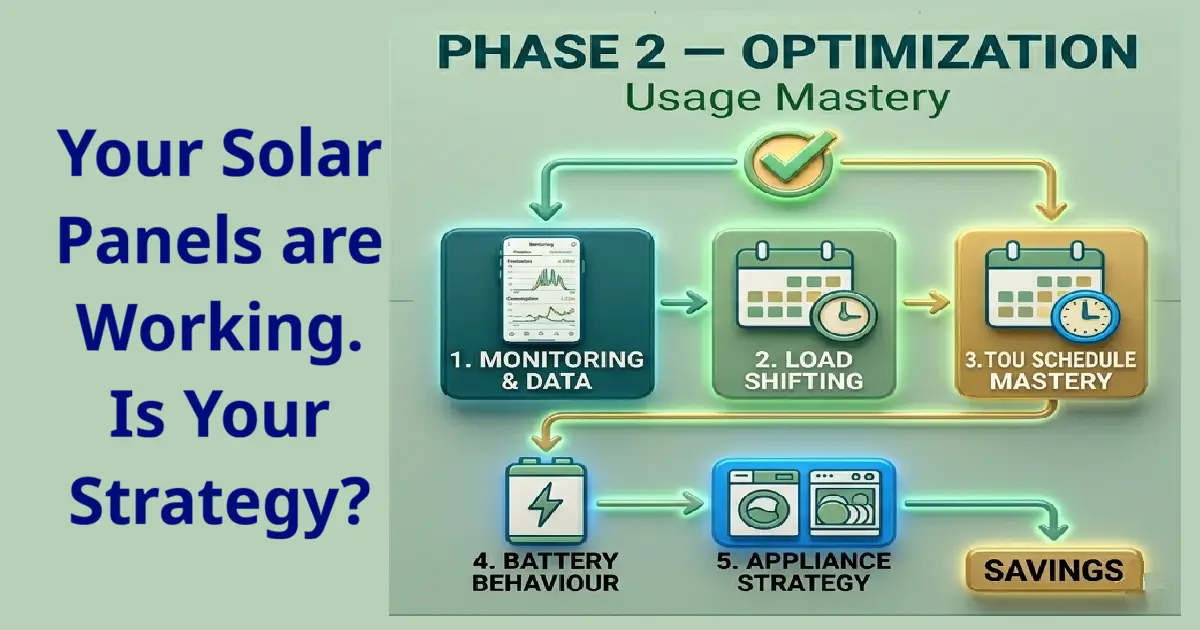
How to Maximize Your Solar System After Installation
The Real Secret to Higher Solar ROI
You’ve installed your solar system, and you’re generating clean, free power. That’s when you realise “solar alone is not optimization.”
Now, the game changes.
You’re no longer just trying to save energy; you’re trying to maximize the use of your free, self-generated electricity.
That’s where the 3M Optimization Strategy comes in.
The goal is no longer simply producing solar energy.
The key to maximizing solar ROI is increasing self-consumption: using as much of your solar production directly in the home as possible, rather than relying heavily on grid imports or exporting excess electricity back to utility companies at lower buyback rates.
The appliances you choose play a major role in that equation.
To truly unlock the financial potential of your solar investment, you need to think about electrification, production, and optimization.
The real advantage comes from implementing optimization strategies.
That’s where modern solar systems become significantly more powerful financially.
The Real Goal of Solar Optimization
Solar optimization is not about producing more electricity — it’s about getting more value from every kilowatt-hour your system already produces.
Most homeowners assume the job is done once panels are installed. In reality, installation is only the first stage.
The financial performance of a solar system is determined by what happens next:
- When energy is used
- How energy is stored
- How energy is exported
- And how utility billing rules interact with those decisions
- This is why two identical solar systems can produce completely different savings outcomes.
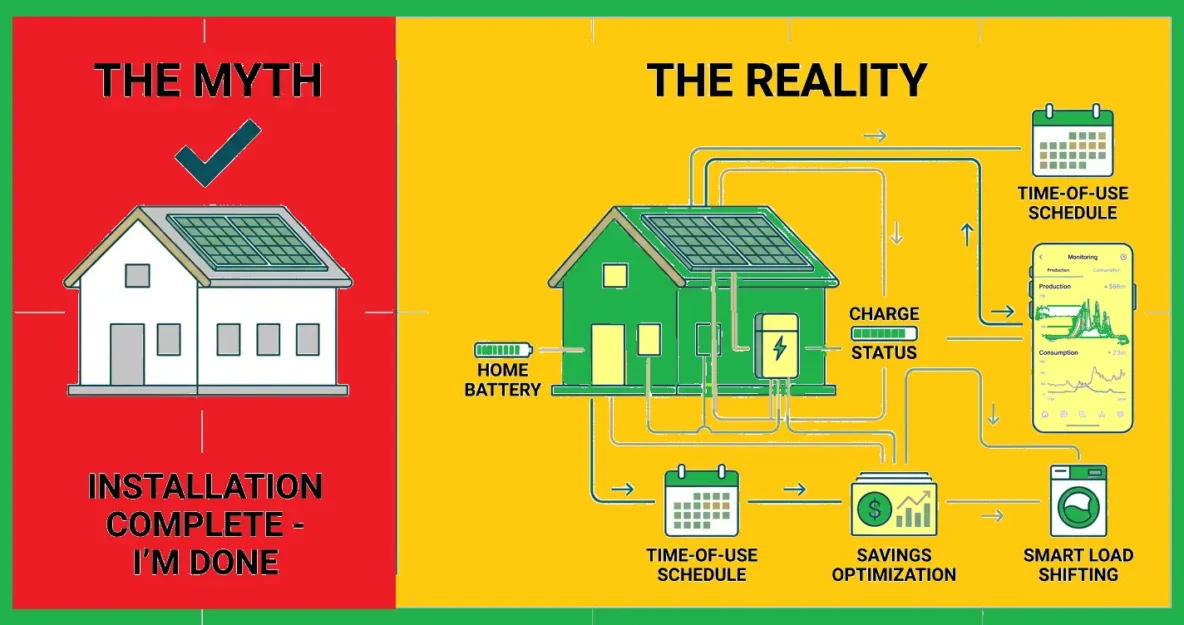
Optimization is the difference.
Solar panels generate electricity. Optimization determines how much of that electricity becomes real savings.
In this guide, we’ll explore the habits, technologies, and strategies that help homeowners maximize self-consumption, reduce grid dependence, improve system performance, and unlock the full financial potential of their solar investment.
Inverter Settings Cheat Sheet
Exploring different inverters and their function. Understand how energy is controlled and directed through your home
Download the free printable Load-shifting schedule, Solar Optimization Guide, and Inverter Settings cheat sheet.
Use these together with the NavigatingSolar Toolkit for best results.
Maximizing Self-Consumption (The Core of Solar ROI)
One of the most important optimization concepts in solar energy is self-consumption — using the electricity your system generates directly inside your home instead of exporting it to the grid.
While exporting energy still provides value, most utility structures reward self-consumption more effectively than grid exports.
Why self-consumption matters:
- Exported energy is often credited at a lower rate than imported energy costs
- Self-used solar energy avoids buying electricity at peak rates
- Higher self-consumption means faster solar payback
- It reduces dependence on unpredictable utility pricing
How to increase self-consumption:
- Run appliances during daylight hours
- Charge EVs during solar production windows
- Heat water during peak generation
- Use smart timers and scheduling
- Add battery storage to shift energy into evening hours
Self-consumption is where solar stops being “generation” and becomes financial optimization.
⚡ Want to Increase Your Solar Savings Without Adding More Panels?
Most homeowners focus on production — but real gains come from improving self-consumption.
Discover how smart energy usage can increase your solar ROI using the system you already own.
➡️ Improve Your Solar Self-Consumption Strategy
 Optimizing Your Largest Energy Loads
The biggest energy consumers in your home are typically your heating, cooling, and water heating systems. Upgrading these offers the most significant ROI when paired with solar.
| Appliance Category | Traditional Model | Solar-Ready Upgrade | Why It’s a Solar Partner |
|---|---|---|---|
| Heating & Cooling | Gas Furnace & Standard AC | Air Source Heat Pump (ASHP) | Efficiency: Moves heat (up to 300% efficient) instead of creating it. Fuel Switch: Replaces expensive gas/propane with free solar electricity [1]. |
| Water Heating | Standard Electric or Gas Heater | Heat Pump Water Heater (HPWH) | Efficiency: Uses a fraction of the energy of a standard electric heater. Load Shifting: Can be programmed to run only during the midday solar peak, storing free energy as hot water [2]. |
| Cooking | Gas or Electric Coil Range | Induction Cooktop/Range | Efficiency: Transfers 90% of energy directly to the pot (vs. 40-50% for gas/coil). Health: Eliminates indoor air pollution from burning gas. |
| Clothes Drying | Standard Electric Dryer | Heat Pump Clothes Dryer | Efficiency: Recirculates air, using up to 60% less energy than conventional dryers. Load Shifting: Low energy draw makes it easy to run during the solar window. |
Heating and Cooling Appliances That Can Make a Difference
In many places climate control is non-negotiable, adding considerably to the total of a utility bill.
Modern heat pumps, central air systems and mini-splits are among the highest-ROI electrification upgrades because they reduce energy demand while making better use of solar production.
Compare whole-home HVAC systems, mini-splits, equipment specifications and energy-efficient solutions from multiple manufacturers to see which approach best suits your home and budget.
➡️ Browse the HVAC marketplace
Optimizing Comfort Without Running the Whole House
Sometimes the most effective energy optimization strategy isn’t generating more power—it’s reducing the amount of energy you need in the first place.
Instead of running a central HVAC system to condition an entire home, some homeowners choose targeted, portable climate control solutions.
This approach can reduce overall energy demand while improving comfort where it matters most.
Newer portable energy solutions now combine battery storage, solar charging capability, and portable heating and cooling into a single ecosystem.
These systems are particularly useful during power outages, off-grid living, remote workspaces, camping, van life, and emergency preparedness scenarios.
Rather than focusing on powering an entire property, they focus on solving a specific problem: keeping people comfortable when traditional climate control isn’t practical, available, or energy-efficient.
➡️ Explore Portable Climate Control & Energy Solutions
📌 The Key Takeaway:
For many homeowners, optimization isn’t just about producing more electricity—it’s about using the right amount of energy, in the right place, at the right time.
Small changes matter more than you think – it has a compounding effect that makes the difference.
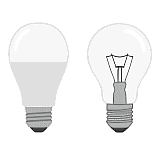
Consider appliances that are highly efficient and run on the electricity you generate for free.Example: By replacing old lightbulbs with LED lightbulbs alone, you’ll be surprised at the annual cost saving from just that one small action!
LED vs INCANDESCENT
The Load-shifting Strategy: Timing Energy Usage Around Solar Production
The most successful solar homeowners are masters of load shifting: using high-draw appliances during the day when the sun is shining. Smart appliances make this easy.
| Appliance | Smart Feature | Solar Strategy |
|---|---|---|
| Electric Vehicle (EV) | Smart Charging (via car or charger app) | Charge during the day. Program your EV to only charge between 10 AM and 3 PM to ensure you are fueling your car with 100% free solar power. |
| Dishwasher & Washing Machine | Delayed Start Timer | Run during the day. Program the cycle to start at 11 AM or 12 PM, ensuring the high-energy heating element runs when your solar production is at its peak. |
| Smart Thermostat | Pre-Cooling/Pre-Heating | Pre-condition your home. Program the thermostat to cool your home to a lower temperature (or heat it to a higher one) during the midday solar window, reducing the need for AC/Heat during the expensive evening peak. |
| Pool Pump | Variable Speed Drive & Timer | Run during the day. Program the pump to run its longest cycle between 10 AM and 4 PM. A variable speed pump uses significantly less energy than a single-speed model. |
📌 The Key Takeaway: Look for appliances with Wi-Fi connectivity or a Delayed Start function.
These features are your tools for maximizing self-consumption and minimizing your reliance on the grid.
Smart Energy Management Systems
Modern energy ecosystems don’t simply power appliances—they coordinate them.
Smart Energy Management Ecosystems can coordinate solar production, battery storage, EV charging and major household loads like HVAC from a single management platform. Seeing one in action makes the concept much easier to understand.
If you’re curious how intelligent energy management works in practice, it’s an excellent place to explore.
➡️ EcoFlow Home Energy Ecosystem
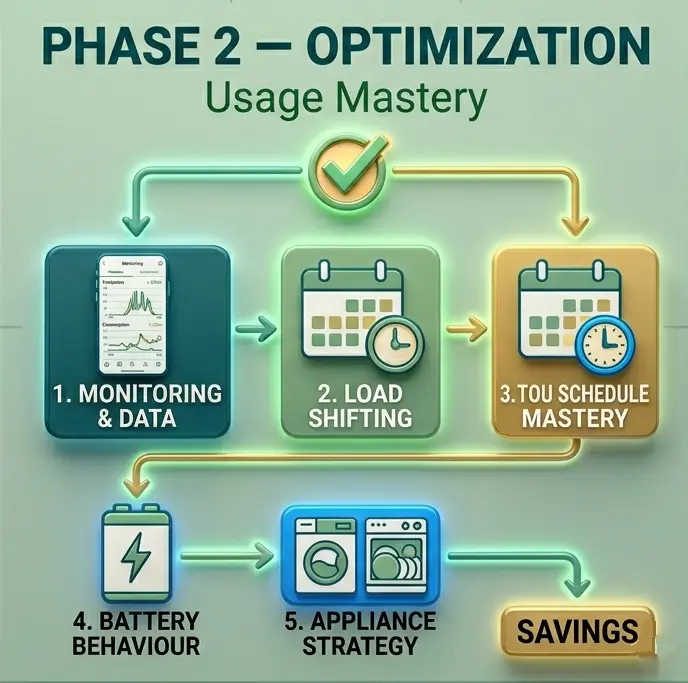
The 3M Strategy: Optimization Framework
Solar optimization works best when approached as a structured system rather than a collection of individual habits.
The 3M Strategy helps homeowners consistently extract maximum value from their solar systems:
1. Manage
Understand how your system behaves day-to-day.
Actively improve financial performance by adjusting:
- Appliance timing
- Energy usage behavior
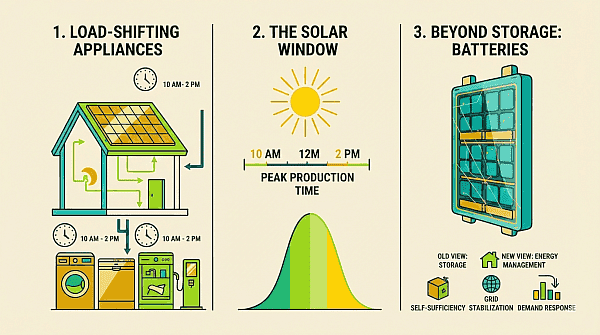
SOLAR OPTIMIZATION STRATEGY
- Storage and discharge cycles
- Self-consumption rates
- Typical production levels
- Seasonal variation
- Energy usage patterns
2. Monitor
Track production, consumption, and battery behavior using your solar dashboard.
Solar Monitoring helps you identify:
- Performance drops
- Inefficient usage patterns
- System faults or inefficiencies
3. Maintain
Protect long-term performance through seasonal checks and system upkeep.
This ensures:
- Panels remain efficient
- Wiring and equipment stay reliable
- Performance degradation is minimized
📊 Turn Your Solar System Into a Live Energy Dashboard
Monitoring helps you detect inefficiencies before they become costly.
See how tracking production, usage, and battery behavior improves long-term solar performance.
➡️ Explore Solar Monitoring Tools
Battery Storage: The Time-Shift Engine of Solar Optimization
Battery storage allows solar energy to be used at the most financially valuable time.
Instead of exporting excess solar power during the day and buying expensive electricity in the evening, batteries store that energy for later use.
What battery storage enables:
- Shift solar energy from daytime → evening
- Reduce peak-rate electricity consumption
- Increase self-consumption rates
- Provide backup power during outages
Key insight:
Without a battery, solar is production-based.
With a battery, solar becomes time-controlled.
Solar batteries and energy storage give you a superpower: “time-shifting ability”. It’s one of the most powerful optimization tools available to homeowners.
Battery Storage and Energy Optimization
For many homeowners, optimizing a solar system isn’t just about generating more electricity—it’s about using that energy more effectively.
Battery storage allows excess solar production to be stored during the day and used when energy demand is highest, helping reduce grid reliance, improve self-consumption, and provide backup power during outages.
Depending on your goals, there are several approaches available:
Traditional Solar + Battery Systems are typically designed and installed as part of a complete home energy solution.
Modular Energy Ecosystems offer a more flexible approach, allowing homeowners to add battery storage, backup power, smart energy management, EV charging integration, and future expansion as needs evolve.
Portable and Expandable Power Solutions can provide backup power for critical appliances, workshops, RVs, cabins, off-grid properties, and even whole-home energy resilience when properly sized.
Compare Before You Buy
Systems rely entirely on the right combination of panels, batteries, inverters, charge controllers and supporting components, comparing equipment from multiple manufacturers becomes part of the planning process.
For homeowners exploring modular energy storage and backup solutions:
Compare complete system types, energy storage and individual components and manufacturers side by side.
Visit the solar marketplace for excellent diagrams, product layouts and system illustrations, making it one of the easiest places to visualize how different solar systems are assembled before making decisions.
Here’s a visual aid:
Steps: Follow the link below – Choose a system (hybrid, grid-tied or off-grid) – Choose a size (essentials:3-5kW to whole-home: 10kw+) – Hover over the product image and see how it transforms into a home energy system.
➡️ Compare Modular Solar Energy Ecosystems
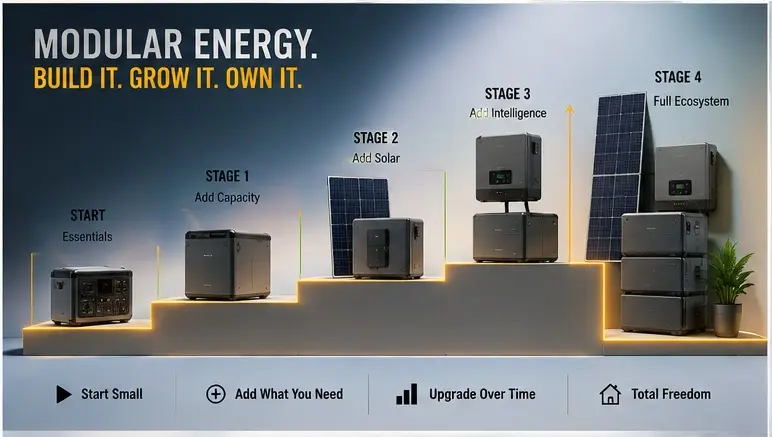
➡️ Explore EcoFlow Energy Ecosystems for smart energy management, battery storage, home backup, and expandable whole-home solutions.
➡️ Explore Bluetti Energy Solutions for off-grid living, backup power, energy storage, and flexible systems that can grow alongside your energy needs.
The best energy optimization strategy is the one that balances production, storage, consumption, and future expansion based on your specific goals and budget.
Resources & Tools for you
Below you can download the guide on Solar batteries, and use the Solar Battery Capacity Calculator to estimate how much battery storage you might need for your setup.
Battery Types 101 - A Beginners Guide
Learn about Solar Battery types, Energy Storage and Why batteries add long-term value.
➡️ Open the Batter Capacity Calculator
Efficiency Gains for Off-Grid and Backup Systems
While most home appliances run on AC power (converted by your inverter), some specialized appliances are designed to run directly on DC power, which is what your panels and battery produce.
This eliminates the small energy loss that occurs during the DC-to-AC conversion.
| Appliance | Power Type | Best Use Case |
|---|---|---|
| DC Refrigerators/Freezers | 12V or 24V DC | Excellent for off-grid cabins, RVs, or as a dedicated backup freezer in a battery-powered home. |
| LED Lighting | Low-Voltage DC | Highly efficient and ideal for backup lighting circuits powered directly from a battery system. |
| Ceiling Fans | DC Motor Fans | Use significantly less energy than traditional AC fans, making them a great choice for solar homes. |
📌 The Key Takeaway: For critical loads or off-grid applications, choosing a DC appliance can squeeze out a few extra percentage points of efficiency, which is vital when relying solely on stored energy.
🔋 Shift Your Solar Energy Into the Most Valuable Time of Day
Battery storage allows you to store daytime solar energy and use it during expensive evening peak periods.
Learn how batteries improve ROI through energy time-shifting.
Learn About Solar Battery Storage Strategy
Understanding How Solar Interacts with the Grid: Import, Export, and Credit Value
Every solar system interacts with the utility grid in two directions:
- Importing electricity when solar production is low
- Exporting electricity when production exceeds demand
However, the financial value of electricity is not fixed.
Depending on your utility structure, exported electricity may be credited at:
- Full retail rate (rare)
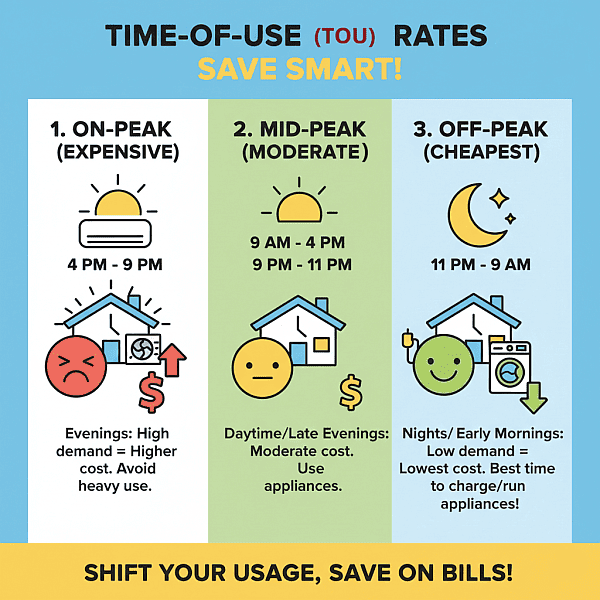
- Time-of-use adjusted rates
- Wholesale rates
- Or partial credit systems
Why this matters:
The same kilowatt-hour of electricity can have a different financial value depending on timing.
This creates a hidden optimization layer in your solar system.
Optimization goal:
- Reduce high-cost imports
- Increase high-value self-consumption
- Avoid low-value exports where possible
Solar optimization is not just energy management — it is value timing management.
💵 Understand Your Solar Bill Better
Not all solar savings come from production — many depend on how your utility calculates timing, credits, and usage rates.
Learn how billing rules affect your solar savings and where value is often lost.
➡️ Understand Solar Billing & TOU Pricing
The Hidden “Value Loss” in Solar Systems
Even well-designed solar systems can lose financial performance without homeowners realizing it.
This is not equipment failure — it is optimization failure.
Common causes of lost value in solar production:
- Running high-energy appliances during peak electricity rates
- Exporting energy when credit values are low
- Ignoring battery discharge timing
- Lack of monitoring or visibility
- Poor load-scheduling habits
The result:
Your system may be producing full solar output — but still delivering suboptimal financial returns.
Optimization fixes this by:
- Aligning energy usage with production
- Shifting loads into solar hours
- Storing energy for peak-rate periods
- Tracking performance regularly
⚠️ Are You Losing Solar Savings Without Realizing It?
Even well-installed systems can underperform due to timing, billing rules, and usage patterns.
Identify common solar performance issues and how to fix them with these independent, online tools.
Your Home, Optimized by the Sun
Your solar panels have given you the gift of free electricity. Your job now is to use that gift wisely.
Modern solar homes are no longer just generating electricity.
They are becoming intelligently managed energy ecosystems where appliances, batteries, EV chargers, smart thermostats, and solar production work together to reduce waste and maximize efficiency.
The most efficient solar homes are rarely the ones with the largest systems alone. They are the homes that strategically match energy production with intelligent energy usage.
By replacing your old energy hogs with high-efficiency energy partners, applying the 3M Strategy, optimizing your self-consumption & energy production, you are not just saving money – you are completing the transformation of your home into a modern, self-sufficient energy ecosystem.
🚀 Your Solar System Is Only as Good as How It’s Managed
Installing solar is just step one.
Optimization is where long-term savings are created.
When self-consumption, TOU timing, storage, and monitoring work together, your system reaches its full financial potential.
Explore the full Solar Optimization system and take control of your energy performance.
Suggested Further Reading
Solar ROI, IRR & Payback Explained
7 Solar Installation Mistakes to Avoid (Including Hidden Costs Most People Miss)
Utility Bill Still High After Solar Install?
A Step-by-Step Checklist to Map Solar Value
Inverter Settings Cheat Sheet
Exploring different inverters and their function. Understand how energy is controlled and directed through your home
Read more here: The Homeowner’s Solar Decisions Manual: Built on Choices
Educational transparency.
NavigatingSolar is an Independent Educational Resource. We are not solar manufacturers or installers – we research them.
Why these suggestions?
Navigating Solar doesn’t recommend companies simply because they offer affiliate programs. We believe readers should always understand why something is being recommended. We begin with the homeowner’s decision—not the product. We identify where people struggle to make informed choices, then evaluate products, services and partners that genuinely solve those problems.
Not every recommendation earns us a commission. Partnerships are selected to fit the educational framework—not forcing the educational framework to fit whatever affiliate programs happened to exist. If a company doesn’t fit the decision framework and ethos, we don’t include it—whether it has an affiliate program or not. If we believe a better solution exists, we’ll recommend it regardless of whether it generates a commission.
➡️ Our goal is to help you make the right decision—not the fastest purchase.
References
[1] Enact Solar. “Top Solar & Electrification Rebates and Incentives in 2025.” Enact Solar Blog.
[2] U.S. Department of Energy. “Heat Pump Water Heaters.” Energy.gov.
[3] Direct Solar Power. “What Appliances Can Run on Solar Power – Cut Bills Fast.” Direct Solar Power Blog.
[4] Enphase. “How to maximize solar savings with home energy efficiency.” Enphase Blog.