 Navigating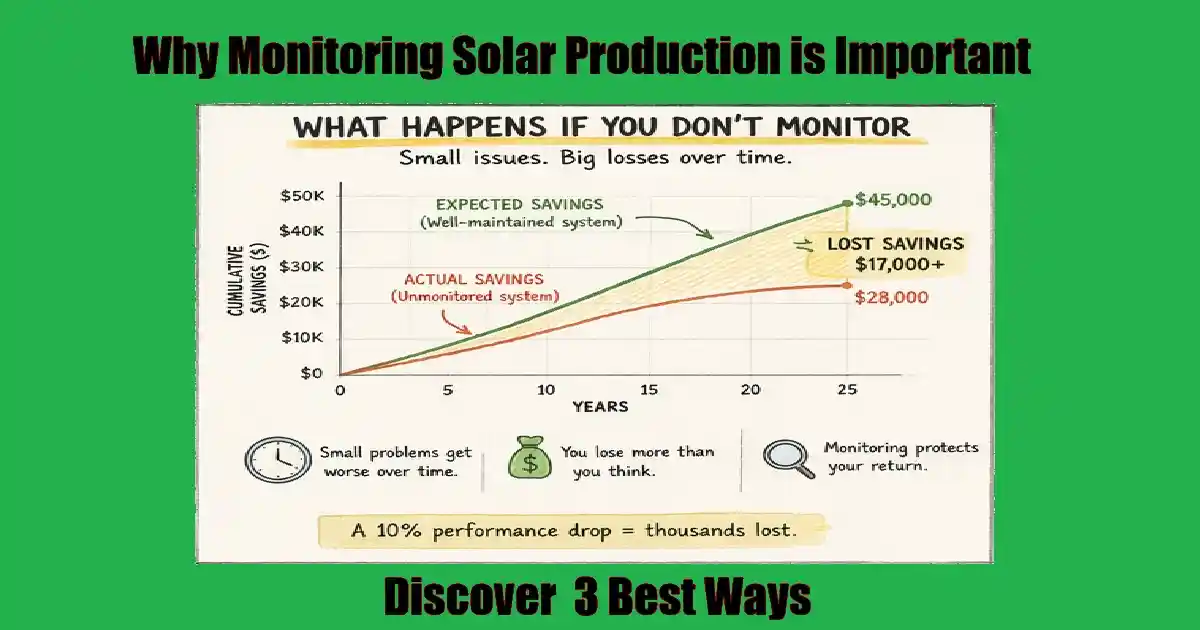
Monitor, Measure, and Track your Solar Production and Performance
Staying on Top of Your Solar Investment’s Savings & System Health
If you’ve invested in solar, you’ve probably heard the need to monitor solar production and performance, about apps, dashboards, and monitoring tools…
But how do you really track what your panels are producing, know if your system is performing well, and ensure you’re getting the savings you expected?
Monitoring your solar production isn’t just a tech luxury — it’s a critical part of protecting your investment and understanding how solar truly benefits you every day. Monitoring is part of the Optimization phase where homeowners learn how their system actually performs over time. Let’s break it down clearly.
Why Monitoring Solar Production Matters
Think of your solar system as an investment you can see and use every day.
Unlike stocks or property, your solar panels are working constantly: generating energy, reducing your bills, and building long-term value.
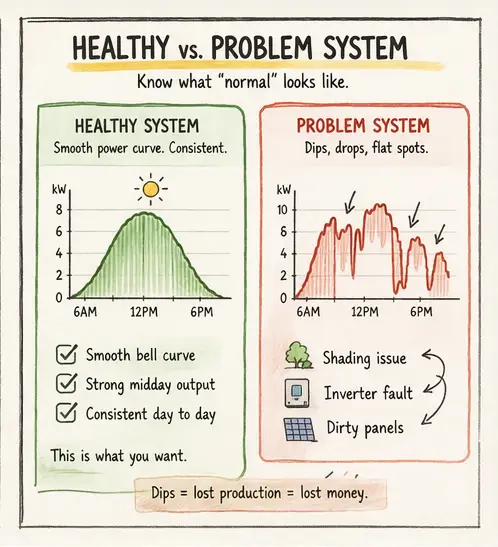
Without monitoring, you’re flying blind. Systems can underperform due to shading, inverter faults, or panel degradation — and you wouldn’t know until your savings fall short. Monitoring gives you:
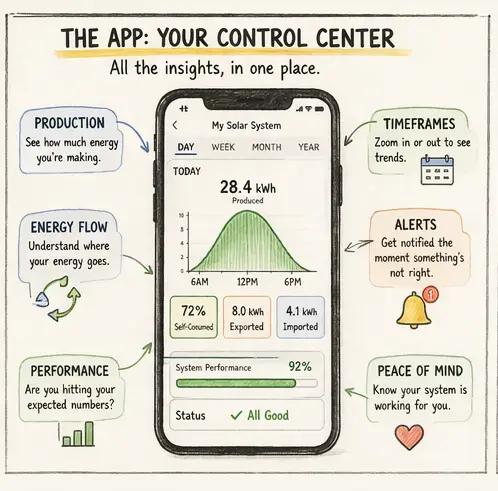
- Real-time insights: See how much energy your panels produce each hour or day.
- Early alerts: Catch problems before they impact savings.
- Validation of savings: Confirm that your system is delivering the ROI you expected.
- Behavioral insights: Adjust your energy use to maximize your solar production.
Monitoring becomes far more useful when you understand how your production, consumption, and tariff timing work together.
If you’re trying to improve savings or identify inefficiencies, the Optimization tools can help you interpret the bigger picture more clearly.
Do You Really Need a Monitoring App?
Many homeowners ask: “Do I need an app, or can I just trust my system to work?”
While technically not mandatory, apps and monitoring tools are highly recommended. They consolidate data, alert you to issues, and make your production tangible. Without monitoring, you might:
- Miss underperforming panels or inverter problems.
- Misjudge your actual energy savings.
- Leave potential long-term value and efficiency untapped.
In short: monitoring turns your invisible solar energy into actionable insights.
Most Systems Come With Some Form of Monitoring
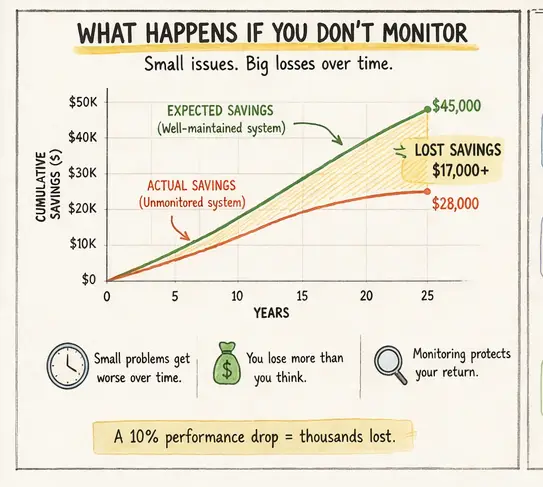
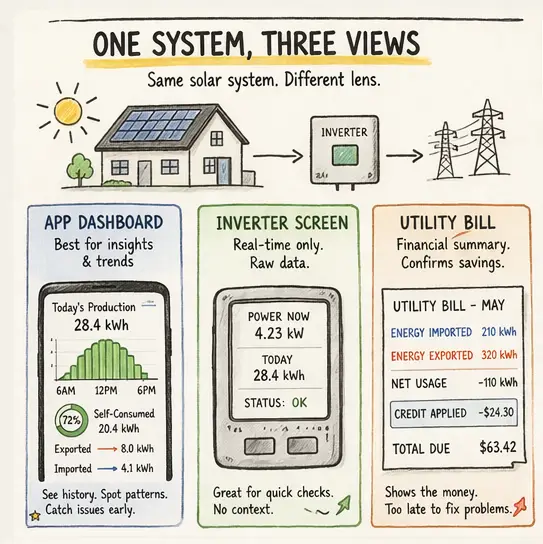
If you have a modern system, your inverter or installer likely provides a monitoring app or portal. For example:
- Enphase and SolarEdge include smartphone apps and web dashboards.
- SMA systems often come with free portals for PC and mobile.
These apps track production, panel-level output, and sometimes even your consumption. But the features and accessibility vary — which brings us to choosing the right approach.
Choosing the Right App: Installer vs Third-Party
Installer Apps
- Pros: Easy setup, guaranteed compatibility, basic alerts, direct support.
- Cons: May be limited in analytics or customization, tied to one system.
Third-Party Apps
- Pros: Aggregate multiple systems, advanced analytics, historical trends, custom alerts.
- Cons: May require extra setup, not officially supported by your installer, sometimes a subscription cost.
Tips for choosing: Look for reliability, clarity, actionable alerts, and ease of understanding your production versus your household energy use.
What to Do If Your Hardware Doesn’t Include an App
Some older or simpler solar systems don’t come with a dedicated monitoring app. No problem — there are ways to track your production:
- Manufacturer portal: Even without an app, your inverter may have a web-based dashboard.
- Smart home energy monitors: Devices like Sense or Emporia can track solar production and consumption.
- Utility smart meters: Some track exported solar and overall consumption, giving you indirect but actionable data.
The takeaway: apps aren’t the only way, but they are the most convenient.
Other Ways to Measure Solar Production Without an App
If you prefer analog or hardware-based tracking:
- Inverter display: Many inverters show production in kWh right on the unit.
- Panel-level monitoring devices: These attach to your array or breaker panel to track output.
- Manual logbooks: Track your daily or weekly kWh against utility bills.
Apps simplify this process, but these methods still give accurate insights if you’re willing to check manually.
Common Pitfalls & How to Avoid Them
When it comes to solar monitoring, homeowners often struggle with:
- Multiple apps confusion: Stick to one primary app for alerts and reports.
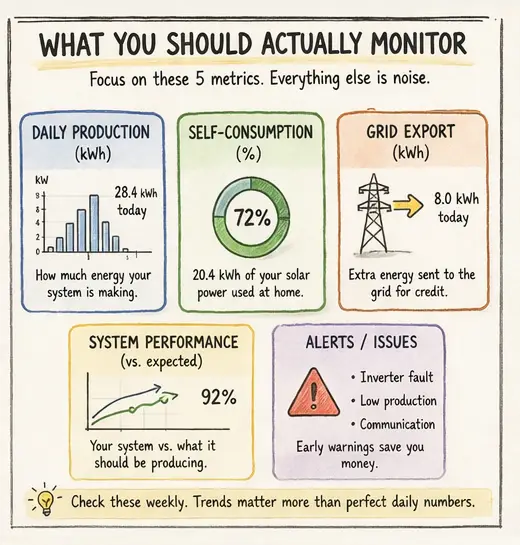
- Data overload: Start with simple metrics — daily kWh, monthly production, total savings.
- False alerts or misinterpretation: Learn your system’s normal patterns to distinguish real problems.
- Subscription traps: Some apps charge for advanced analytics; weigh cost vs value.
- Integration issues: Ensure your app works with your phone, tablet, and potentially smart home setup.
Monitoring is powerful only when you understand and act on the data, not just collect it.
Top 3 Ways to Track Your Solar Production
Here’s a clear, actionable breakdown:
1. Manufacturer / Installer App
- Best for beginners and guaranteed compatibility.
- Provides alerts, real-time production, and system status.
- Minimal setup — often comes free with your system.
2. Third-Party Aggregator Apps
- Ideal for advanced tracking or multiple systems.
- Offers analytics, historical trends, custom alerts, and sometimes cost tracking.
- Great for tech-savvy users who want a holistic view.
3. Hardware-Based Monitoring / Smart Energy Devices
- Includes smart panels, energy monitors, or utility meters.
- Works even if your inverter doesn’t provide an app.
- Gives direct measurements, often with historical data for ROI tracking.
Making Your Monitoring Data Actually Useful
Monitoring solar production isn’t just numbers on a screen — it’s about understanding your system and maximizing value. Use your data to:
- Adjust household energy use to match peak production.
- Confirm that incentives, rebates, and energy savings are performing as promised.
- Spot inefficiencies or maintenance needs before they reduce savings.
- Track long-term ROI, payback, and cumulative energy production.
When used this way, monitoring turns solar into a learning experience about investing, energy management, and long-term financial growth — all while powering your home daily.
Bottom Line
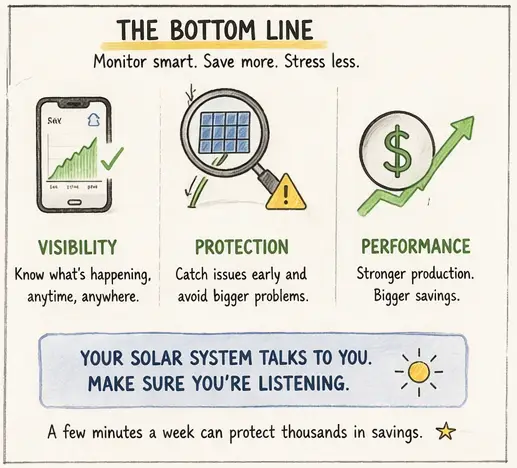
Monitoring your solar production transforms a passive energy system into an active, trackable investment. Whether you use an installer app, a third-party solution, or hardware-based monitoring, the goal is the same: see your energy, optimize your usage, and maximize savings and ROI.
With clear tracking, solar isn’t just a way to save on bills — it’s a hands-on lesson in smart investing, daily value creation, and long-term wealth growth.
Solar monitoring is not only about checking production numbers.
Over time, it helps you understand:
- when your home uses the most power
- where self-consumption drops
- whether batteries may improve savings
- how Time-of-Use tariffs affect your results
Related Articles
Solar Battery Storage: Value vs Expense