 Navigating
The Costly Difference between Installation and Optimization
The cheapest solar upgrade, is often understanding the one you already own.
“I installed solar, but the utility bill is still high” is probably one of the most common experiences homeowners have after installing solar.
And it’s usually followed by an even more uncomfortable one.
“Did I make a mistake going solar?”
No. You’re not sitting on a problem — you’re sitting on potential.
But you may have expected your electricity bill to keep doing the same job it did before you installed solar.
It doesn’t.
Your utility bill has become a diagnostic tool—a pointer showing you where your energy strategy still depends on the grid.
It isn’t measuring the same thing it measured before solar.
It isn’t telling you that you made an investment mistake or that your system is too small.
It’s telling you where to look for savings next.
The REAL problem with your solar investment isn’t the bill.
The bill is just the symptom.
The real problem is this:
Installing solar changes your relationship with energy—and nobody hands you the optimization manual.
Until you understand that shift, every monthly statement is easy to misinterpret.
Your Utility Bill’s Job Description Changed
Before solar, your electricity bill had one simple job:
Measure how much electricity you bought from the utility company.
Use more. Pay more.
Use less. Pay less.
Simple.
After installing solar, that job changes.
Your utility bill is no longer only measuring everything you used.
It’s measuring what your solar system couldn’t provide.

Same bill. Completely different job.
Installing solar is like changing the rules of a game halfway through.
That’s why interpreting it the old way leads to frustration.
You’re still looking at the same monthly bill, but it’s telling you something different to before.
Before solar, it measured dependence.
Now it measures the energy you couldn’t produce, couldn’t store, or chose to buy instead.
Your electricity bill has become feedback
This is probably the biggest mindset shift.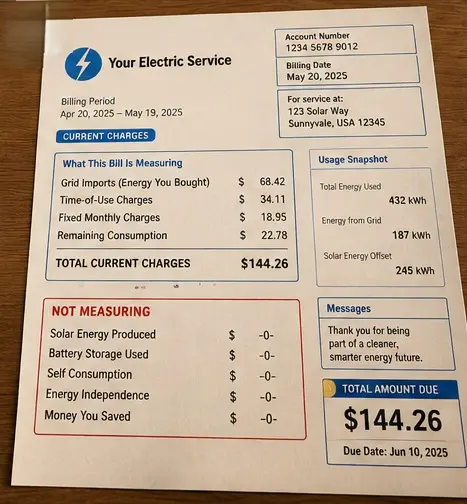
Stop thinking of your bill as proof that solar “didn’t work.”
Instead…
Treat it as feedback.
Every bill tells a story.
Maybe you’re importing more electricity at night than expected.
Maybe your battery is too small for your evening demand.
Maybe most of your heavy appliances run after sunset.
Maybe your utility’s Time-of-Use tariff is costing more than you realized.
Very often a funny thing happens: a family simply uses more electricity after solar installation than before – misinterpreting solar as constant supply of “free power”.
None of those automatically mean something is wrong.
They simply reveal where energy is still flowing.
And once you can see those patterns, you can start improving them.
The real question isn’t “Why is my bill still high?”
It’s this.
“What is my bill trying to teach me? What patterns does it show me?”
That changes everything.
Because every answer creates another opportunity.
Sometimes the answer is behavioral: Running appliances during daylight hours instead of late at night.
Sometimes it’s technical: Adding battery storage. Improving monitoring. Expanding the system.
Sometimes it’s simply educational: Understanding how your utility calculates charges.
Your bill isn’t accusing you of making a mistake.
It’s pointing toward the next improvement.
Realistic expectations are cheaper than hardware
This is where many homeowners rush into another expensive decision.
A higher-than-expected bill doesn’t automatically mean you need more panels.
Or a bigger battery.
Or a new inverter.
It means you need better information.
Start by asking optimization questions:
- Is my current system performing as designed?
- Does my electricity usage match my original design assumptions?
- When do I consume most of my energy?
- Which charges come from my utility rather than my solar system?
- What outcome am I actually trying to achieve?
Only once those questions are answered does it make sense to start exploring hardware options.
The goal isn’t to buy more equipment.
The goal is to build a system that matches your energy strategy.
Solar doesn’t come with the Optimization Manual
Grid-only life has one rule:
Use electricity.
Pay bill.
Solar changes the rules.
Now timing matters
Storage matters. Tariffs matter.
Self-consumption matters.
Weather matters.
Future expansion matters.
The electricity bill becomes a scorecard instead of just an invoice.
The Truth behind your Missing Solar Savings
You don’t buy a solar system for no reason. The motivators are normally savings or energy independence to some or other degree.
So when your system and bill consistently tell you the math between production vs usage vs savings isn’t adding up…
…and it’s not a faulty system or an installer dud.
…or incorrect system size,
the hunt for answers can be confusing.
More often than not, it’s closer to something oddly simple… and slightly ridiculous.
Because nobody explained the rules of the new game.
Like buying instant pudding that tells you: “Just add eggs, milk, and refrigerate.”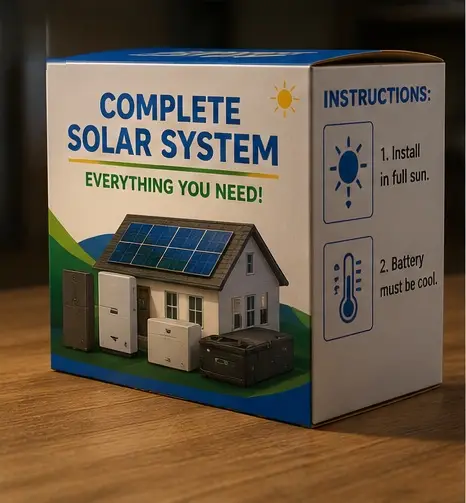
But never actually tells you: how many eggs, how much milk, or how long to leave it.
The ingredients are fine.
The outcome just depends on the missing instructions.
And solar works a lot like that.
The installer gives you working hardware: Panels. An inverter. Maybe batteries.
What you don’t receive is the operational handbook that teaches you how to get the best financial performance from that system.
The equipment works exactly as designed.
But the savings depend on how the system is used.
Before spending another dollar on hardware
…spend ten minutes understanding what your bill is actually telling you.
Visit the NavigatingSolar Optimization Guide
Only after that…
If your bill consistently points to a hardware limitation…
Then…
it’s usually clearer which additional equipment is worth exploring.
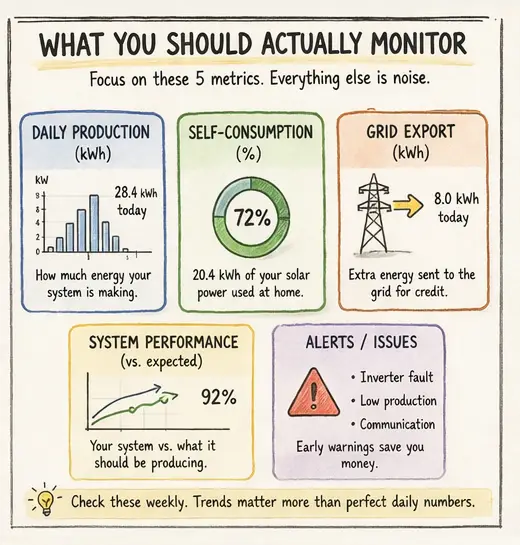
📊 Monitoring & Energy Optimization
Your electricity bill tells you what happened. Monitoring tells you why.
Learn how energy monitoring, load management, and automation help turn information into better decisions.
Turn your electricity bill into useful feedback by understanding where energy is produced, stored, used, and purchased.
➡️ Independent Online Resource
Visit NavigatingSolar.com for solar research & planning tools, calculators and guides.
Our Optimization page shows you the strategies for getting the most from your system.
Or
Get your free copy of The Solar Homeowner’s Optimization Guide.
Follow the clues before following the catalog
Your bill might not conveniently disappear, but make the best use of it.
Use it as a diagnostic tool.
That’s where the first clues to missing optimization hide (…possibly because Utility Bill knows you hate looking at him).
So let’s play a quick game of Solar Cluedo.
Before spending money on new hardware, ask whether your current system is already capable of solving the problem.
If you’ve optimized everything you reasonably can—and your bill keeps pointing to the same limitation—then it may be time to explore additional equipment.
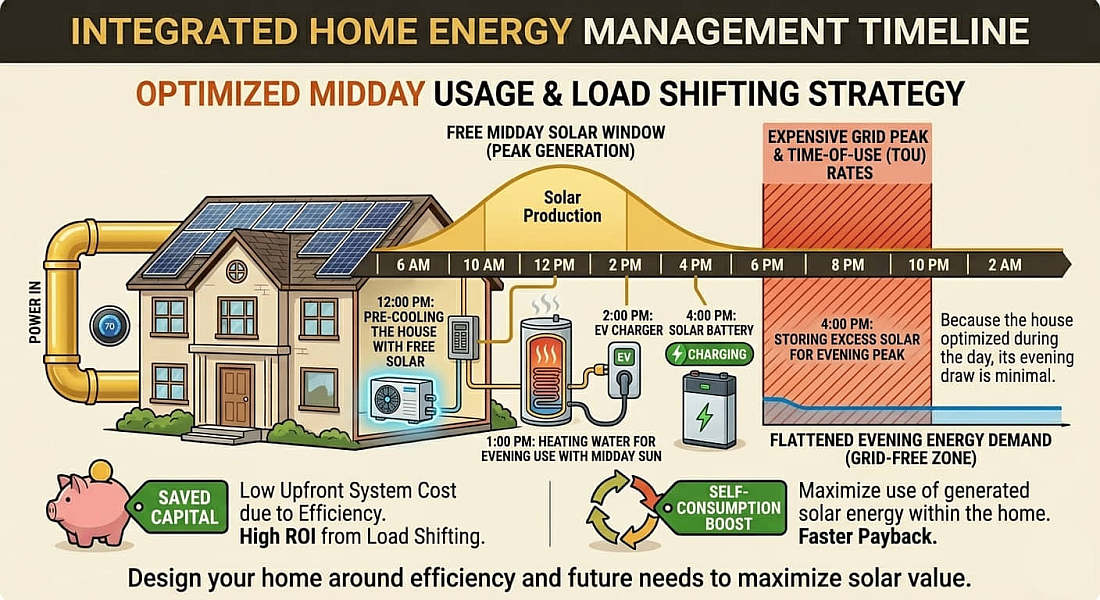
🌙 My bill is still high because most of my electricity use happens after sunset.
Optimize first:
- Are you running high-energy appliances during daylight hours?
- Can any loads be shifted to when your panels are producing?
- Is your current battery fully charging and being used efficiently?
Still relying heavily on the grid after dark?
Then it may be worth exploring:
Store more of your daytime solar production for use during the evening and overnight.
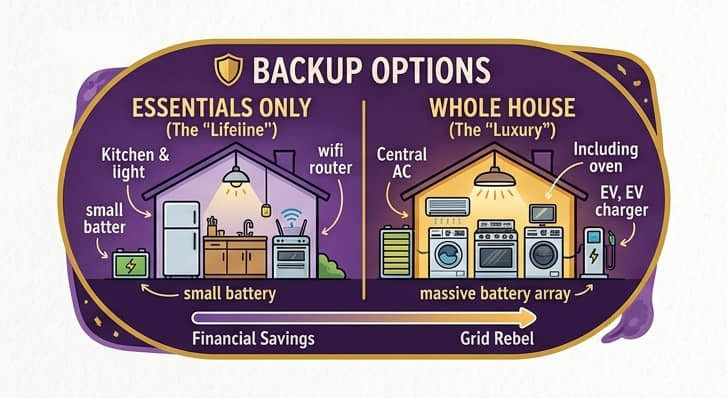 ⚡ My home still loses power during outages.
Optimize first:
- Which appliances actually need backup power?
- Are essential circuits already separated from non-essential ones?
- Does your current system provide the level of backup it was designed for?
Need longer runtime or greater resilience?
Then it may be worth exploring:
Expand battery capacity or redesign your backup strategy around your household’s priorities.
🚗 My electric vehicle changed everything.
Optimize first:
- Are you charging during peak solar production?
- Have you measured how much your EV has changed your daily energy consumption?
- Is charging competing with other high-demand appliances?
Still exceeding your system’s capacity?
Then it may be worth exploring:
➡️ EV Charging & Future Expansion
Plan for growing demand before it forces expensive redesigns later.
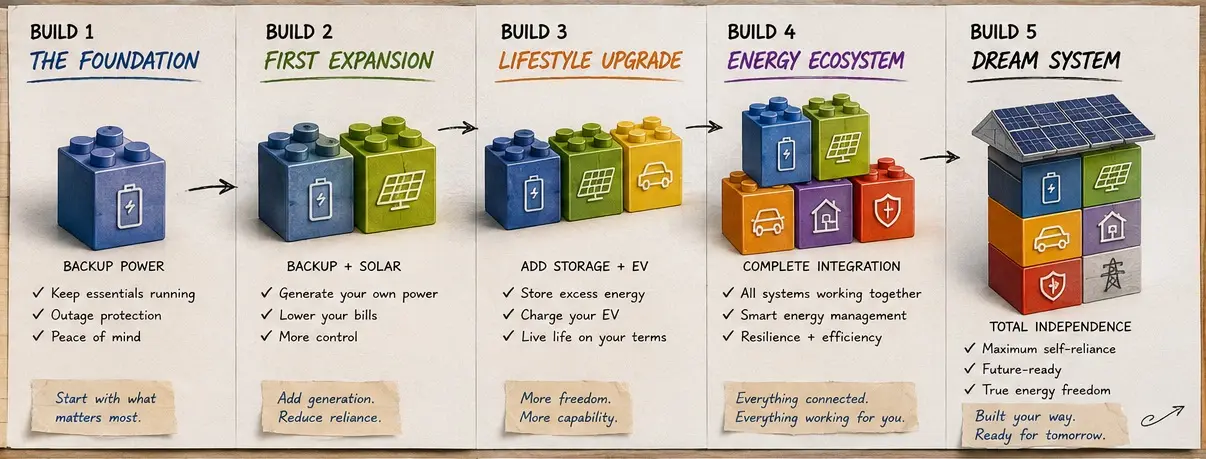
☀️ My household has outgrown the original system.
Optimize first:
- Has your electricity usage genuinely increased?
- Have new appliances, air conditioning, or family members changed your demand?
- Could better scheduling reduce the gap?
The numbers still don’t add up?
Then it may be worth exploring:
Increasing generation may be more valuable than changing how you use electricity.
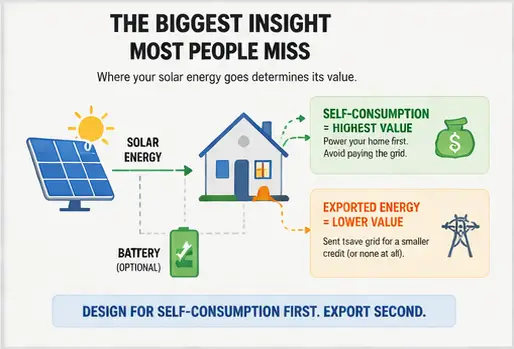 🔌 I’m still buying more electricity from the grid than I expected.
Optimize first:
- Have you identified when you’re importing power?
- Are your utility’s billing rules affecting your savings?
- Have you optimized your daily energy habits first?
Still too dependent on the grid?
Here’s a visual representation:
Steps: Follow the link below – Choose a system (hybrid, grid-tied or off-grid) – Choose a size (essentials:3-5kW to whole-home: 10kw+) – Hover over the product image and see how it transforms into a home energy system.
Battery storage and hybrid operation can reduce grid reliance by storing more of the energy you already produce.
Look into residential inverters and panel optimizers.
Transparency: The resources above connect to our carefully curated partner network. Every recommendation is included because it helps reduce uncertainty, compare solutions more effectively, or support better long-term solar decisions—not simply because it’s available to promote.
Solar has its own Energy Strategy
And it’s not as static as you think. Solar isn’t just about installing panels and batteries and hoping for the best.
It’s about building an energy strategy that matches the way you live, where your live, the responsibility you’re willing to accept, and the future you’re planning for.
That starts with setting realistic expectations.
If you understand what your system is designed to do—and just as importantly, what it isn’t—you’ll make better decisions, compare proposals with greater confidence, and avoid chasing solutions to problems you never actually had.
Once your goals are clear, choosing the right hardware becomes much simpler.
Every home has different priorities.
Some homeowners are happy with grid-tied system to lower electricity bills.
Others want reliable backup during outages.
Some folks start their solar journey with an electric vehicle as it affects their daily work routine and profitability.
Off-grid systems require complete energy independence and a whole different strategy.
Those goals influence every hardware decision you make. Not the other way around.
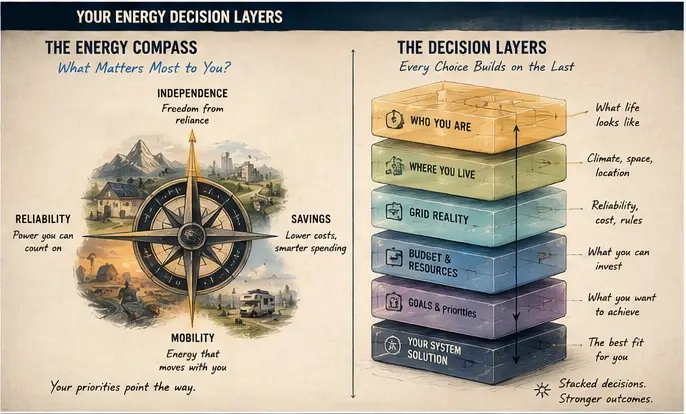 Navigating your way with Solar
There are a few steps to take that will make the process of going solar and expanding later, easier. It helps set the right expectations from the get-go.
Sometimes it’s worth revisiting these after installation or before your next addition.
➡️ Identify your energy profile: Understand your energy needs and goals.
➡️ Then, learn about the different types of solar systems : Grid-Tied, Hybrid & Off-Grid Systems Understand how each system type balances savings, resilience, independence, and flexibility.
➡️ Use your free NavigatingSolar Calculators to help you plan and estimate system size, ROI and payback.
Then only focus on hardware
Every solar system is built from the same core building blocks.
The difference isn’t what they are. It’s how they’re combined to support different energy goals.
Explore the options below to understand which building blocks best support and contributes to your overall energy strategy.
☀️ Solar Panels
Not all panels are built for the same purpose.
Choosing the right panel is less about chasing efficiency and more about matching the technology to the application.
Learn the difference between monocrystalline, bifacial, rigid, flexible, portable, and other panel technologies to understand where each performs best and what trade-offs they involve.
➡️ Compare rigid, flexible, bifacial and portable panels
🔋 Solar Batteries
Backup Power & Energy Resilience
Batteries aren’t simply about storing electricity
—they’re about deciding how much energy you want available, when you want it, and what you’re trying to protect.
Learn how storage capacity influence backup power choices, self-consumption, and long-term resilience.
Choose backup solutions based on the level of protection and reliability your household requires.
➡️ Explore battery sizes, technologies, backup capabilities, and long-term planning considerations.
⚡ Solar Inverters
Often called the brain of the system, your inverter influences far more than converting DC to AC power.
Inverter types affect battery compatibility, future expansion, monitoring, backup capability, and overall system flexibility.
➡️ Learn how to choose your system’s mastermind.
🚗 EV Charging
Planning for an electric vehicle or starting your solar journey with one?
Cutting fuel costs, charging while your drive or parked in the sun…
A car just became more than a set of wheels.
☀️ Future Expansion & Upgrades
Planning for a heat pump, workshop, or growing household?
Thinking ahead today can prevent expensive system upgrades tomorrow.
➡️ Learn why future demand should influence today’s system design.
🚐 Portable Solar & Mobile Power
Mobile solar and portable power stations offer a different approach to energy independence.
Explore portable power systems for RVs, camping, emergency preparedness, cabins, and mobile applications.
➡️ Choose which solutions fit your lifestyle.
Educational transparency.
NavigatingSolar is an Independent Educational Resource. We are not solar manufacturers or installers – we research them.
Why these suggestions?
Navigating Solar doesn’t recommend companies simply because they offer affiliate programs. We believe readers should always understand why something is being recommended. We begin with the homeowner’s decision—not the product. We identify where people struggle to make informed choices, then evaluate products, services and partners that genuinely solve those problems.
Not every recommendation earns us a commission. Partnerships are selected to fit the educational framework—not forcing the educational framework to fit whatever affiliate programs happened to exist. If a company doesn’t fit the decision framework and ethos, we don’t include it—whether it has an affiliate program or not. If we believe a better solution exists, we’ll recommend it regardless of whether it generates a commission.
➡️ Our goal is to help you make the right decision—not the fastest purchase.
Solar doesn’t end your relationship with electricity.
It begins a different one. One of control more than costs.
Every energy system has costs, whether its the utility or solar.
The real question is whether those costs are predictable, aligned with your priorities, and delivering the kind of return that matters most to you.
The best solar system isn’t the one with the biggest battery, the highest-efficiency panels, or the lowest quoted price.
It’s the one that supports your energy goals with the fewest surprises over the years ahead.
With a renewable solar power cycle, you’re no longer just buying energy.
You’re producing it.
Managing it.
Storing it.
Choosing when to use it.
And that’s exactly what your bill has been trying to tell you all along.
The bill is no longer your enemy. It’s feedback.
It tells you where your system is working well—and where you still have opportunities to improve.
If your utility bill is still higher than expected, don’t assume your solar investment has failed.
Ask a better question.
Has my understanding kept up with my system?
 Related reading
Solar Batteries: Value vs Expense
7 mistakes to avoid when going solar
The Homeowner’s Solar Decisions Manual: Built on Choices
Solar ROI Leverage : Strategy, Sequence and Timing
Types of solar-powered systems
The Homeowner’s Guide to Solar Optimization