 Navigating
Summary
👉 “How do you calculate solar ROI?”
To calculate solar ROI, subtract incentives from total system cost, then divide the net cost by your annual electricity savings. This gives your payback period, which varies based on electricity rates, incentives, and system design.
But there's more...
The 7 Questions you should ask when Going Solar
How to Calculate Your Real Solar Value
By now, you’ve probably realized something important:
🟡 Solar Value isn’t about a 30% tax credit anymore
🟡 It’s about whether the numbers actually work where you live
And here’s the uncomfortable truth:
🟡 Two identical systems can produce completely different results depending on your state, utility, and setup
So instead of asking: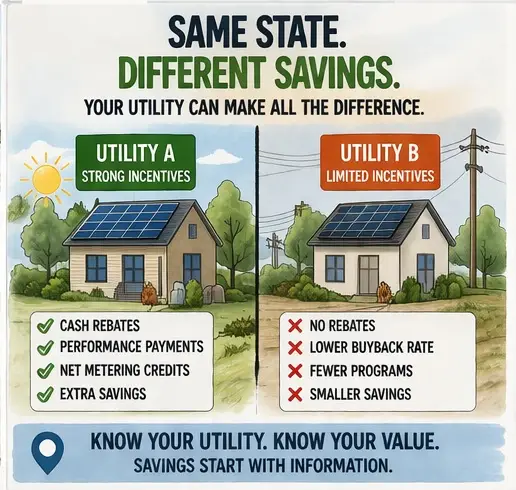
“Do I qualify for incentives?”
The better question is:
🟡 “What is solar actually worth for me?”
Here’s a Step-by-Step Checklist to Map Solar Value in the US in 2026
Before calculating solar value, it helps to understand how ROI, payback periods, incentives, and system sizing work together.
Because no matter how you look at it, solar can be a good investment, even for complete beginners.
Play the game right and your solar investment becomes an active savings mechanism in your daily life.
Step 1:
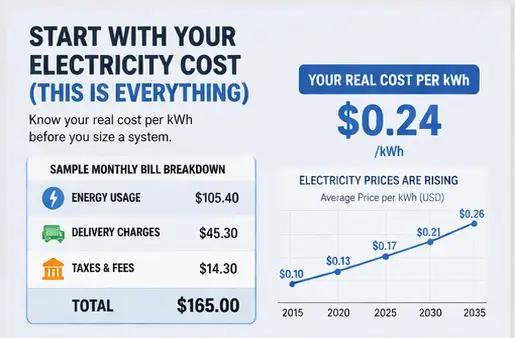
Start With Your Electricity Cost (This Is Everything)
This is the single biggest driver of solar value.
The higher your electricity rate, the more valuable solar becomes.
What You Need to Find
Look at your utility bill and identify:
- Cost per kWh (kilowatt-hour)
- Monthly usage (kWh)
Why This Matters
If you live in a high-cost state like California or Massachusetts:
🟡 Every unit of solar power you generate replaces expensive electricity
If you live in a lower-cost state like Texas:
🟡 The savings per unit are smaller — so system design becomes more important
💡 Quick Reality Check
- High electricity cost = fast payback
- Low electricity cost = slower ROI (unless incentives are strong)
Step 2:
Understand Your Utility’s Buyback Rules
This is where most people get completely misled.
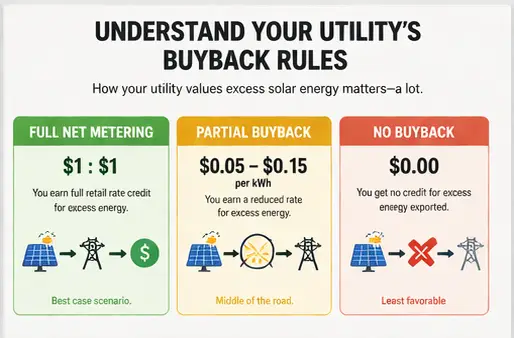
What Is Buyback (Net Metering)?
When your system produces excess energy:
🟡 Your utility may buy it back — but not always at the same rate you pay
The 3 Common Scenarios
1️⃣ Full Net Metering (Best Case)
- You get credited at the same rate you pay
🟡 This is the gold standard
2️⃣ Reduced Buyback Rate
- You sell electricity cheaper than you buy it
🟡 This reduces overall savings
3️⃣ No Buyback
- Excess energy is essentially wasted
🟡 Correct System size becomes critical here
💡 Example:
In California, newer policies have reduced buyback rates significantly.
🟡 That shifts value toward:
Step 3:
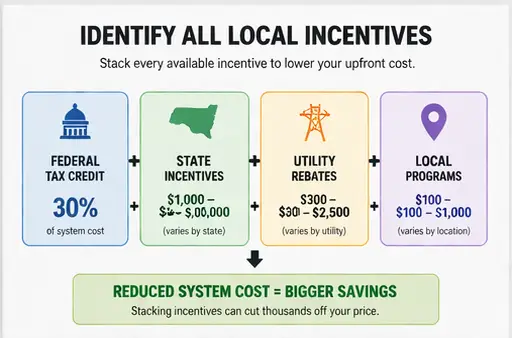
Identify All Local Incentives (This Is Where the Hidden Gold Is)
This is the part most installers gloss over.
Types of Incentives to Look For
State-Level Incentives
- Tax credits
- Rebates
- Grants
🟡 Strong in places like New York
Utility Incentives
- Installation rebates
- Performance bonuses
- Time-of-use advantages
🟡 Common in parts of Texas
Performance-Based Incentives
- You get paid for energy production
🟡 Seen in Massachusetts and New Jersey
Tax Exemptions
- No sales tax on equipment
- No property tax increase
🟡 Strong in Florida
💡 Key Insight
🟡 Incentives are rarely one big thing
🟡 They’re a stack of smaller benefits that add up
➡️ Here’s a Map:
Solar Incentives by State in 2026
Step 4:
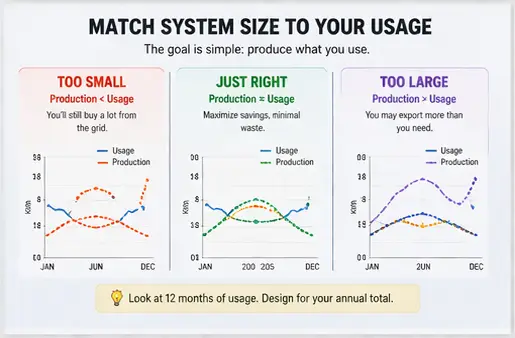
Match System Size to Your Usage (Not the Sales Pitch)
This is where most people lose money.
The Common Mistake
🟡 Oversizing the system to maximize “production”
Sounds good — but:
- Excess energy may be undervalued
- You may never recover the cost
The Smart Approach
🟡 Size your system to match:
- Daytime usage
- Buyback rules
- Future needs (EV, appliances)
💡 In states with weak buyback:
🟡 Smaller, smarter systems often outperform larger ones
Grab your last utility bill, and follow the link to the calculator, and step-by-step instructions on what to do next.
Step 5:
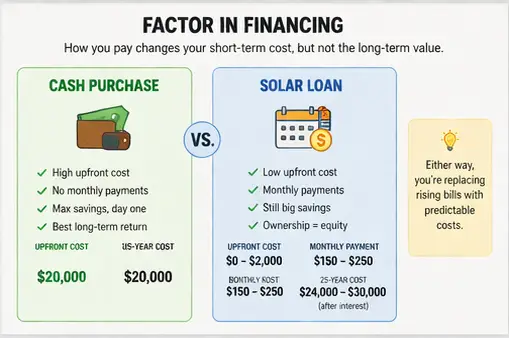
Factor in Financing
⚠️This Changes Everything⚠️
Even a perfect system can become a bad deal with poor financing.
What to Watch For
- High interest solar loans
- Long-term escalator agreements
- Hidden dealer fees
Why This Matters
🟡 Financing can erase:
- Tax credit benefits
- Incentive gains
- Monthly savings
💡 Rule of thumb:
🟡 Always compare:
- Cash purchase
- Loan scenario
- Lease/PPA option
Step 6:
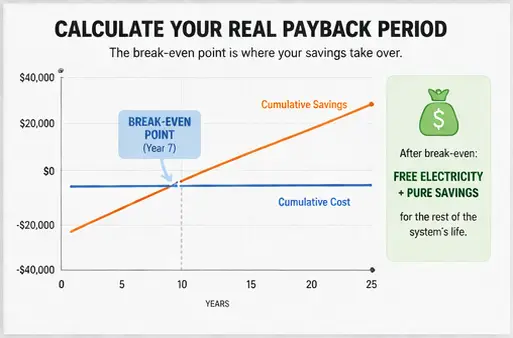
Calculate Your Real Payback Period
Now we combine everything.
Basic Formula
System Cost – Incentives – Rebates = Net Cost
Then:
Net Cost ÷ Annual Savings = Payback Period
Example
- System cost: $20,000
- Incentives: $4,000
- Net cost: $16,000
- Annual savings: $2,000
🟡 Payback = 8 years
💡 But here’s the key:
🟡 That number changes drastically by state
Calculate Your Solar Estimates
Here are the Links to the NavigatingSolar Calculators
These include step-by-step guides and explanations
Please Note: These Are Independent Calculators and are not influenced by any marketing tool or brand.
Step 7:
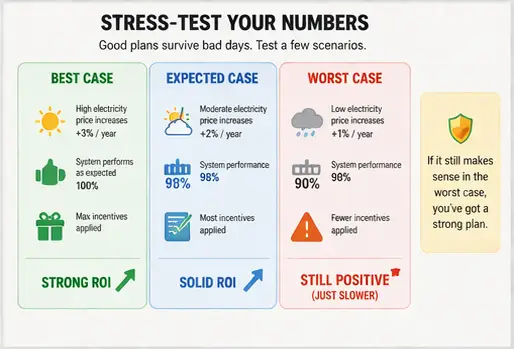
Stress-Test Your Numbers (Almost Nobody Does This)
This is your unfair advantage.
Ask These Questions
- What happens if electricity prices rise?
- What if buyback rates drop?
- What if usage increases?
🟡 A strong solar setup still works under different conditions
🟡 A weak one falls apart quickly
The Biggest Insight Most People Miss
Solar is not a product.
🟡 It’s a location-based financial system
That means:
- Incentives vary
- Utility rules vary
- ROI varies
🟡 And that’s why:
Two people can install the same system…
…and get completely different outcomes.
The Bottom Line
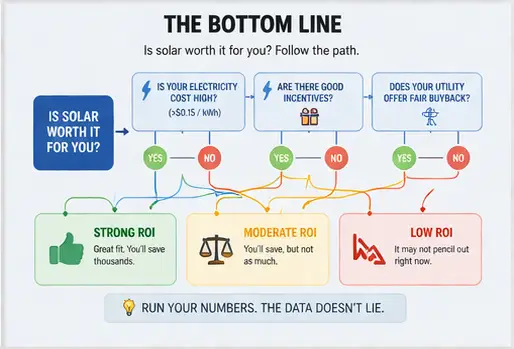
If you take one thing from this:
🟡 Stop thinking about solar as a “deal”
🟡 Start thinking about it as a calculation
Because once you understand:
- Your electricity cost
- Your utility rules
- Your local incentives
🟡 You can safely predict your estimated outcome before you spend a cent
What Comes Next
Now that you know how to calculate your real solar value:
🟡 The next step is applying it
- Comparing system options
- Avoiding bad installer setups
- Making sure your numbers actually hold up
Because in the end:
🟡 Solar isn’t about panels
🟡 It’s about making a decision that works for your specific situation
Next Steps
At NavigatingSolar we focus on understanding & clarity first, before investing in solar as an asset.
Many homeowners focus only on installation price.
But long-term solar value usually comes from:
- correct system sizing
- timing energy usage properly
- understanding TOU structures
- battery planning
- maximizing self-consumption
Solar becomes far more effective when the entire energy strategy works together.
We divide going solar into 3 phases:
Initialization → How to Size a Solar System & Prepare Your Home for Solar
Optimization → How to Maximize Solar Performance & Energy Savings
Maximization → How Solar Storage Creates Energy Independence & Long-Term Value
Pick your phase and dive right in with all the calculators and info you need to move forward with solar and energy savings!
If you are ready to speak to Verified Solar Experts in your area, here’s a tool to help you
– safely, securely and fast
Quote Requesting Tool
Connect with Local US Installers trusted by homeowners nationwide — step-by-step, practical, and pressure-free.
Affiliate Disclaimer:
This link may connect you with solar providers through our partner network.
We may earn a commission if you choose to engage — at no extra cost to you.
Why Use This Tool?
Options vary by location.
You can start by seeing which providers are actually available in your area.
✔️ Fast connection to available solar providers
✔️ Used by homeowners across the US
✔️ No obligation to move forward
✔️ Simple, guided process
✔️ Options based on your location
✔️ Explore your options at your own pace
Useful Factual Reading Material
Solar Incentives by State in 2026
US Solar Tax Credits : 2026 Updated Facts
Solar ROI Leverage : Strategy, Sequence and Timing
Solar Battery Storage: Value vs Expense
UNDERSTANDING INCENTIVES (Bonus Cheat Sheet)
Trusted Links to Official Sources
U.S. Department of Energy – Solar Energy Technologies Office
SEIA – Solar Energy Industries Association