 Navigating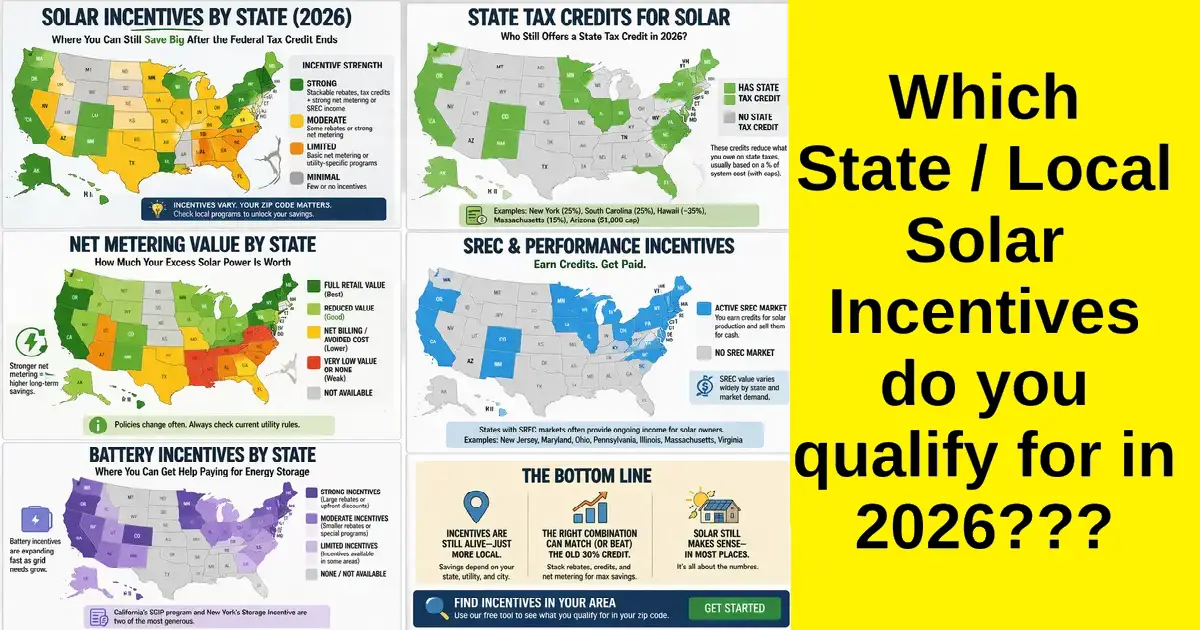
Federal ITC is gone, but State Incentives AREN’T
The Types of Solar Incentives still available (some better than the ITC)
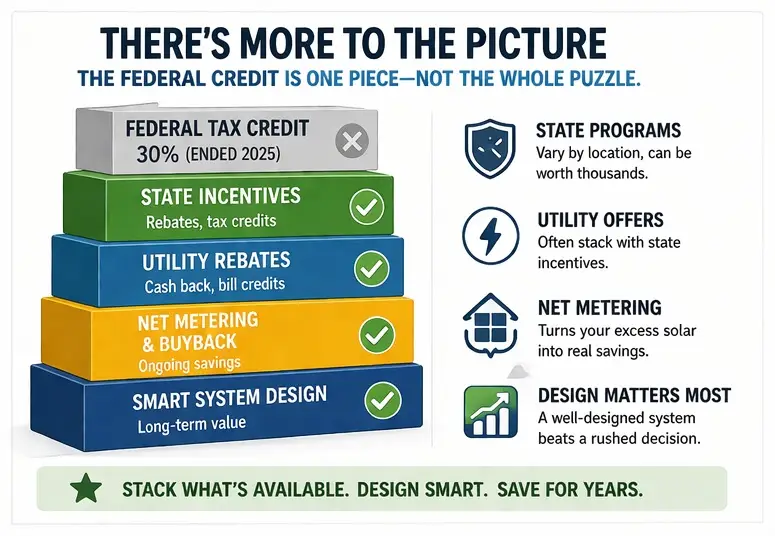
You’ve heard the 30% federal solar tax credit is no longer available for new systems after 2025, you felt the shock — and you’re not alone.
And yes — that’s a big change. But here’s what most homeowners don’t realize:
⚠️ The federal incentive was never the whole story.
The new Focus: Solar Incentives by State in 2026
Across the U.S., state programs, utility rebates, and local incentives are still very much alive — and in some cases, they can match or even exceed what the federal credit used to offer.
The problem?
These solar incentives are no longer centralized.
They’re fragmented, local, and often harder to find.
That’s exactly what this guide is here to fix.
How Solar Incentives Work Now (2026 Reality)
Before diving into the states, it’s important to understand what actually exists today.
Most solar savings now come from a mix of:
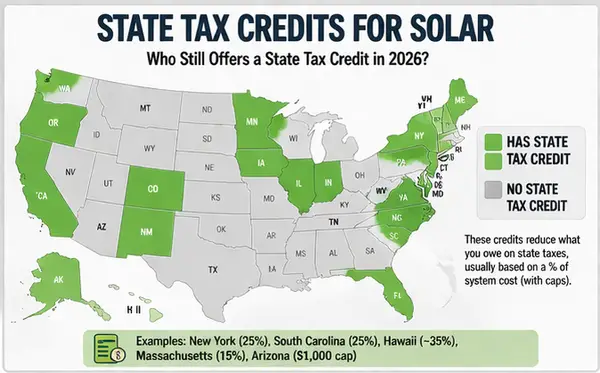
State Tax Credits
- Percentage-based credits on your installation cost
- Usually capped
- Applied when you file state taxes
US Solar Tax Credits : 2026 Updated Facts
Utility & State Rebates
- Cash-back incentives
- Sometimes paid upfront, sometimes after installation
- Often limited by funding availability
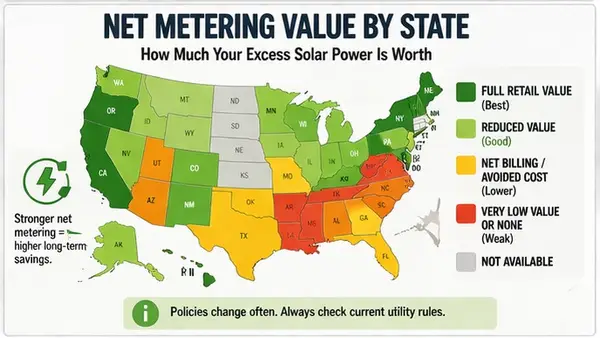
Net Metering / Net Billing
- Credits for sending excess solar power back to the grid
- Value varies significantly by state and utility
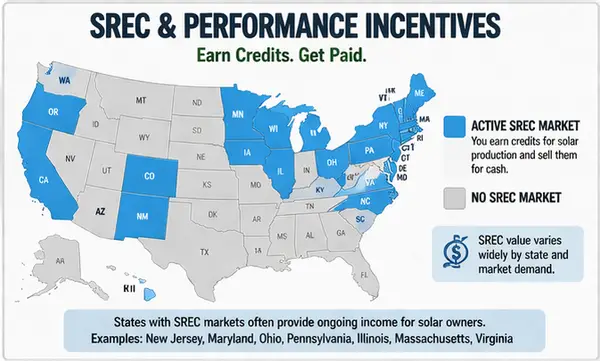
Performance Incentives (SRECs)
- You earn credits for energy your system produces
- Can be sold for cash in certain states
Tax Exemptions
- Property tax exemptions (your home value won’t increase taxes)
- Sales tax exemptions (no tax on solar equipment)
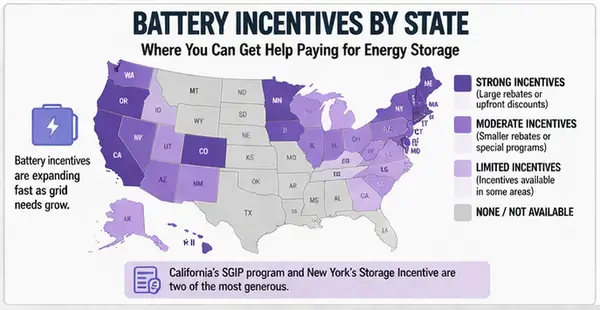
Battery Incentives
- Growing fast
- Often tied to grid support or backup programs
Remember: Batteries are more than just backup power.
➡️ Full System Protection
➡️ Better ROI & Monthly Savings
➡️ Energy Independence and Resilience
Learn more: Solar Battery Storage: Value vs Expense
Solar Incentives by State (Full 2026 Breakdown)
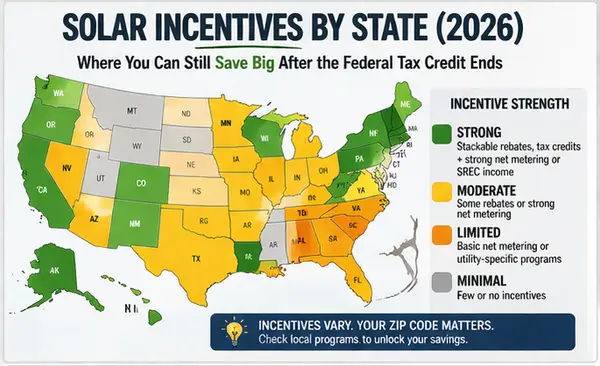
Here’s a simplified but comprehensive view of what’s available across all 50 states.
Explore Available Solar Options in Your Area
- no obligation
- compare options – get multiple quotes
- find verified installers near you
- 5-min guided process
States With the Strongest Solar Incentives
These states offer the best overall combination of rebates, credits, and long-term savings.
New York
- 25% state tax credit (up to $5,000)
- NY-Sun rebates
- Net metering / VDER
- Property + sales tax exemptions
- Battery incentives available
👉 One of the best total incentive stacks in the U.S.
Massachusetts
- SMART program (long-term payments per kWh)
- Net metering
- Tax exemptions
- Battery incentives
👉 Strong for long-term cash flow, not just upfront savings
New Jersey
- SREC-style income system (SuSI/TREC)
- Strong net metering
- No sales tax
👉 Ongoing income makes this a top-tier state
Maryland
- State grants (~$1,000)
- SREC market
- Net metering
Illinois
- Adjustable Block Program (upfront incentives)
- Net metering
South Carolina
- 25% state tax credit
- Net metering
Hawaii
- High state tax credit
- Strong ROI due to high electricity prices
States Where Incentives Depend on Your Utility
In these states, your savings depend heavily on your local provider.
Texas
- No state tax credit
- Strong utility rebates:
- Oncor Electric
- AEP Texas
- Denton Municipal Electric
- Buyback programs vary
👉 Incentives are highly localized
Minnesota
- Utility rebates and performance payments
- Xcel Energy and others offer ongoing incentives
California
- No state tax credit
- Strong battery incentives (SGIP)
- Net billing system (NEM 3.0)
👉 Shifted from solar → battery-driven value
Florida
- No income tax credit
- Full retail net metering
- Sales + property tax exemptions
👉 Simple, but still effective
Mid-Level Incentive States
These states still offer value, but not as aggressively.
- Pennsylvania (SRECs)
- Virginia (SRECs + net metering)
- Arizona (small tax credit)
- Nevada (strong net metering)
- Colorado (utility programs)
- Oregon (moderate rebates)
States With Limited Solar Incentives
These states have minimal support beyond basic net metering (if that).
- Alabama
- Mississippi
- Kentucky
- South Dakota
- West Virginia
- Wyoming
👉 Solar can still work here — but system design matters more than incentives
The Big Shift: Incentives Are Now Local
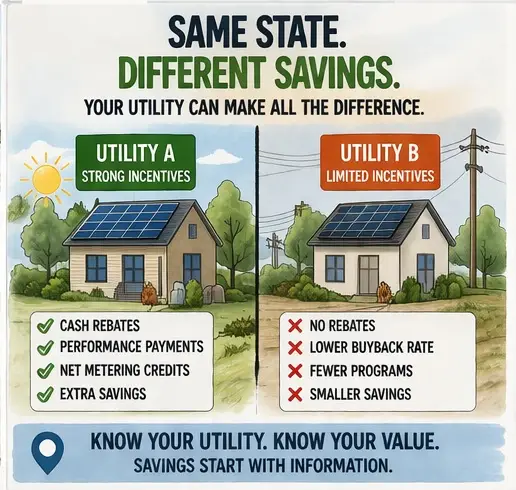
Here’s the most important takeaway:
👉 The U.S. is no longer one solar market
It’s:
- 50 different state systems
- Hundreds of utility programs
- Thousands of local variations
That means:
✔ Two homes in the same state can have completely different savings
✔ Your utility provider matters as much as your location
That’s because real solar ROI also depends on:
- utility rates
- electricity inflation
- net metering policies
- battery usage
- self-consumption habits
- system sizing accuracy
Incentives help reduce entry cost — but optimization determines long-term value.
Does Solar Still Make Sense Without the Federal Credit?
Yes — but the way you evaluate it needs to change.
The biggest drivers of savings are now:
- System design (correct sizing)
- Electricity usage patterns
- Local incentives
- Utility rate structure
Not just tax credits
The Smarter Question to Ask in 2026
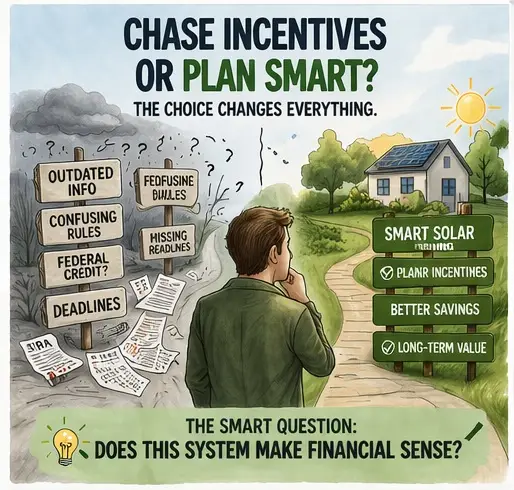
A Step-by-Step Checklist to Map Solar Value
Instead of asking:
“Do I qualify for the incentive?”
Ask:
👉 “Does this system make financial sense for me — with what’s available in my area?”
What You Should Do Next
If you’re considering solar:
- Check what incentives exist in your exact location
- Don’t rely on outdated federal messaging
- Focus on total system value, not just rebates
Remember incentives are only one part of the equation.
Before requesting quotes, it helps to understand:
- your electricity usage
- your estimated savings
- possible payback timelines
- whether batteries make sense in your area
These tools can help you establish a clearer baseline first.
The NavigatingSolar Toolkit
provides independent calculators, tools, and step-bystep guides
all in one place
to help US homeowners understand, plan, and maximize their solar investment.
We’re an independent informational resource and don’t provide solar installation, equipment or quotes directly.
So… we partnered up, to also bring you a secure Quote Request Tool
Speak to Experts who understand solar
You can start by seeing which providers are actually available in your area.
✔️ Fast connection to multiple providers
✔️ Used & Trusted by homeowners across the US
✔️ No obligation
✔️ Simple, guided process
✔️ Options based on your location
Quote Request Tool
Connect with Local US Installers trusted by homeowners nationwide — step-by-step, practical, and pressure-free.
Affiliate Disclaimer:
This link may connect you with solar providers through our partner network.
The commission we may earn, if you choose to engage — at no extra cost to you — powers these free resources.
Final Thought
The federal tax credit may be gone for new systems — but solar savings haven’t disappeared.
They’ve just become more localized, more nuanced, and more dependent on smart decisions.
And if you get those decisions right:
👉 Solar can still deliver strong, long-term value.
RECOMMENDED READS
US Solar Tax Credits : 2026 Updated Facts
Solar ROI Leverage : Strategy, Sequence and Timing