 Navigating
Summary
The US Homeowner's Solar Buying Guide
From comparing equipment and financing options to evaluating installers and understanding utility rules, this guide walks through the key decisions homeowners face before investing in solar.
What to Know Before Buying a Solar-powered Home System
How to Compare Quotes, Avoid Sales Traps, and Buy with Confidence
You’ve learned how solar panels generate electricity.
You’ve explored batteries, inverters, monitoring systems, and optimization strategies.
Now comes the part that matters most when shopping for solar:
Choosing the right solar system for your home.
This is where many homeowners feel overwhelmed. Quotes arrive with unfamiliar terminology, competing equipment recommendations, financing options, production estimates, and promises that can be difficult to compare.
The good news is that buying solar doesn’t need to feel complicated.
Most successful solar projects follow the same process:
✓ Understand your energy needs
✓ Evaluate the available technology
✓ Compare installers carefully
✓ Choose a financing strategy that aligns with your goals
The homeowners who achieve the best results aren’t necessarily solar experts.
They simply know which questions to ask before signing a contract.
This guide walks through the key decisions, common pitfalls, and practical checklists that can help you compare quotes, avoid costly mistakes, and buy with confidence.
By the end, you’ll understand exactly what to look for, what to avoid, and how to evaluate a solar proposal like an informed homeowner rather than a pressured buyer.

The Solar Buyer’s Survival Guide
Homeowner to homeowner insights on how to optimize and maximize your solar investment.
Why Some Solar Systems Deliver Great Results and Others Disappoint
Two homeowners can spend the same amount on solar and experience completely different outcomes.
The difference is rarely the panels alone.
It often comes down to:
✓ system design
✓ installer quality
✓ utility billing rules
✓ future planning
✓ equipment compatibility
✓ financing choices
The goal is not simply shopping for solar.
The goal is buying the right solar system for your home, energy usage, and long-term goals.
A good buying decision can generate savings for decades.
A poor one can create frustration, underperformance, and unnecessary costs.
Plan – Prepare – Install
🛒 The Pre-Shopping Solar Prep – The “Know Thyself” List
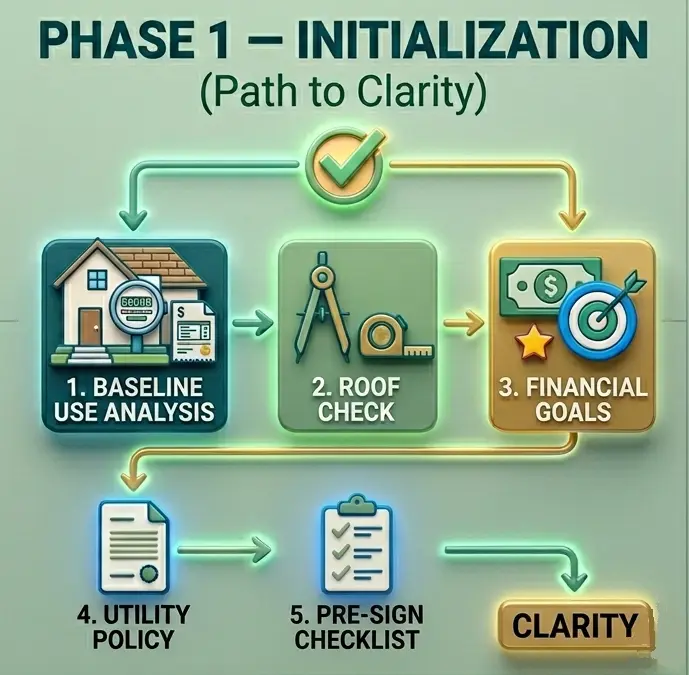
Before you even pick up the phone to call an installer, gather a few essential pieces of information about your own home and habits. This knowledge is your power—it ensures you get a system designed for your life, not a generic sales pitch.
1. Your Energy Consumption History
-
What to Gather: Collect your last 12 months of utility bills.
-
Why it Matters: This is the single most important piece of data. It tells the installer exactly how much electricity (in kWh) your home uses annually. A quality installer will use this to design a system that offsets 100% (or your desired percentage) of your usage. Beware of any solar quote that doesn’t ask for this data.
- Interactive Solar Planning Tool : The NavigatingSolar Smart Start Quiz helps you run a checklist to see your solar readiness.
2. Your Roof’s Health and Orientation
-
What to Check:
-
Age: If your roof is older than 10-15 years, consider replacing it before installing solar. Removing and reinstalling panels later is an added, unnecessary cost.
-
Shading: Note any large trees, chimneys, or neighboring buildings that cast shadows on your roof, especially between 9 AM and 3 PM. This will dictate the best inverter technology (microinverters or optimizers) for your home.
-
Direction: Which way does your main roof face? South-facing is ideal, but East/West split systems are common and highly effective.
-
3. Your Financial Goal
-
What to Decide: Understand your energy profile.
The type of energy consumer you are will determine the type of solar system you need.
Are you going solar primarily for financial savings, energy independence (backup power), or environmental impact? -
Why it Matters: This goal will determine your budget and whether you prioritize a larger system for maximum savings, or a smaller system with a battery for maximum resilience.
⚡ Not Sure How Large Your Solar System Should Be?
Your electricity bills already contain most of the information needed to estimate system size.
➡️ Use our solar sizing tools to calculate your ideal system before requesting quotes.
Affiliate Disclaimer:
This article may contain affiliate links. The options link to carefully selected educational resources and trusted partners. NavigatingSolar independently researches products and selects partners based on how well they fit our educational framework, not simply because they offer commissions. We only feature products and services that support the decision-making process described throughout NavigatingSolar, helping you compare solutions with greater confidence.
🛒 The Solar Product Selection – The “What to Buy” List
You don’t need to be an engineer, but you do need to know the language of quality. This is a quick recap of the key components and the non-negotiable features you should be looking for.
| Component | Key Metric to Ask About | Why it Matters |
|---|---|---|
| Solar Panels | Tier 1 Manufacturer | Ensures the company is financially stable enough to honor the 25-year warranty [1]. |
| Performance Warranty | Look for a guarantee of 85% or more of original output after 25 years. | |
| Technology | Ask for Half-Cut Cells and PERC technology for better shading performance and efficiency. | |
| Inverter | Type (Micro vs. String vs. Hybrid) | Microinverters or Power Optimizers are essential for any roof with shading or complexity. |
| Hybrid Capability | If you plan to add a battery ever, ensure the inverter is Hybrid-ready to save on future costs and maximize efficiency [2]. | |
| Battery | Usable Capacity (kWh) | This is how much energy you can actually use for backup. |
| Depth of Discharge (DoD) | Look for 90% or higher to maximize your usable storage. | |
| Chemistry | LFP (Lithium Iron Phosphate) is the current gold standard for home safety and longevity [3]. |
📌 The Shopping List Summary: You are shopping for a system that is efficient, resilient, and backed by long-term warranties from reputable companies. Don’t settle for less than Tier 1 panels and a modern inverter solution.
Solar Planning Strategy: Buy for Tomorrow, Not Just Today
Solar systems often remain in service for 25 years or more.
During that time many homeowners eventually add:
✓ battery storage
✓ EV charging
✓ heat pumps
✓ electric water heating
✓ smart energy management and automation
Planning for these future upgrades during the initial installation can prevent expensive modifications later.
Even if you are not ready for batteries today, choosing battery-ready equipment may provide valuable flexibility in the future.
Click to see the full List of Upgrades That Give The Biggest ROI
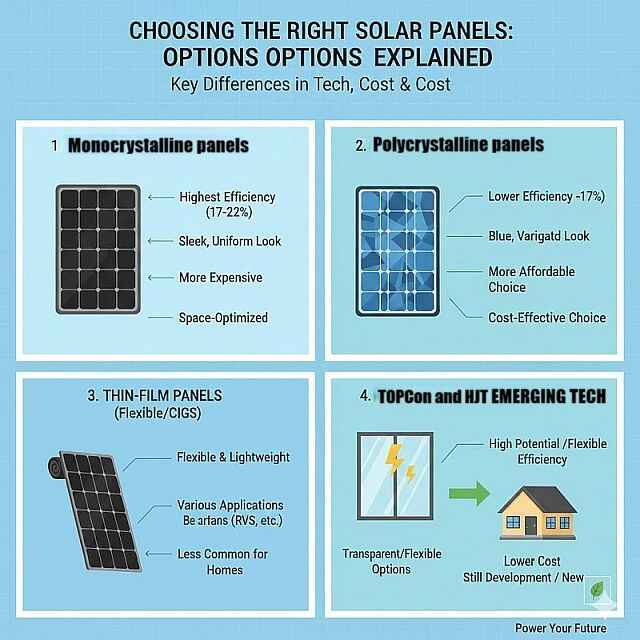
Click to see the full Solar Panel Comparison Chart
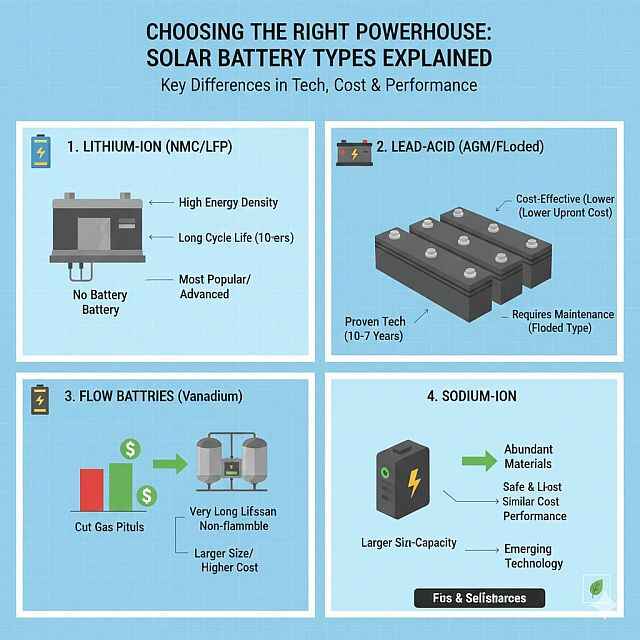
Free Resource: Homeowner’s Guide to Choosing a Solar Battery
Compare complete solar kits, panels, batteries, inverters, mounting systems and accessories from multiple manufacturers before requesting quotes.
→ Explore the Solar Marketplace
Modular Solar Systems vs Traditional Solar Installations
Not all solar systems are built the same way.
Traditional solar installations are typically designed and installed by a solar company. The installer assesses your home, calculates your energy needs, selects the equipment, obtains permits, and manages the installation process from start to finish. This approach is ideal for homeowners who prefer a hands-off experience and want a complete, professionally designed system.
Modular solar systems take a different approach.
Modular systems appeal to homeowners who value flexibility, future expansion, portability, phased purchasing, or greater control over equipment selection.
Instead of purchasing a fully customized installation upfront, you build your energy system around expandable components such as batteries, inverters, solar panels, and smart energy management devices. Many modular systems can start small and grow over time as your energy needs or budget change.
Before talking to installers, spend a little time exploring what’s available on the market.
Looking at complete systems, individual components and different brand compatibilities make it much easier to understand the recommendations you’ll receive later.
Understand how each system links to your home and utility, before settling on product choice.
Explore what these systems look like, how they work and what the modules are for each.
Here’s a visual aid:
Steps: Follow the link below – Choose a system (hybrid, grid-tied or off-grid) – Choose a size – Hover over the product image and see how it transforms into a home energy system.
➡️ See how it works
Traditional Solar Installation
✓ Professionally designed and installed
✓ Single project completed at one time
✓ Permits and utility paperwork often handled for you
✓ Ideal for homeowners seeking a complete turnkey solution
Modular Solar System
✓ Expandable over time
✓ Greater flexibility and equipment choice
✓ Can be professionally installed or owner-managed
✓ Often suitable for backup power, energy independence, cabins, workshops, RVs, and off-grid applications
Neither approach is automatically better.
The right choice depends on your budget, goals, property, and how involved you want to be in managing your energy system.
Some homeowners prefer the simplicity of a professionally installed system, while others appreciate the flexibility and scalability that modular energy ecosystems provide.
Before Choosing a Modular or DIY Solar System
Modular and DIY solar systems can offer excellent flexibility and allow you to expand your energy setup over time. However, it is important to understand that the equipment price is often only one part of the total project cost.
When comparing systems online, remember to budget for additional items that may not be included in the advertised price:
✓ Electrical installation and labor
✓ Main panel upgrades (if required)
✓ Transfer switches and critical load panels
✓ Disconnects, breakers, conduit, and wiring
✓ Roof mounting hardware and structural considerations
✓ Permits and inspections where required
✓ Shipping and delivery costs
✓ Monitoring equipment and communication devices
✓ Future expansion components
Even homeowners who plan to install portions of the system themselves often hire a licensed electrician for final connections, panel work, permitting requirements, or utility interconnection.
Before making a final decision, remember that equipment specifications tell only part of the story.
Warranty coverage, support options, and long-term serviceability can be just as important as battery capacity, power output, or upfront cost.
The goal is not to discourage a modular or DIY approach.
Many homeowners successfully build systems that cost less than traditional installations while gaining greater flexibility and control.
The key is comparing total project costs rather than equipment prices alone.
A battery, inverter, or solar kit may be only one part of the investment required to create a safe, reliable, and code-compliant energy system.
The First Big Question: Which Solar Path Fits You Best?
Not every homeowner approaches solar the same way. Choose the path that best matches your goals, budget, and level of involvement.
Option 1: Fully Managed Installation (Hands-Off)
“I don’t want to hassle with hardware and technicalities.”
Prefer to leave the planning, equipment selection, permits, and installation to professionals?
Compare multiple quotes from verified installers and discuss system design, battery options, financing, and expected savings before making a decision.
➡️ Request Multiple Installer Quotes
Option 2: Guided Equipment Selection (Modular Ecosystem)
“I want to choose hardware but not engineer everything.”
Want more control over the equipment you choose without designing every part of the system yourself?
Explore complete solar and battery ecosystems that can be professionally installed or expanded over time.
Compare panel mounting options, storage and backup power, energy management, and smart home integration options.
➡️ Explore Modular Solar Solutions
Option 3: Build at Your Own Pace (DIY & Off-Grid)
“I want complete control and will learn as I go.”
Prefer maximum flexibility?
Research components, learn system design, and build your solar setup gradually as your needs, budget, and experience grow.
Ideal for off-grid properties, remote locations, workshops, cabins, and hands-on homeowners and homesteaders.
This solution is often packaged as a similar kits for RVs, camping or outdoor adventures and small-space solutions.
➡️ Explore DIY Solar Resources
Compare Equipment Before You Compare Quotes
The cheapest quote is not always the best value, the biggest system don’t necessarily create the most savings
Two systems may appear similarly priced while offering very different long-term performance and support.
Understanding what is included is often more important than focusing on the final number.
When comparing proposals, evaluate:
• system size (kW)
• estimated annual production
• panel manufacturer
• inverter type
• battery compatibility
• workmanship warranty
• monitoring capabilities
• projected payback period
One of the easiest ways to spot a good installer quote
…is to know roughly what the equipment actually looks like in the marketplace.
Rather than relying on a single proposal, spend a few minutes comparing:
* panels
* inverters
* batteries
* mounting systems
* HVAC
* EV chargers
* complete solar kits
Seeing multiple manufacturers side by side makes installer recommendations much easier to understand.
→ Start Comparing Equipment Here
Why You Should Never Compare Solar Quotes on Price Alone
The cheapest quote is not always the best value.
When comparing proposals, evaluate:
• system size (kW)
• estimated annual production
• panel manufacturer
• inverter type
• battery compatibility
• workmanship warranty
• monitoring capabilities
• projected payback period
Two systems may appear similarly priced while offering very different long-term performance and support.
Understanding what is included is often more important than focusing on the final number.
🛒 Choosing The Installer – The “Who to Hire” List
The installer is the most critical part of the process. A great system poorly installed is a poor system. A great installer can make a good system perform brilliantly. Get at least three quotes.
Here are the non-negotiable questions to ask every potential installer.
This is your ultimate checklist for separating the professionals from the fly-by-nights [4] [5].
1. The Experience and Credentials Check
-
“How long have you been in business, and how many systems have you installed in my area?”
-
Goal: Look for a company with a proven track record, ideally 5+ years in business. Solar is a long-term investment; you need a company that will be around to service the warranty.
-
-
“Are you licensed, bonded, and insured in this state/region?”
-
Goal: Demand proof. This protects you from liability if an accident occurs on your property.
-
-
“Do you use your own in-house crews, or do you subcontract the installation?”
-
Goal: In-house crews generally mean better quality control and accountability. Subcontracting isn’t always bad, but it adds a layer of complexity.
-
2. The Warranty and Guarantee Check
-
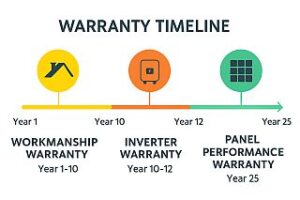
“What is your workmanship warranty, and for how long?”
-
Goal: This covers the installation itself (e.g., roof leaks, wiring issues). Look for a minimum of 10 years.
-
-
“Do you offer a production guarantee?”
-
Goal: This is a promise that the system will produce a minimum amount of energy (kWh) annually. If it falls short, the installer compensates you for the difference. This shows confidence in their design.
-
-
“Who handles the warranty claims—you or the manufacturer?”
-
Goal: A full-service installer will handle the entire process for you. If they tell you to call the panel manufacturer directly, that’s a red flag for poor customer service.
-
3. The Design and Monitoring Check
-
“Can you show me the design software model that accounts for shading on my roof?”
-
Goal: A professional installer uses sophisticated software (like Aurora or Helioscope) to model your roof and account for shade. They should be able to show you exactly where the panels will go and why.
-
-
“What kind of monitoring system is included, and what data will I see?”
-
Goal: You should have access to an app that shows real-time production. If you have microinverters or optimizers, you should demand panel-level monitoring.
-
Solar Sales Red Flags to Watch For
When shopping for solar, remember, not every quote is created equal.
Be cautious if an installer:
❌ refuses to explain system sizing
❌ guarantees unrealistic savings
❌ pressures you to sign immediately
❌ avoids discussing shading
❌ cannot explain monitoring tools
❌ refuses to provide equipment specifications
❌ provides only one financing option
❌ dismisses questions about warranties
A professional solar installer should welcome questions and explain recommendations clearly.
If something feels rushed or confusing, seek additional quotes before making a decision.
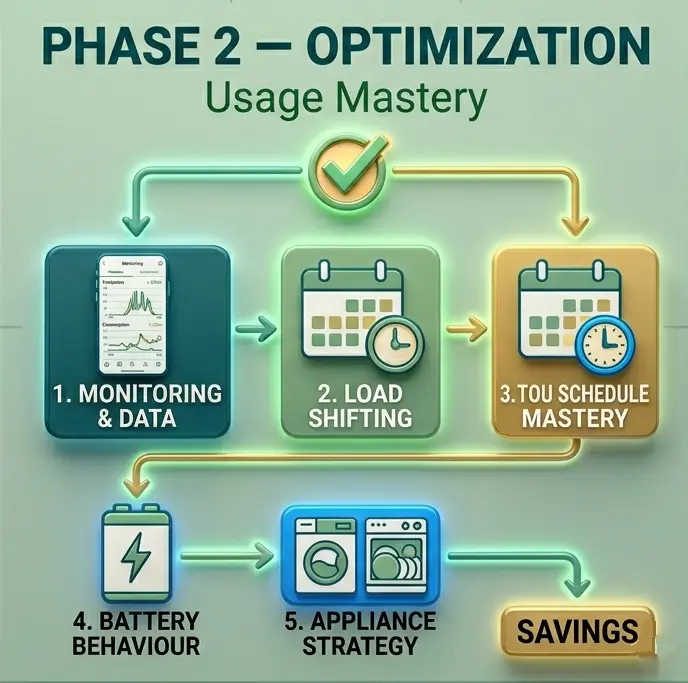
🏡 Ready to Take the Next Step?
Step 1: Download the Solar Buyer’s Survival Guide
Step 2: Go to Navigatingsolar: Phase 1: Initialization
work through the planning checklists, estimate your system requirements.
Step 3: Visit the Resources page,
to learn how to choose & compare trusted installer quotes with confidence.
The Solar Buyer’s Survival Guide
Homeowner to homeowner insights on how to optimize and maximize your solar investment.
🛒 The Financial Strategy – The “How to Pay for Solar” List
Once you have your quotes, the final decision is how to pay for your system. This choice impacts your long-term savings, tax benefits, and home equity.
| Financing Option | Ownership | Upfront Cost | Tax Credit (ITC) | Best For… |
|---|---|---|---|---|
| Cash Purchase | You | Highest | You claim the full credit. | Maximizing long-term savings and return on investment (ROI). |
| Solar Loan | You | Low/None | You claim the full credit. | Homeowners who want ownership and tax benefits without the upfront cost. |
| Power Purchase Agreement (PPA) | Installer/Third Party | None | Third party claims the credit. | Homeowners who want to go solar with $0 down and simply pay a fixed rate per kWh. |
| Solar Lease | Installer/Third Party | None | Third party claims the credit. | Similar to a PPA, but you pay a fixed monthly “rent” for the equipment, regardless of production. |
📌The Consumer Takeaway:
Ownership (Cash/Loan): If your goal is to maximize your financial return and increase your home’s value, ownership is the clear choice. You claim the valuable solar tax credits and own the asset.
Third-Party (PPA/Lease): If your goal is to go solar with absolutely no upfront cost and no responsibility for maintenance, a PPA or Lease can be a good option, but you sacrifice the tax credit and the highest long-term savings [6]
When Going Solar, Your Utility Company Still Matters
Many homeowners focus entirely on equipment specifications while overlooking the utility billing structure that ultimately determines savings.
Important factors include:
• net metering rules
• export compensation rates
• Time-of-Use pricing
• fixed utility charges
• demand charges (where applicable)
Solar panels generate electricity.
Utility billing rules determine how much that electricity is worth.
Understanding both sides of the equation helps maximize long-term value.
🏛️ Solar Permits, Rules & Why Installation Isn’t Just a Purchase
Solar is an asset, an investment with long-term value – you are not just shopping for the next new gadget or appliance. Installing solar is not a simple product purchase — it is a regulated energy system connected to the electrical grid.
That means every system must comply with local rules before it can operate.
Most homeowners are surprised to learn that solar installations typically require:
- Building permits from your local authority
- Electrical compliance inspection
- Utility interconnection approval
- Final “Permission to Operate” (PTO) from the utility company
- In some cases, HOA approval
These steps ensure your system is safe, grid-compatible, and legally connected.
📌 This is why the solar installation process is just as important as the equipment itself.
⚙️ Who Handles Solar Permits and Approvals?
The good news: you are not expected to manage this alone.
In a properly managed installation, your installer handles most of the administrative process.
Installer is responsible for:
- Submitting solar permit applications
- Designing the system for code compliance
- Handling utility interconnection paperwork
- Coordinating inspections
- Managing PTO approval process
Homeowner is responsible for:
- Providing utility bills and property details
- Reviewing and approving system design
- Signing permit authorization forms
- Allowing access for inspections if required
📌 If an installer asks you to manage permits yourself, treat that as a warning sign. This also does not mean you should not pay attention. Double-check to make sure you have all the permits and paperwork in order.
A professional solar installation process should feel guided, not chaotic.
🔌 Utility Approval: The Final Step Before Activation
Even after installation is complete, your system is not fully “live” until your utility company completes final approval.
This usually includes:
- Meter inspection or replacement
- Grid connection approval
- Permission To Operate (PTO) issuance
Until PTO is granted:
- your system may be limited or inactive
- export to the grid may be restricted
- monitoring may show partial functionality
This is a normal part of the solar approval process, not a delay or problem.
🏡 Selling a Home With Solar Panels
Solar can increase home value — but how smooth the sale is depends on system ownership.
✔️ Owned solar systems (cash or loan)
- Typically increase property value
- Transfer automatically with the home
- Lower electricity bills become a selling point
- Cleanest option for real estate transactions
⚠️ Leased systems / PPAs
- Contract must be transferred to buyer
- Buyer must qualify for agreement
- Can slow down or complicate home sales
- Requires additional paperwork during closing
📌 In most cases, owned solar systems are significantly easier to sell and more attractive to buyers.
You can read more about shared solar here:
➡️ Community Solar and VPPs
🧭 Where to Check Solar Installation Rules
Before committing to a system, homeowners should understand local requirements by checking:
- Your city or municipal building department (solar permits section)
- Your utility company’s “interconnection requirements” page
- State or regional renewable energy regulations
- Your installer’s compliance breakdown
A reputable installer should already be fully aligned with these rules and able to explain them clearly.
🔎 Related Home Solar Guides
Download & Collect your free solar guides from the NavigatingSolar Library
- Solar Buyer’s Guide
- Solar Optimization Strategies
- Solar Savings Ecyclopedia
- Solar Battery Storage Explained
💡 Key Takeaway
Solar isn’t just about panels and inverters — it is a regulated system tied to your utility company and local compliance rules.
Understanding the solar installation process, permit requirements, and utility approval steps ensures:
✔️ smoother installation
✔️ fewer delays
✔️ and a system that is fully operational from day one
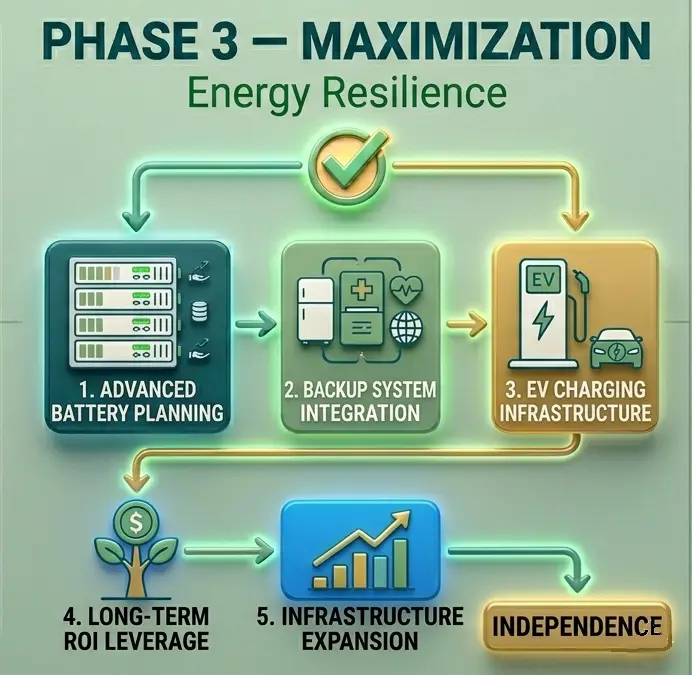
📈 Solar Savings Depend on More Than Panels
Timing, billing rules, exports, batteries, and energy usage patterns all influence your final savings.
➡️ Learn how homeowners maximize solar value after installation.
The Goal Isn’t Perfection. It’s Confidence.
Most homeowners don’t become solar experts before buying a system.
They simply learn enough to ask better questions.
Once you understand:
✓ your energy usage
✓ your equipment options
✓ your installer’s recommendations
✓ your utility billing structure
the process becomes dramatically easier.
Solar should never feel like guesswork.
The more informed you become, the easier it is to recognize quality, compare proposals, and make decisions with confidence.
A Free Online Resource :
An Independent Solar Research & Planning Toolkit for Homeowners
NavigatingSolar.com
Offering independent solar calculators, step-by-step e-guides and interactive online tools,
designed to help our readers through all 3 phases of going solar – Initialization, Optimization, and Maximization.
From where and how to start, to maintenance and monitoring, solar and finances, right through to what the next upgrade/advancement should be – we cover it all!
Before buying solar, or speaking to installers:
Use the Navigating Solar Toolkit to calculate estimated system size & cost, savings, Payback timeline and ROI, battery capacity and more.
How Ready are You to Shop for Solar?
✔️Check your solar readiness here.
✔️Calculate your estimated Annual Savings, ROI, and Payback period
✔️ Estimate your system size & cost.
✔️ Know which solar incentives apply to your address?
✔️Plan for future expansion, like battery storage
✔️Vet your installer thoroughly.
For step-by-step guidance, you can use the tool below:
Quote Request Tool
Connect with Local US Installers trusted by homeowners nationwide — step-by-step, practical, and pressure-free.
Affiliate Disclaimer:
This link may connect you with solar providers through our partner network.
We may earn a commission if you choose to engage — at no extra cost to you.
Frequently Asked Questions When Shopping For Solar
How many solar quotes should I get?
Most homeowners should obtain at least three quotes before making a decision. Comparing multiple proposals helps identify differences in pricing, equipment, warranties, and system design.
Is the cheapest solar quote the best option?
Not necessarily. Equipment quality, warranties, installer reputation, monitoring features, and future upgrade compatibility often justify higher pricing.
Should I buy a battery with my solar system?
That depends on your goals. Batteries provide backup power, improve self-consumption, and can reduce peak electricity costs under Time-of-Use pricing.
How do I know if my roof is suitable for solar?
Roof condition, orientation, shading, and available space all influence solar suitability. A professional site assessment can identify potential limitations.
What information should I gather before requesting quotes?
At minimum:
• 12 months of utility bills
• roof age information
• future energy plans
• backup power goals
The Solar Buyer’s Survival Guide
Homeowner to homeowner insights on how to optimize and maximize your solar investment.
Related Articles:
Solar Incentives by State in 2026
US Solar Tax Credits : 2026 Updated Facts
Solar Battery Storage: Value vs Expense
Solar Mistakes, “Hidden Costs” and Myths are Marketing BS
Which Type of Solar Consumer Are You?
References
[1] Solar Choice. “What is a “Tier 1” solar panel? Tier 2 or 3?” Solar Choice Blog.
[2] SRNE Solar. “String vs Micro vs Hybrid: Which Type of Solar Inverter Is Best.” SRNE Solar Blog.
[3] Anern Store. “LFP vs. NMC Safety: A Deep Dive Into Battery Chemistries.” Anern Store Blog.
[4] ASES. “40 Questions to Ask an Installer.” American Solar Energy Society.
[5] SolarReviews. “Key Questions To Ask Solar Companies Before You Go Solar.” SolarReviews Blog.
[6] Aurora Solar. “Your Solar Finance Primer: What to Know About the Top Four Solar Financing Options.” Aurora Solar Blog.