Navigating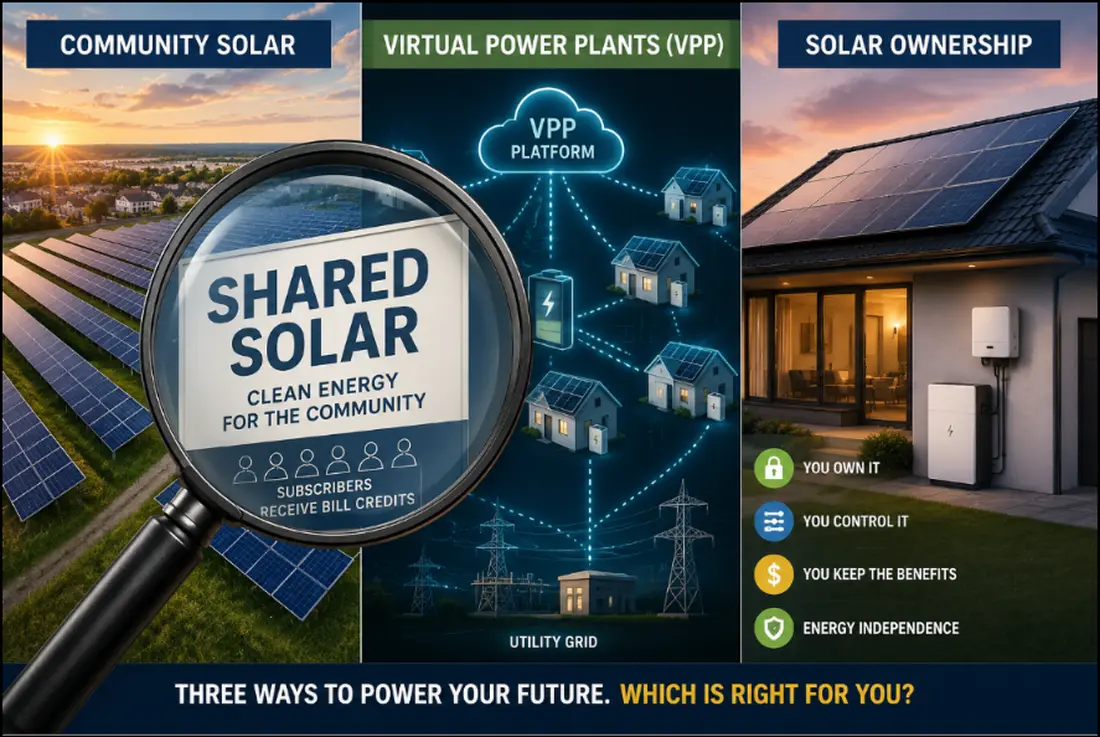
Summary
This collective energy is what drives innovation, ensures fair policy, and ultimately makes the transition to a sustainable future possible.
💚 Embrace your Solar community. 🎓 Share your knowledge. 🌞 Let’s power on together!
Community solar is often presented as a simple idea:
“Join a solar farm, get cheaper electricity, support clean energy.”
And in many cases, that’s technically true.
But depending on where you live, how the program is structured, and what contract you sign, it can feel very different in practice — from a genuinely useful option… to a confusing subscription tied to your electricity bill.
This article breaks down how community solar actually works, why it exists, where it helps, and where people disagree — without trying to sell you a position.
What Community Solar Actually Is (Mechanics First)
Community solar does not mean shared ownership of solar panels.
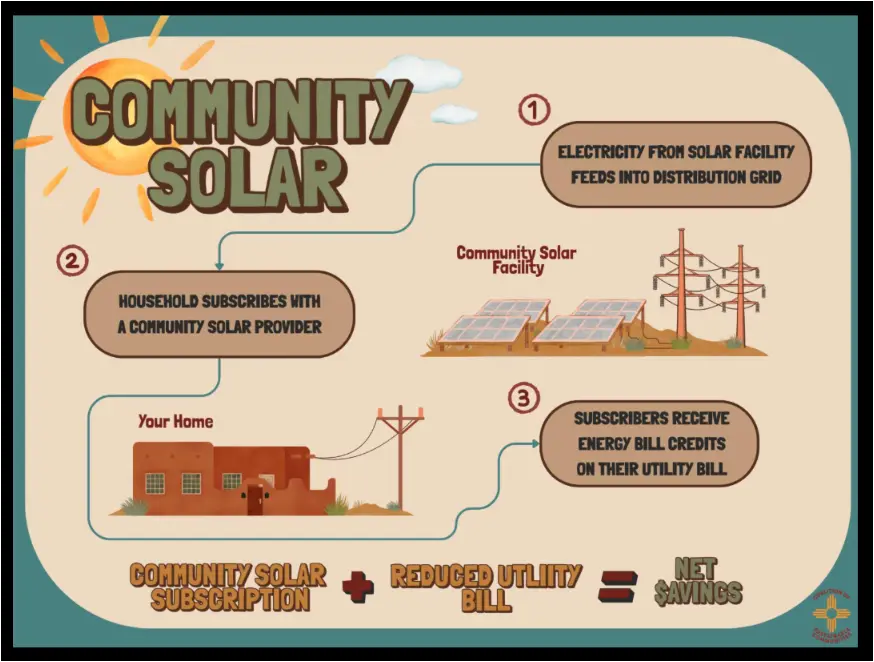
Instead, it is usually a subscription model:
- A large solar farm is built off-site (often ground-mounted or on commercial roofs)
- You subscribe to a portion of its energy output
- That energy is fed into the grid
- Your utility bill is credited based on your share of production
In most cases:
You are not using “your electricity” directly. You are receiving financial credits based on shared generation.
The physical electricity still flows into the grid like all other power sources.
Why Community Solar Exists
Community solar didn’t emerge as a lifestyle trend — it emerged as a workaround.
It exists because many people cannot install rooftop solar due to:
- renting or apartment living
- shaded or unsuitable roofs
- HOA restrictions
- upfront installation costs
- structural or ownership limitations
- you rent or move frequently
- you want low-commitment participation
Community solar attempts to solve part of that problem by allowing multiple participants to benefit from shared solar generation projects without needing to install panels directly on their own homes.
In many ways, these programs reflect a broader shift happening across the energy landscape — where participation in renewable energy is slowly becoming more flexible, distributed, and accessible beyond traditional ownership model
At the same time, governments and utilities need to expand renewable energy capacity without rebuilding every home system individually.
So community solar becomes a middle layer:
A way to distribute renewable energy participation without requiring individual installations.
How the Money Flow Actually Works
This is where things become less obvious.
Behind the scenes, the structure usually looks like this:
- A developer builds and owns the solar farm
- The energy is fed into the utility grid
- Subscribers are assigned a share of production
- Utility bill credits are issued based on that share
- A discount is applied (in many, but not all, cases)
Your savings depend on:
- contract design
- credit rate vs retail electricity price
- administrative fees
- utility billing structure
The savings can be real — but they are not universal, fixed, or guaranteed.
Community Solar Is Not the Same Everywhere
One of the most important things to understand about community solar is that programs vary significantly depending on location, utility providers, regulations, and project structure.
Some programs operate through utility companies, while others are managed by private developers or energy cooperatives.
Savings structures, subscription terms, cancellation policies, availability, and long-term benefits can differ widely between programs and states.
Before joining any community solar project, it is important to review:
- contract terms
- participation requirements
- billing structure
- cancellation policies
- expected savings estimates
- and who manages the program itself
Community solar can provide useful access to renewable energy in the right circumstances — but like any energy agreement, understanding the details matters.
Where People Disagree About Community Solar
Community solar is widely supported in policy circles, but debated in practice.
✔️ Supporters argue:
- it increases access to renewable energy
- it helps renters and non-homeowners participate
- it avoids upfront installation costs
- it supports grid-scale renewable expansion
⚠️ Critics argue:
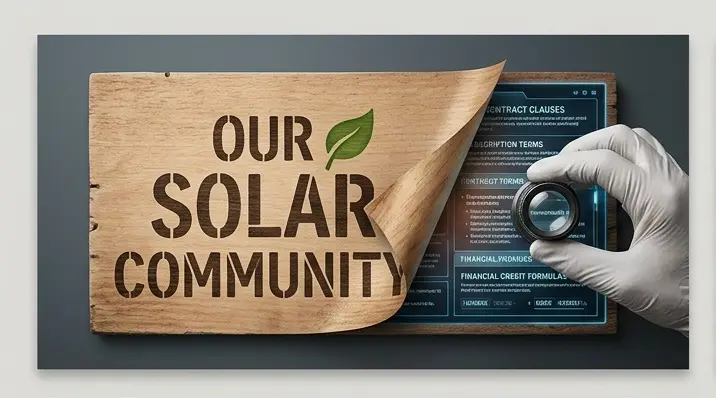
- “community” is misleading branding in many cases
- consumers don’t control generation or infrastructure
- savings depend heavily on contract design
- exit conditions and terms vary significantly
- transparency is inconsistent across programs
The disagreement is not about solar itself — it is about how transparent and consistent the participation model actually is.
🧾 Questions to Ask Before Joining Any Program
Before entering a community solar agreement, it’s worth understanding:
- What exactly is the discount structure?
- Is the rate fixed or variable?
- What fees are included?
- How long is the contract?
- What happens if you move?
- Are there exit penalties?
- Who owns and manages the solar farm?
These details often matter more than the marketing description.
🔋 Where Rooftop Solar Still Has the Advantage

Community solar and rooftop solar are often discussed together, but they solve different problems.
Despite its accessibility benefits, community solar does not replace rooftop systems.
Rooftop solar systems with storage typically offer:
- direct ownership of energy generation
- potential to reduce and offset consumption
- potential to export surplus energy back into the system
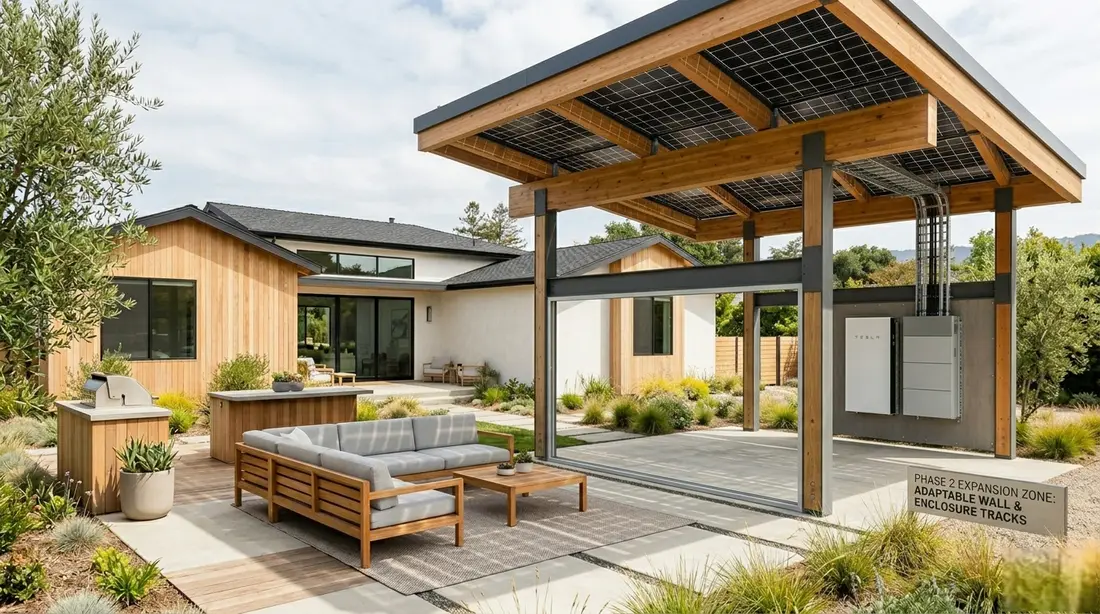
- backup power during outages (with batteries)
- long-term cost predictability
- higher energy independence
Community solar generally does not provide:
- household backup power
- energy storage
- physical control over generation
In simple terms: one prioritizes access. The other prioritizes control.
Community Solar vs Energy Independence
Community solar is generally designed to increase access to renewable energy participation and potential utility savings without requiring homeowners to install their own systems.
In contrast to shared solar, self-managed solar systems with battery storage allow homeowners to control, store, and prioritize their own energy usage more directly.
Neither approach is automatically better for every situation.
The right choice depends on factors such as:
- property ownership
- budget
- energy goals
- grid reliability
- location
- and how much control you want over your energy system long term.
Understanding these differences helps create more realistic expectations around what each type of solar participation can and cannot provide.
⚡ The Missing Middle: Becoming an Energy Producer
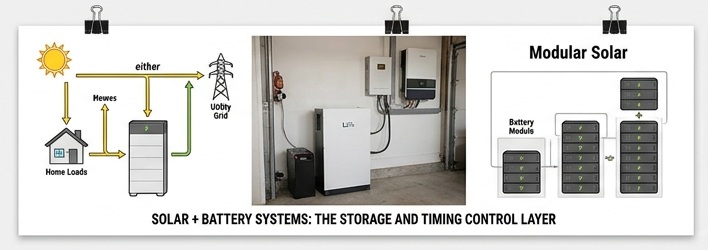
Rooftop solar systems are not just about reducing consumption — they can also become small-scale energy production assets.
When a household generates more electricity than it uses, that excess power can often be exported back to the grid, depending on local utility rules and infrastructure.
This introduces a third role in the solar ecosystem:
- Community solar participants → energy consumers via subscription
- Rooftop solar owners → energy self-users
- Rooftop solar owners with excess generation → energy producers
🧾 How excess energy typically works
Depending on the region, surplus energy may be:
- credited back through net metering systems
- compensated at a fixed feed-in tariff
- rolled over as future bill credits
- or in some cases, exported without meaningful compensation structures
This means rooftop solar can function not only as a cost-reduction system, but also as a micro-generation asset feeding energy back into the wider grid.
And this leads us to the next part of our discussion:
🔋 Virtual Power Plants (VPPs): When Your Home Becomes Part of the Grid
The Missing Layer Between Community Solar and Rooftop Solar
Most explanations of solar energy options present a simple choice:
- join a community solar program
- or install rooftop solar
But this leaves out an increasingly important middle layer in the modern energy system.
Not all solar participation is passive. And not all ownership is fully independent.
Between subscription-based community solar and fully self-managed rooftop systems, there is a third category emerging: active grid participation systems.
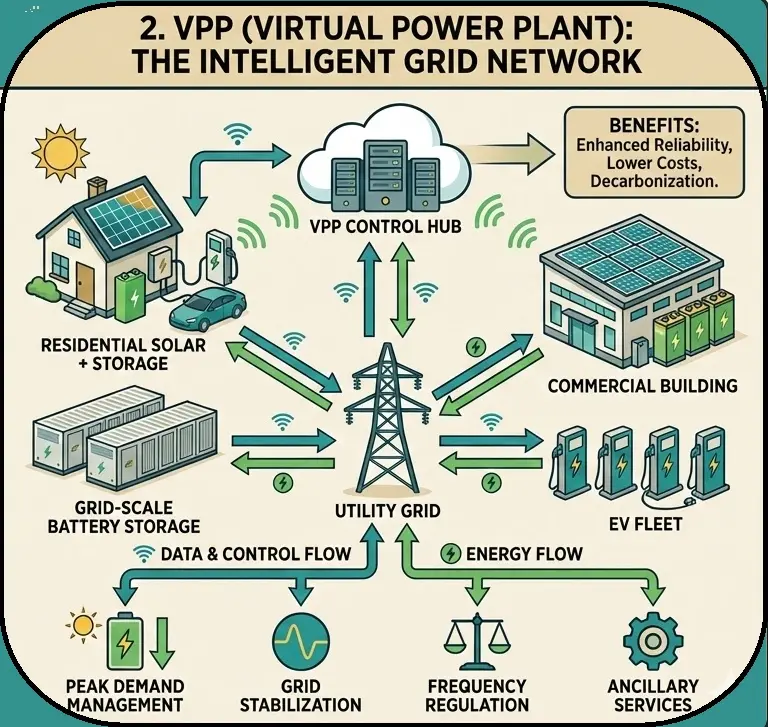
A Virtual Power Plant (VPP) is not a physical power station.
Instead, it is a network of connected home energy systems — usually combining: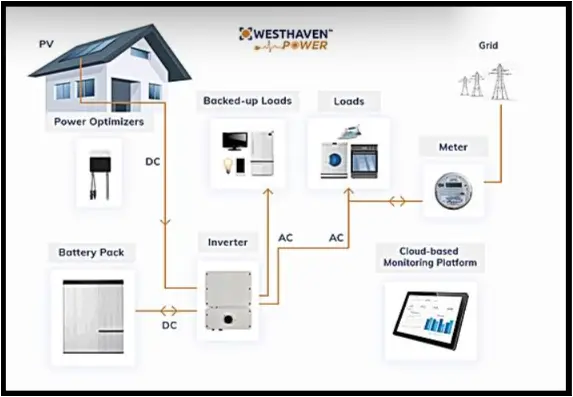
- rooftop solar
- home battery storage
- sometimes electric vehicles or smart appliances
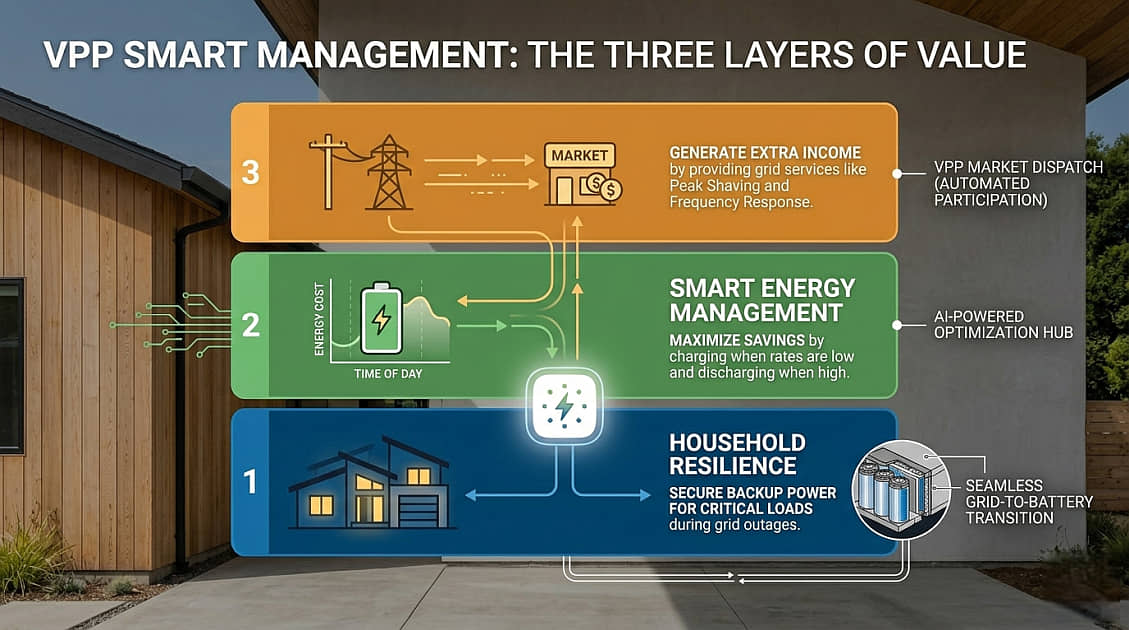
These systems are coordinated through software platforms that can adjust when energy is stored, used, or exported.
In simple terms:
A VPP turns thousands of individual homes into a coordinated, responsive energy network.
⚙️ How VPPs differ from community solar
While community solar is primarily about receiving credits for shared generation, VPPs are about actively participating in energy flow and timing.
With a VPP:
- your system may discharge energy during peak demand periods
- your battery may be charged when grid demand is low
- your home contributes to grid stability in real time
- you may receive incentives or payments for participation
Community solar is about accessing energy benefits. VPPs are about shaping how energy is used.
💰 Why utilities support VPPs
From a grid operator’s perspective, VPPs help:
- reduce peak demand pressure
- avoid expensive infrastructure upgrades
- stabilize supply during high-load periods
- integrate renewable energy more efficiently
Instead of building new power plants, utilities can “borrow” capacity from distributed home systems.
This creates a financial incentive structure where homeowners may receive:
- participation payments
- export credits
- or time-based usage incentives
🧭 Why this matters in the bigger solar picture
Once you include VPPs, the solar landscape stops being a simple two-option decision.
It becomes a spectrum:
- Community solar → access model (no ownership required)
- Rooftop solar → ownership model (self-controlled energy)
- VPP systems → participation model (grid-integrated energy assets)
Each one represents a different level of:
- control
- responsibility
- and system integration
🧭 Bringing it back to the bigger picture
Transitional insight : This is where the comparison becomes clearer:
Some systems prioritize access.
Some prioritize independence.
Others prioritize coordination.
And depending on your situation, one may make more sense than the others — or even work together as part of a hybrid approach.
🌍 Local economic and system impact from solar
When rooftop solar systems scale across neighborhoods, the effects extend beyond individual homes:
- increased local energy resilience
- reduced strain on centralized infrastructure
- growth in local installation and maintenance jobs
- stronger adoption of distributed energy systems
- gradual shift in how electricity is produced and managed regionally
This is where rooftop solar begins to function less like a household upgrade, and more like a distributed infrastructure layer embedded within the local economy.
Every solar installation requires local electricians, roofers, sales staff, and maintenance technicians. By How to get a solar quote, you are directly supporting jobs and economic growth within your own community.
How grid resilience translates into financial benefits for homeowners
When more homes in a neighborhood generate their own solar power — especially when paired with battery storage — the benefits extend beyond environmental or infrastructure stability — the entire local grid becomes more resilient. During a major event, this distributed network of power sources can help stabilize the local grid and reduce the strain on centralized power plants.
There is also a direct and indirect financial impact for homeowners.
1. Reduced peak demand pressure (lower system costs over time)
When distributed solar systems feed energy into the local grid during daylight hours, they help reduce strain on peak demand infrastructure.
Utilities typically design pricing around peak capacity — not just total energy use.
So when distributed solar reduces peak stress:
- fewer expensive infrastructure upgrades are required
- lower reliance on peak-time generation plants
- reduced strain-related maintenance costs over time
These system-level savings don’t always show up as immediate rebates, but they influence long-term tariff pressure.
2. Slower electricity price escalation
One of the biggest long-term financial pressures on homeowners is rising electricity tariffs.
When distributed generation increases:
- utilities buy less expensive peak energy from fossil fuel plants
- grid balancing becomes more efficient
- dependency on volatile fuel pricing decreases
Over time, this can contribute to:
more stable or slower-increasing electricity pricing structures than would otherwise occur.
Even small percentage differences compound significantly over years.
3. Higher property value and market appeal
Homes in areas with strong solar adoption — especially those with battery backup capability — often benefit from:
- higher resale attractiveness
- improved energy cost predictability (a selling point)
- better resilience perception during outages
- lower expected utility risk exposure
In many markets, energy-resilient homes are increasingly viewed similarly to:
“lower operating cost assets”
rather than just housing units.
4. Reduced exposure to grid instability costs
When the grid is under strain, homeowners can experience:
- voltage instability events
- outage-related food loss or disruption
- generator fuel costs (in non-solar homes)
- emergency power rental or backup expenses
Distributed solar + storage reduces exposure to these hidden financial shocks.
Even if these costs are occasional, they can be significant over time.
Important nuance
These benefits are not always directly visible on a monthly bill.
Instead, they show up as:
avoided costs
reduced volatility
slower long-term price increases
increased asset value stability
In other words: grid resilience doesn’t just support the system — it stabilizes the financial environment around it.
A Changing Energy Landscape
Community solar reflects a larger shift happening across the energy landscape. Instead of only individual ownership models, we now see:
- shared generation systems
- utility-linked participation models
- hybrid ownership structures
- distributed renewable infrastructure
For some people, solar will mean owning panels and batteries. For others, it may simply mean participating in cleaner energy systems through shared infrastructure and utility programs.
The important shift is not only how energy is generated — but how access to energy participation is expanding over time.
Understanding the differences between ownership, subscription models, and self-managed systems helps people make clearer long-term energy decisions based on their own circumstances, goals, and level of control they want over their energy future.
🌍 Rethinking What “Community” Really Means
When people talk about community solar, the word community often sounds like connection, shared purpose, and collective benefit.
But in practice, it usually refers to a structured participation model — contracts, subscriptions, and utility-linked systems designed to distribute renewable energy access at scale.
Community solar is not simple, but it is not meaningless.
It’s also neither a scam nor a miracle solution. It just makes it different from what the word emotionally suggests.
Because there is another kind of “solar community” that doesn’t appear in contracts or billing systems.
One version of community is written into contracts.
The other only becomes visible when systems fail.
It shows up in very different moments: during outages, emergencies, or times when infrastructure stops behaving the way we expect it to.
That version of community is not organized by policy or subscription. It’s organized by necessity, proximity, and preparedness
The more useful question might be simpler:
If things didn’t go as planned tomorrow — how much control would you want over your own energy?
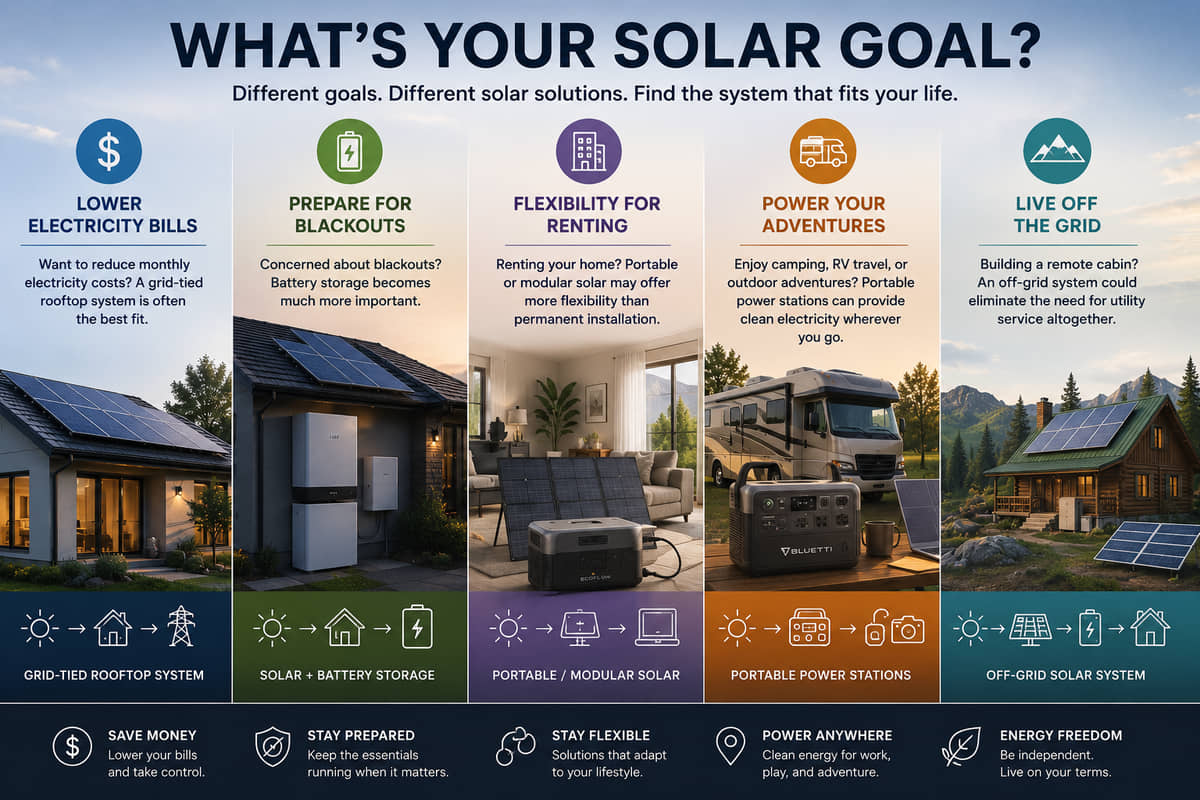
For some people, the answer is shared access through structured programs. For others, it leads toward more direct systems — rooftop solar, storage, or portable modular setups that operate independently of external agreements. Not because one is right and the other is wrong. But because resilience looks different depending on what you value when conditions change.
You don’t just choose a solar system. You choose how you want to experience uncertainty when it arrives.
Where to Go Next: Resources to Continue Exploring Shared Solar
Solar doesn’t have to look the same for everyone.
After reading this guide, you may have discovered that your priorities aren’t simply about saving money or following the latest energy trend. They might be about independence, flexibility, resilience, or simply understanding your options before making a commitment.
Whether you decide to join a shared program, participate in a Virtual Power Plant, or build your own system, the most important decision is making an informed one.
Explore the path that best matches your goals below.
⚡Learn More About Community Solar
If you’re interested in US community solar subscriptions, local programs, or the policies shaping shared renewable energy, these independent resources are an excellent place to continue your research.
Solar United Neighbors
Solar United Neighbors (SUN) is a national nonprofit representing the rights and needs of solar owners, subscribers, and supporters.Not supported by or affiliated with any solar company or group of solar companies – vendor-neutral in order to best serve individuals. “Committed to expanding access to solar and its benefits to everyone, helping consumers to understand solar options and technology. We’ve compiled everything you need to know about community solar. Understand the benefits and learn what to consider when shopping for community solar. Plus, peruse our directory of community solar projects in your area!” – SUN
For the best understanding of how community solar works, I’d say this page lays it out the best: https://solarunitedneighbors.org/community-solar/how-community-solar-works/ Official home page link: https://solarunitedneighbors.org/community-solar/
Vote Solar — Community Solar
https://votesolar.org/community-solar/ Advocacy-focused, educational, and not a marketplace. Helpful if you want to confirm nonprofit status. “Vote Solar is a non-profit policy advocacy organization with the mission of making solar more accessible and affordable across the United States. Working at the state-level in more than 25 states to drive the transition to a just 100% clean energy future. A team of solar advocates using a winning combination of deep policy expertise, coalition building, and public engagement to power just and equitable clean energy progress in states nationwide.”
GRID Alternatives — Energy for All: Community Solar
https://gridalternatives.org/what-we-do/energy-for-all/community
“GRID Alternatives is a national leader in community solar for low-income and underserved communities, as a developer, installation contractor, project and program partner, workforce development and policy leader.”
- GRID Alternatives — Community Solar Program https://gridalternatives.org/regions/colorado/get-solar/community-solar Good example of a program page with practical info.
Tribal Energy Alternatives
“is a new chapter in GRID Alternatives’ long-standing commitment to Indian Country. . Our programs span five core pillars—Grants, Workforce Education, Construction, California, and Policy, are all designed to meet tribes where they are and grow opportunities from within.” https://tribalalternatives.org/
Low-Income Solar Policy Guide
https://www.lowincomesolar.org/practices/community-solar/
Government Resources
- U.S. Department of Energy — Community Solar Basics https://www.energy.gov/cmei/systems/community-solar-basics Official, educational, noncommercial.
- U.S. Department of Energy — Community Solar https://www.energy.gov/cmei/systems/community-solar Strong overview of community solar and the NCSP+ partnership.
- U.S. Department of Energy — Join the National Community Solar Partnership+ https://www.energy.gov/cmei/systems/join-national-community-solar-partnership Good for stakeholder network/resources; nonprofit/government-adjacent.
⚡ Learn More About Virtual Power Plants
Virtual Power Plants are changing how homeowners interact with the electricity grid by allowing distributed solar and battery systems to work together.
If this concept caught your attention, these organisations provide reliable information about how VPPs work, where they’re available, and how they’re evolving across the United States.
Clean Energy Group — Virtual Power Plant Acceleration
https://www.cleanegroup.org/initiatives/virtual-power-plant-acceleration/
Useful for VPP-related context; nonprofit and policy-focused.
“Clean Energy Group collaborates with policymakers, regulators, utilities, and community advocates to evaluate, design, and implement equitable and inclusive VPP programs.
Through analytical support, policy and technical guidance, coalition building, and advocacy, we have advanced some of the first and most innovative VPP programs in the country. In partnership with the Clean Energy States Alliance and World Resources Institute, Clean Energy Group supports the VPP Acceleration Initiative, a national effort to help states, local governments, communities, and financial institutions deploy and scale VPPs.”
American Micro-grid Solutions
https://www.americanmicrogridsolutions.com/
An interesting read for more perspective.
🏠 Prefer to Own Your Own Energy?
Reading about shared solar isn’t always what convinces people to join a shared program.
Sometimes it has the opposite effect.
Many homeowners discover that what they’re really looking for isn’t shared participation—it’s greater control over how their electricity is generated, stored, and used.
That’s where choosing the right hardware and system design becomes the next step in the journey.
Step 1: Size Your System Before You Buy Anything
Before comparing products or requesting quotes, understand how much electricity your home actually uses and what you want your solar system to achieve.
Whether your goal is lowering bills, surviving outages, becoming energy independent, or eventually participating in programs like VPPs, proper planning always comes first. Visit NavigatingSolar.com to use our free planning tools, calculators, and beginner-friendly guides designed to help you make informed decisions before spending a cent.
Step 2: Consider what fits your lifestyle needs
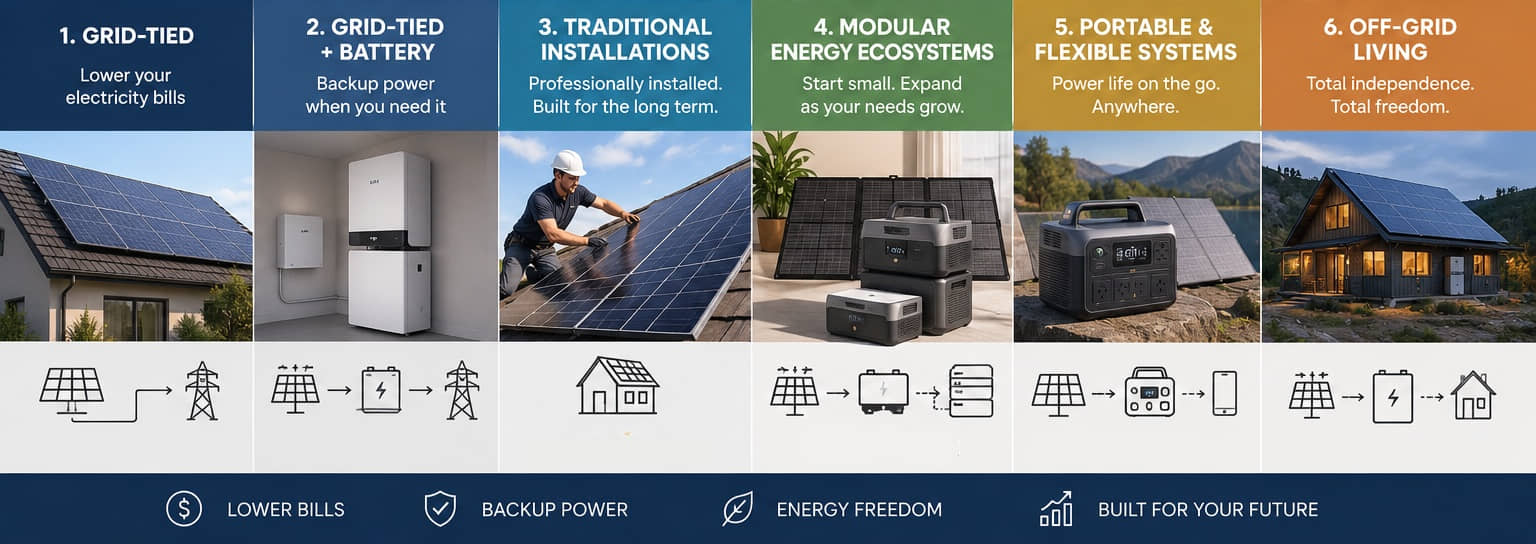
From there look at your 3 main options
Transparency matters. Some of the links below lead to trusted partner resources and product comparison pages. If you decide to purchase through one of these links, we may earn a small commission at no additional cost to you. These commissions help support the free educational content and tools available on NavigatingSolar.com. The following links are product comparison pages with specs, current pricing and real-world application examples.
Traditional Rooftop Installation
A turnkey solution where professionals do the evaluation, consultation, and installation. Ideal for homeowners looking for a professionally designed, grid-connected solar system with minimal hands-on involvement.
Visit our website NavigatingSolar.com :
➡️ Learn how to choose an installer and what to ask when requesting a quote
➡️ Get Quotes from Vetted Local Installers Near You
Modular Energy Ecosystems
These systems allow you to build your energy ecosystem one module at a time. Some folks start with panels, others start with battery backup solutions, and scale from there until it is a whole-home energy ecosystem. From light bulbs and climate control, down to generating, storing and distributing energy automatically through your home.
These systems do require professional assistance when it involves home electrification, installation and grid interaction.
➡️ Compare modular solar power systems, manufacturer differences and compatibilities
Portable Power and Battery Backup Solutions
This has become a popular choice for many homes of various types.
From mobile homes, to off-grid living, and back to suburban living where needing backup battery power during blackouts, power cuts and natural disasters have been a reality for some.
For some people the ability to lower bills by using stored energy during peak TOU pricing times, have made portable battery systems an attractive entry point for homeowners wanting backup power without committing to a full rooftop installation.
These too are modular and allows for scaling a system to suit your home needs.
➡️ Explore battery storage, backup power, and portable power stations
When Your Roof Isn’t the Right Place for Solar
Alternative Solar Mounting Options
Not every roof is suitable for solar panels, but that doesn’t mean solar is off the table.
Some people start with battery backup to solve an immediate problem, and then later only invest in panels.
The options for solar panel mounting has expanded hugely due to the demand for solar, but the regular problem of infrastructure or site unsuitability.
➡️ We expand on this in the article titled “Alternative Solar Installation Solutions”
One last thought…
However you choose to participate in the energy transition, don’t let anyone convince you there’s only one “right” way. Some people value simplicity. Others value independence. Some want to support the grid. Others want to rely on it less.
The best solar system isn’t the one that wins the most online arguments.
It’s the one that fits your home, your budget, your goals, and your life.