 Navigating
What’s All the Hype About EV Chargers…
…When Only 8% of Americans Drive Electric Vehicles?
You can’t scroll through energy news without seeing it.
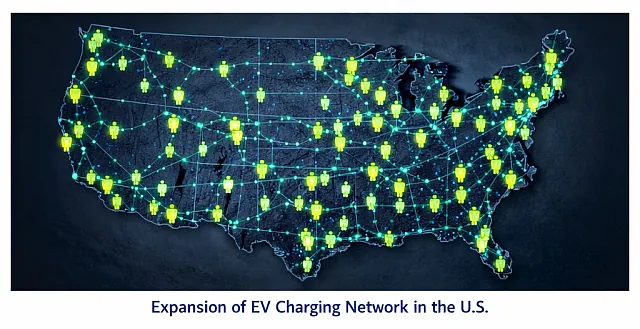
New fast-charging corridors.
Federal funding announcements.
Retail parking lots installing rows of chargers.
States racing to expand infrastructure.
But here’s the uncomfortable question:
If only around 7–8% of U.S. vehicle sales are electric…
why are we building charging networks like everyone already drives one?
Is this environmental urgency? Or strategic market positioning?
Or something entirely different?
The real story may not be EV chargers themselves.
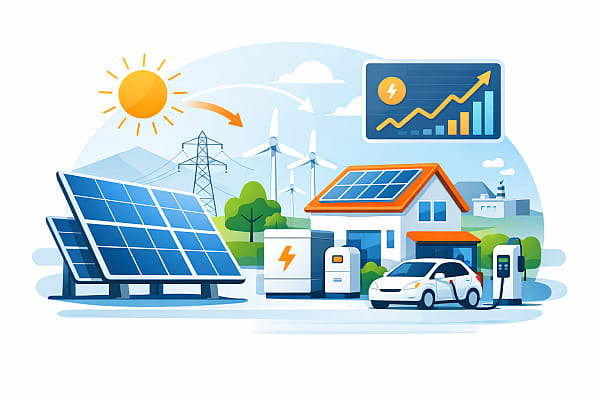
It may be the gradual merging of transportation, home energy systems, battery storage, and grid infrastructure into one interconnected ecosystem.
And if that shift continues, the households that understand energy early may have far more flexibility than those reacting later.
Let’s unpack it.
Infrastructure Doesn’t Follow Adoption. It Prepares for It.
The focus on EV chargers isn’t about today’s drivers. It’s about tomorrow’s hesitation.
One of the biggest barriers to electric vehicle adoption isn’t battery technology. It’s psychology.
Range anxiety — the fear of running out of charge on a long trip — is still the dominant consumer concern. Even people who rarely drive long distances imagine the worst-case scenario.
But Who Actually Uses Public Chargers?
Most current EV owners charge at home. That’s important.
Public charging isn’t primarily for suburban homeowners with garages. It’s for:
Apartment dwellers
Urban residents with street parking
Long-distance travelers
Commercial fleets
In other words, public chargers expand access beyond early adopters.
Without them, EV ownership remains limited to people with private driveways.
With them, it becomes scalable.
So the logic is simple:
If you build a visible, reliable charging network first, you remove the mental barrier before mass adoption arrives.
Infrastructure becomes confidence. And confidence drives purchases.
Why This Matters Even If You Don’t Drive an EV
Even households without electric vehicles may eventually feel the effects of large-scale EV adoption.
More EVs on the road can influence:
Electricity demand patterns
Utility infrastructure upgrades
Time-of-use electricity pricing
Grid strain during peak hours
Demand for residential solar and battery systems
As transportation and home energy systems become more connected, the broader conversation shifts from simply “owning a vehicle” to managing energy more intelligently overall.
In many ways, EV chargers are becoming part of a much larger transition in how homes consume, store, and distribute electricity.
How EV Charging Connects to Home Solar Energy
For homeowners with solar panels, EV charging changes the math entirely.
Instead of relying solely on fuel stations or grid electricity, excess daytime solar production can potentially charge a vehicle directly from your own roof.
That creates a different kind of relationship between transportation and solar energy:
Solar panels generate electricity during the day
Home batteries can store excess production
EVs become flexible energy loads
Smart charging systems can reduce peak electricity costs
Future bidirectional systems may even help support backup power during outages
Suddenly, an electric vehicle stops being just transportation.
It becomes part of a larger home energy ecosystem.
And that’s one reason the expansion of charging infrastructure matters beyond the cars themselves.
From Individual Devices to Connected Energy Ecosystems
For many homeowners, the next step isn’t simply adding an EV charger—it’s thinking about how every part of the home’s energy system can work together.
Modern energy ecosystems can combine solar panels, battery storage, EV charging, smart energy management, and backup power into a single coordinated system.
Rather than treating each component as a separate purchase, they allow energy to be generated, stored, monitored, and used more intelligently.
For example, excess daytime solar production can be directed toward charging a home battery or an electric vehicle, while smart energy management helps prioritize when and where electricity is used throughout the day.
As these technologies continue to evolve, homeowners are increasingly planning for complete energy ecosystems rather than isolated upgrades.
➡️ See why we found EcoFlow’s Integrated Home Energy Ecosystem interesting
Could Solar Offset Your EV Charging Costs?
Charging an electric vehicle adds a new layer to your household’s energy consumption—but it can also create one of the biggest opportunities to benefit from home solar.
Instead of relying entirely on grid electricity or public charging stations, many homeowners use surplus daytime solar production to offset part or all of their vehicle’s charging needs. Over time, this can reduce fuel costs, improve the value of a solar installation, and increase overall energy independence.
Is Your Home Actually Ready for an EV?
Installing a charger is only one part of the equation.
Before making the switch, it’s worth understanding whether your home’s electrical system, solar production,
battery storage, and charging setup are ready to support an electric vehicle safely and cost-effectively.
Questions such as:
Is my electrical panel large enough?
Will I need additional solar panels?
Should I install battery storage first?
Can my existing inverter support future expansion?
Which type of charger is right for my home?
Is bidirectional charging compatible with my vehicle?
Will charging an EV actually save me money?
…don’t have one-size-fits-all answers.
They depend on your home, your driving habits, your energy use, and your long-term plans.
We’ll walk through each of these questions step by step in our upcoming guide to planning a solar-ready home for EV ownership.
How Many Solar Panels Would an EV Require?
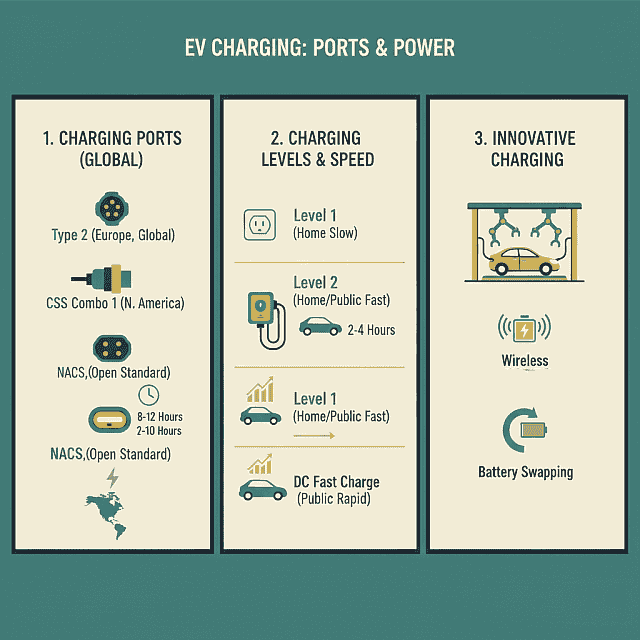
Adding an electric vehicle to your household changes your energy requirements, making it important to consider whether your existing solar system can keep up.
The number of additional solar panels you’ll need depends on several factors, including your vehicle’s battery size, how often you drive, your daily household electricity usage, local sunshine conditions, and whether you also plan to install battery storage for overnight charging.
Could Battery Storage Help With Overnight Charging?
Most homeowners generate the majority of their solar electricity during the middle of the day, yet
many electric vehicles are plugged in during the evening, when solar production has already stopped.
Without battery storage, overnight charging typically relies on grid electricity.
A properly sized home battery, however, can store surplus daytime solar production and make that energy available later,
helping support overnight EV charging,
improve self-consumption, provide backup power during outages, and reduce reliance on peak-rate electricity.
The right battery capacity depends on more than just your vehicle.
It should also account for your household’s daily energy use, backup power priorities, future expansion plans, and charging habits.
Exploring Battery Storage Solutions?
If you’re considering battery storage as part of a broader home energy strategy, it’s worth looking into
Modular Smart Energy Ecosystems
Solar and Energy Storage meets Smart Integration
This automated approach to energy management is becoming an increasingly popular choice for folks to consider.
Some homeowners prefer integrated Smart Energy Ecosystems, where batteries, solar generation, EV charging and selected household loads communicate automatically to manage energy throughout the day.
If you’re interested in an integrated whole-home approach, EcoFlow’s Ocean range demonstrates how batteries, solar generation, EV charging and smart controls work together as a connected energy ecosystem.
These systems can be professionally installed and expanded over time as your household’s energy needs evolve.
This can be an alternative to installing everything at once, while still leaving room for future growth.
➡️ Explore EcoFlow Home Energy Ecosystems
EV Chargers Don’t Charge Home Batteries…
There’s a common misconception that installing an EV charger somehow allows your vehicle to charge your home’s battery system.
That’s not how a standard EV charger works.
Under normal operation, electricity flows from your home to your vehicle. That electricity may come directly from the grid, from rooftop solar, or from a home battery system—but the direction of energy always remains the same.
In other words:
Solar panels generate electricity.
Your home uses or stores that energy.
Your EV charger transfers electricity from your home to your vehicle.
Until Now…
The Real Disruption: Bidirectional Charging
Bidirectional charging changes that one-way relationship.
Certain electric vehicles, when paired with compatible bidirectional charging equipment,
can reverse the flow of electricity—sending stored energy from the vehicle back into the home.
This technology is commonly known as Vehicle-to-Home (V2H).
Instead of acting solely as a consumer of electricity, the vehicle becomes an energy storage asset.
During a power outage, it may be able to supply essential household circuits.
During periods of high electricity prices, it could potentially reduce expensive grid consumption.
This is why many energy experts see bidirectional charging as more than simply an EV feature. It represents another step toward fully integrated home energy systems, where solar panels, battery storage, EVs, and smart energy management work together rather than as separate technologies.
The conversation is no longer just about charging a car.
It’s about managing energy across your entire home.
Why Bidirectional Charging Matters
Bidirectional charging isn’t simply another EV feature—it’s part of a broader shift toward homes becoming active participants in energy management.
In the future, households may be able to generate electricity with rooftop solar, store it in home batteries, charge an electric vehicle during the day, and then use that same vehicle as temporary backup power during outages or periods of high electricity prices.
While widespread adoption will depend on compatible vehicles, chargers, and local regulations, the direction of travel is clear: transportation and home energy systems are becoming increasingly connected.
Understanding these developments today can help homeowners make more informed decisions when planning future solar and battery investments.
Your Vehicle Can Become Part of Your Energy Strategy
When most people think about charging portable power stations, they picture plugging them into a wall outlet or connecting solar panels.
Modern alternator charging systems introduce another option: charging from your vehicle while you drive.
Whether you’re commuting to work, running errands, travelling, or heading out for the weekend, your vehicle’s alternator is already generating electricity.
Instead of letting that available energy go unused, compatible charging systems can direct some of it into a portable power station for later use.
For homeowners, this creates another layer of energy flexibility.
A portable battery can be recharged from the grid, solar panels, or your vehicle—ready to provide backup power during outages, support outdoor projects, camping trips, remote work, or emergency situations.
It’s another example of how modern energy systems are becoming more connected, giving households multiple ways to generate, capture, and use electricity more efficiently.
➡️ Explore Bluetti Alternator Charging & Portable Energy Solutions
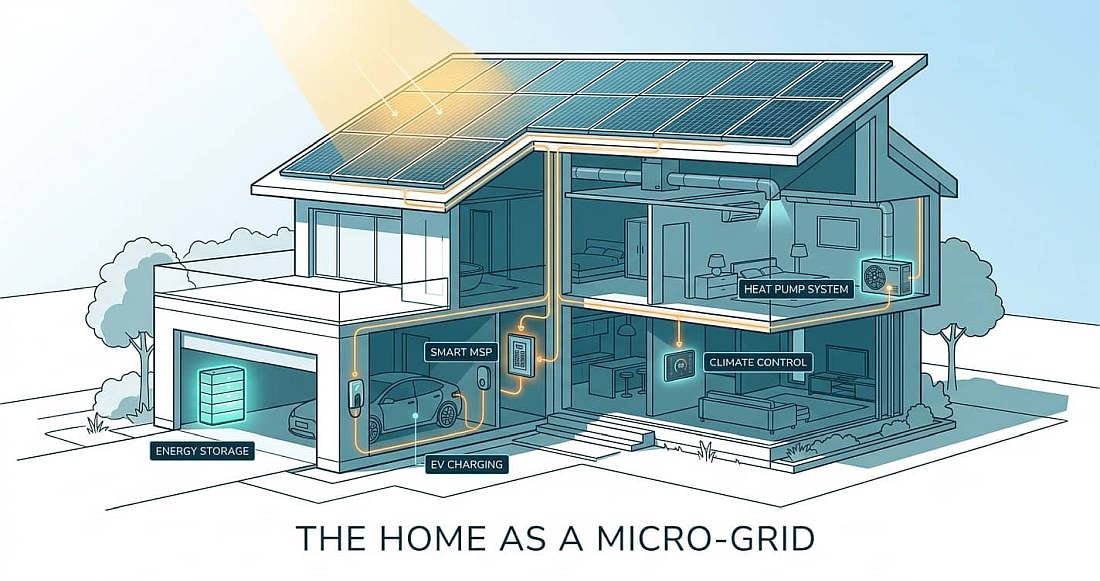
What Does a Connected Home Energy Ecosystem Look Like?
As solar, battery storage, and electric vehicles become more closely integrated, many homeowners are beginning to think beyond individual products and toward complete energy ecosystems.
Modern energy systems increasingly allow solar panels, battery storage, EV charging, and backup power and monitoring to work together, creating an Energy Ecosystem.
A connected ecosystem can potentially:
Charge an EV using surplus daytime solar production.
Prioritize battery storage before exporting electricity to the grid.
Schedule EV charging during lower-cost electricity periods.
Coordinate backup power during outages.
Expand over time as household energy needs evolve.
For homeowners planning around long-term energy independence rather than a single purchase, integrated energy ecosystems are becoming an increasingly popular option.
Seeing how different manufacturers build grid-tied, hybrid and modular solar systems makes it much easier to understand the architecture behind installer quotes.
Ecoflow stands out, but it is always good to compare all your options before finally deciding.
So before talking to installers and getting quotes, spend a little time exploring what’s available on the market.
Looking at complete systems types, individual components and different brand compatibility make it much easier to understand the recommendations you’ll receive later.
Understand how each system links to your home and utility, before settling on product choice.
Explore what these systems look like, how they work and what the modules are for each.
For excellent diagrams, product layouts and system illustrations, making it one of the easiest places to visualize how different solar systems are assembled before making decisions.
Here’s a visual aid:
Steps: Follow the link below – Choose a system (hybrid, grid-tied or off-grid) – Choose a size (essentials:3-5kW to whole-home: 10kw+) – Hover over the product image and see how it transforms into a home energy system.
➡️ See how a whole-home system connects
…then
➡️ Explore EcoFlow’s Integrated Home Energy Ecosystem
Not every household needs a fully integrated system today—but
understanding how these technologies fit together can help you make smarter upgrade decisions over time.
So What’s Really Driving the EV Hype?
Is it environmental responsibility?
Corporate expansion?
Grid modernization?
Consumer protection against volatile energy pricing?
Massive public and private investment is pouring into charging networks.
Federal programs under recent infrastructure legislation are funding nationwide corridor buildouts. Private companies are racing to secure prime retail and highway locations.
This isn’t accidental.
Large-scale infrastructure is rarely reactive.
It’s anticipatory.
Whether driven by climate policy, economic strategy, or corporate growth forecasting, the message is clear:
The charging grid is being built for a future market, not a present one.
The truth to what’s driving the hype likely sits somewhere in the overlap.
What’s clear is this:
The attention around EV chargers isn’t about the 8% who already drive electric. It’s about preparing for the percentage that hasn’t switched yet.
And when infrastructure appears before mass demand, it’s usually because someone expects that demand to arrive.
The Bigger Shift May Already Be Underway
The real story may not be EV chargers themselves.
It may be the gradual merging of transportation, home energy systems, battery storage, and grid infrastructure into one interconnected ecosystem.
There’s more to unpack here — especially around time-of-use pricing, grid strain, and how EV adoption intersects with home solar and battery systems.
We’ll dive deeper into those layers soon, because EV chargers might not just be about cars.
They may be about reshaping how households interact with the grid
That shift won’t happen overnight, but infrastructure expansion often reveals where industries believe the future is heading long before adoption numbers fully catch up.
In time, as EVs, solar systems, batteries, and smart energy management become more connected, households may eventually interact with electricity very differently than they do today.
The charger on the wall may simply be the visible beginning of a much larger energy transition already unfolding in the background.
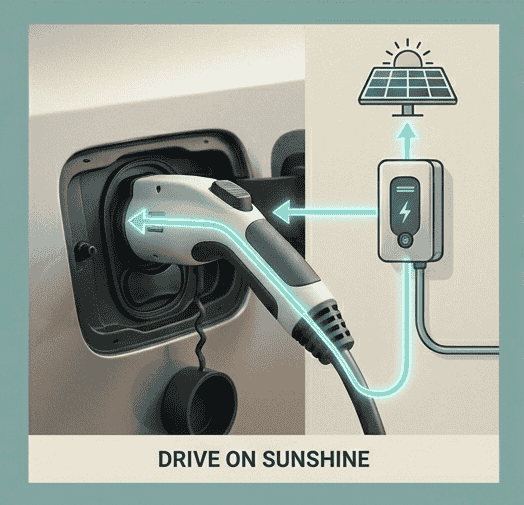
Electric Vehicle Charging on Home Solar
Read Related Articles
A Step-by-Step Checklist to Map Solar Value
Solar ROI, IRR & Payback Explained
Solar Battery Storage: Value vs Expense
Solar Incentives by State in 2026
Energy Costs vs Solar Savings and Incentives
Solar Inverters : The Brain of Your System Solar
Transparency: The options above link to carefully selected educational resources and trusted partners. We only feature products and services that support the decision-making process described throughout NavigatingSolar, helping you compare solutions with greater confidence. That means our loyalty is to:
- the homeowner’s problem,
- the right category of solution,
- then, only if appropriate, a reputable product or brand.
NavigatingSolar independently researches products and selects partners based on how well they fit our educational framework, not simply because they offer commissions.
Learn more about how we choose partners.