 Navigating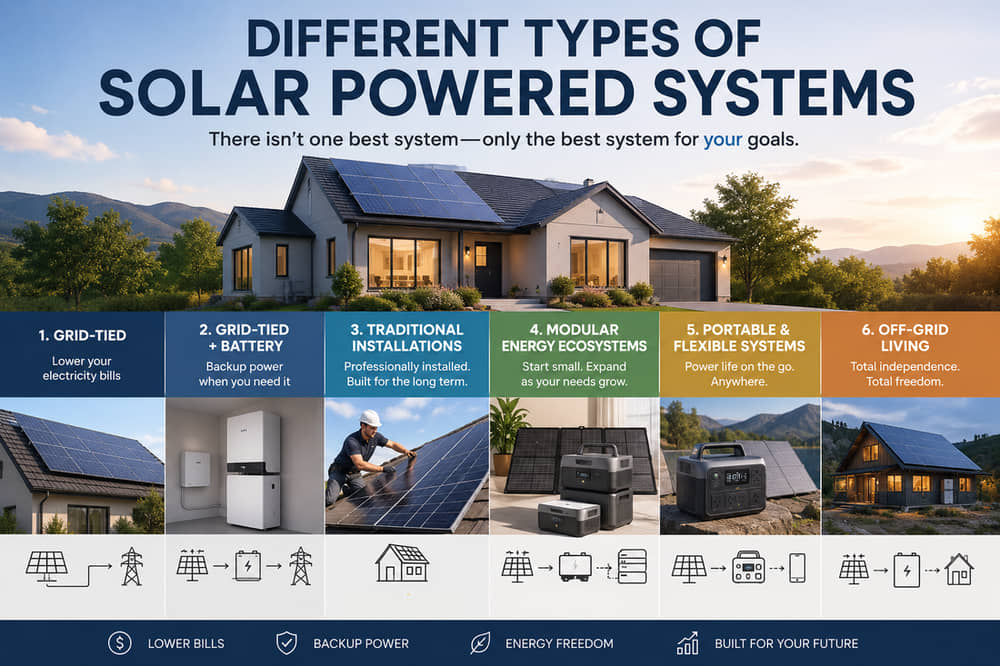
Summary
Solar isn’t one-size-fits-all. There are options. These are often not explained properly.
Explore different types of solar installation, battery storage and inverter types to see which best serves your usage - historically and considering future expansion.
Which Solar System Fits Your Lifestyle?
Building Energy Ecosystems: from Traditional Turnkey Solutions to Portable, Modular Options
One of the biggest misconceptions about solar is that there’s a single “best” setup for every homeowner.
There isn’t. The right system depends on what you’re trying to achieve.
Solar has moved far beyond a one-size-fits-all solution.
Today, homeowners in the United States can choose from rooftop systems, battery-backed hybrids, modular ecosystems, portable power stations, and full off-grid setups.
The challenge isn’t availability anymore.
It’s choosing the right system for your situation.
Because the truth is simple:
There is no single best solar system—only the one that fits your goals, home, and budget.
Some people simply want lower electricity bills.
Others want reliable backup power during outages.
Some are planning for electric vehicles, battery storage, or future home expansion.
And others dream of complete energy independence.
Different goals point toward a different types of solar-powered systems.
Rather than asking “Which system is best?”, a better question is:
“Which system best fits the way I want to live?”
Solar has come a long way from being a niche technology.
Today, homeowners have more options than ever, from traditional rooftop installations to portable power stations you can take camping.
That variety is great—but it can also make choosing the right system feel overwhelming.
Understanding the different types of solar powered systems helps you invest in a solution that matches your lifestyle instead of paying for features you’ll never use.
That’s the questions we’ll answer in this guide.
Start With Your Goal, Not the Technology
Many people begin researching solar by comparing equipment—panels, batteries, inverters, and efficiency ratings.
A better approach is to ask a much simpler question:
What problem are you trying to solve?
Your answer will usually point you toward the right type of system.
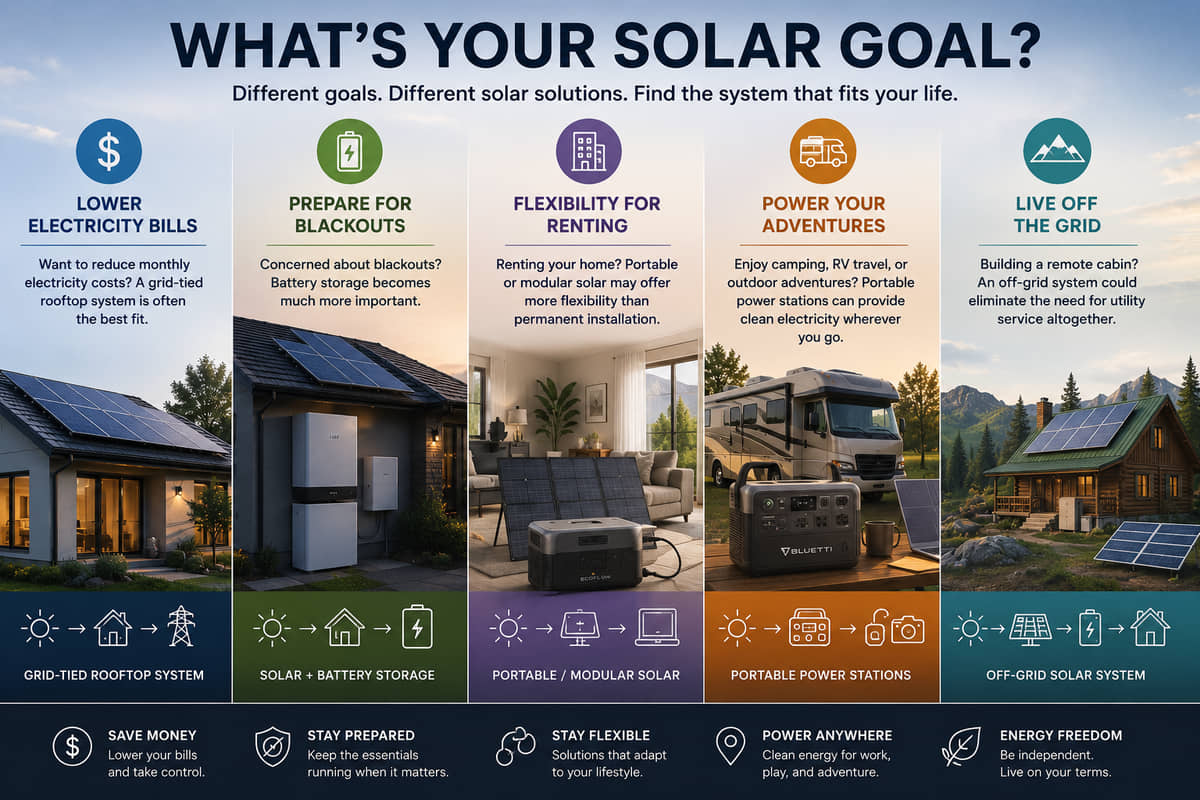
For example:
- Want to reduce monthly electricity costs? A grid-tied rooftop system is often the best fit.
- Concerned about blackouts? Battery storage becomes much more important.
- Renting your home? Portable or modular solar may offer more flexibility than permanent installation.
- Enjoy camping, RV travel, or outdoor adventures? Portable power stations can provide clean electricity wherever you go.
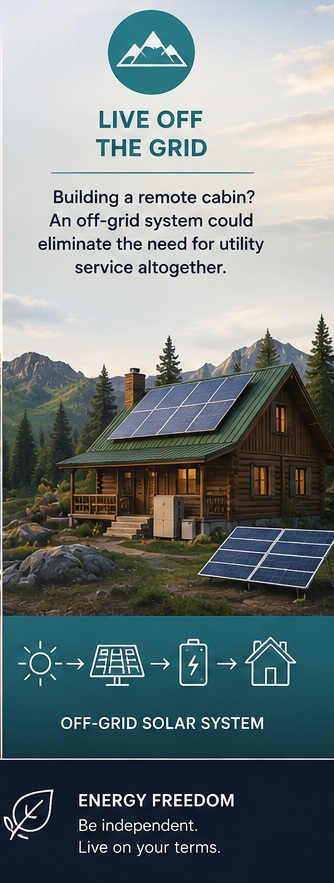
- Building a remote cabin? An off-grid system could eliminate the need for utility service altogether.
Once you know your goal, comparing different solar systems becomes much easier.
Affiliate Disclaimer:
This page link may connect you with solar providers through our partner network.
We may earn a commission if you choose to engage — at no extra cost to you.
Exploring Different Solar Powered Systems
1. Grid-Tied Solar Systems
Grid-tied systems are the most common type of residential solar installation in the United States.
Solar panels generate electricity during the day, reducing the amount of power you buy from your utility company. When your system produces more electricity than your home needs, excess energy may be exported to the grid through local net metering or utility compensation programs where available.
Best for
- Homeowners focused on lowering electricity bills
- Long-term property owners
- Areas with favorable utility policies
Advantages
- Lower utility bills
- Proven technology
- Relatively low maintenance
- Strong long-term return on investment
Trade-offs
A standard grid-tied system shuts down during a power outage for safety reasons. Even if the sun is shining, your solar panels won’t continue powering your home unless battery storage has been included.
If your primary goal is reducing monthly energy costs, this remains one of the most cost-effective ways to invest in solar.
Before you move on:
If your only goal is reducing electricity bills, a system size calculator helps avoid overspending or under-sizing.
Launch the NavigatingSolar Savings Calculator
2. Grid-Tied Solar With Battery Storage
A hybrid solar system combines rooftop solar with home battery storage.
During the day, your solar panels can power your home while charging your batteries. If the grid goes down, stored energy can continue supplying selected appliances—or even your entire home, depending on the system design.
Best for
- Homeowners wanting backup power
- Families in areas with frequent outages
- People seeking greater energy independence
Advantages
- Backup electricity during outages
- Better use of your solar energy
- Reduced dependence on utility companies
- Greater control over household energy use
Trade-offs
Adding batteries increases the initial investment, but many homeowners consider the added resilience worthwhile—especially as extreme weather events become more common.
➡️ Curious how these different grid-tied systems are actually put together?
Seeing how different manufacturers build grid-tied, hybrid and modular solar systems makes it much easier to understand the architecture behind installer quotes.
So before talking to installers, spend a little time exploring what’s available on the market.
Looking at complete systems types, individual components and different brand compatibilities make it much easier to understand the recommendations you’ll receive later.Understand how each system links to your home and utility, before settling on product choice.
Explore what these systems look like, how they work and what the modules are for each.For excellent diagrams, product layouts and system illustrations, making it one of the easiest places to visualize how different solar systems are assembled before making decisions.
Here’s a visual aid:
Steps: Follow the link below – Choose a system (hybrid, grid-tied or off-grid) – Choose a size (essentials:3-5kW to whole-home: 10kw+) – Hover over the product image and see how it transforms into a home energy system.
➡️ See how it works
👉 Battery sizing matters here — undersizing is one of the most expensive mistakes homeowners make.
Use a battery calculator before committing.
Open the Battery Capacity Calculator
Solar and Energy Storage meets Smart Integration
This automated approach to energy management is becoming an increasingly popular choice for folks to consider.
Some homeowners prefer integrated Smart Energy Ecosystems, where batteries, solar generation, EV charging and selected household loads communicate automatically to manage energy throughout the day.
If you’re interested in an integrated whole-home approach, EcoFlow’s Ocean range demonstrates how batteries, solar generation, EV charging and smart controls work together as a connected energy ecosystem. These systems can be professionally installed and expanded over time as your household’s energy needs evolve.
➡️ Explore Smart Energy Ecosystems
3. Traditional Roof-Mounted Solar Installations
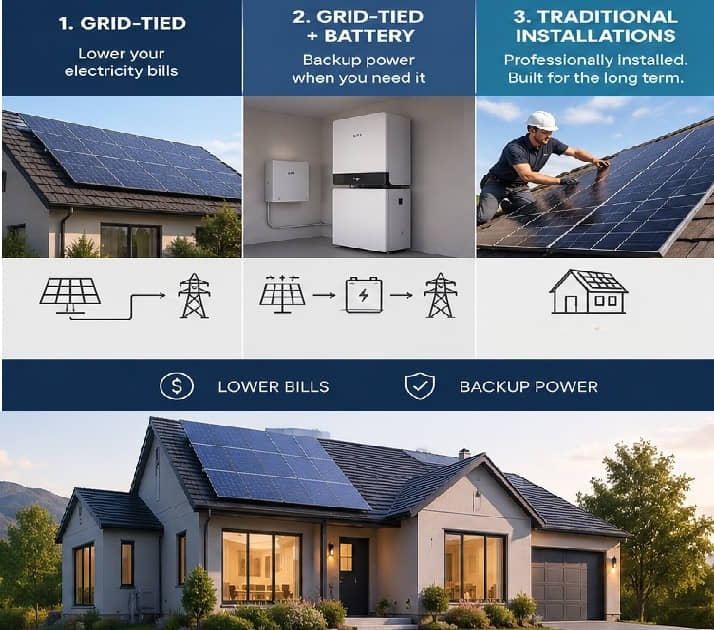
For homeowners planning to stay in their property for many years, a professionally designed rooftop system often delivers the highest long-term value.
Unlike DIY solutions, professional installations are tailored to your roof, energy usage, local regulations, and future electricity needs.
The right installer can also help determine:
- System size
- Battery requirements
- Roof suitability
- Available incentives
- Expected savings
- Installation timelines
If you’re considering a permanent rooftop system, getting multiple quotes is one of the smartest first steps. Comparing professional proposals often reveals significant differences in pricing, equipment, warranties, and projected savings without any obligation to commit.
Best for
- Permanent homeowners
- Maximum long-term savings
- Fully integrated home energy systems
If you’re exploring this route, comparing professional installation quotes is one of the most important early steps.
➡️ Explore: Professional solar installation options
Quote Request Tool
Connect with Local US Installers trusted by homeowners nationwide — step-by-step, practical, and pressure-free.
4. Modular Solar Energy Systems
Not everyone wants—or needs—a permanent rooftop installation.
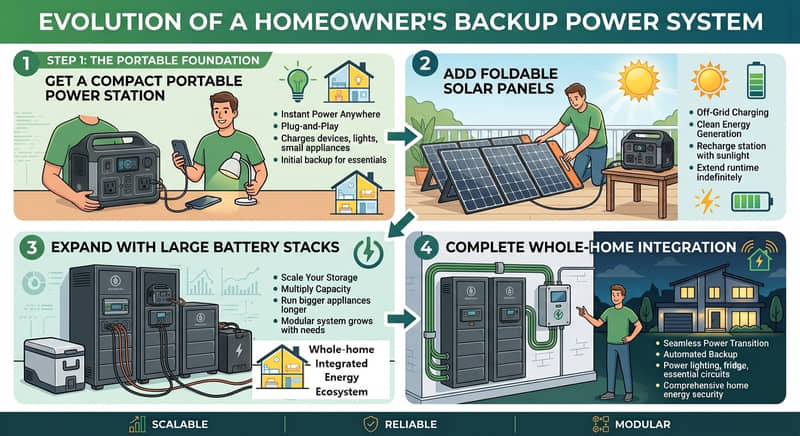
Modular solar ecosystems have become one of the fastest-growing areas of residential solar because they allow homeowners to build their system gradually.
Instead of making one large investment, you can start with a portable power station, add expansion batteries later, and eventually incorporate solar panels as your energy needs grow.
This approach is particularly attractive for:
- Renters
- Apartment owners
- Homeowners testing solar before committing
- People who value flexibility
Leaders in this category are Bluetti, and Ecoflow whose expandable energy systems can evolve alongside changing household needs.
They offer a practical path toward energy independence one step at a time.
Advantages
- Expand over time
- No permanent roof installation required
- Easy relocation when moving
- Multiple indoor and outdoor uses
Trade-offs
While incredibly flexible, modular systems generally aren’t intended to replace large professionally installed rooftop systems for homes with very high electricity consumption.
When modular systems expand to cover the whole home – professional help becomes important, because then you are dealing with infrastructure, electrification etc.
Read more about the costs that aren’t always visible upfront, before making final decisions.
This is where most people start their solar journey before committing to rooftop systems.
➡️ Compare different modular energy systems, individual components and various manufacturers
➡️ Explore modular energy systems
5. Portable Solar Power Systems
Sometimes you don’t need to power an entire house.
Portable solar power stations are designed for mobility, making them ideal for camping, RV travel, emergency preparedness, outdoor work, tailgating, or running essential devices during short outages.
Modern portable systems can charge from wall outlets, vehicle power, generators, or portable solar panels.
Manufacturers like Bluetti have helped make portable solar more capable than ever, with small compact systems powerful enough to run refrigerators, CPAP machines, laptops, communication equipment, and many everyday appliances.
Bluetti’s website tells a great visual story about ready-to-use backup systems.
It’s an easy way to understand off-grid power, portable energy systems, and how different system sizes are put together before diving into the technical details.
Best for
- Campers
- RV owners
- Emergency preparedness
- Outdoor enthusiasts
- Homeowners wanting backup for essential devices
Advantages
- Portable
- Quiet operation
- No fuel required
- Simple setup
- Useful beyond the home
Trade-offs
Portable systems have lower energy capacity than whole-home installations, making them ideal for targeted backup rather than powering an entire household indefinitely.
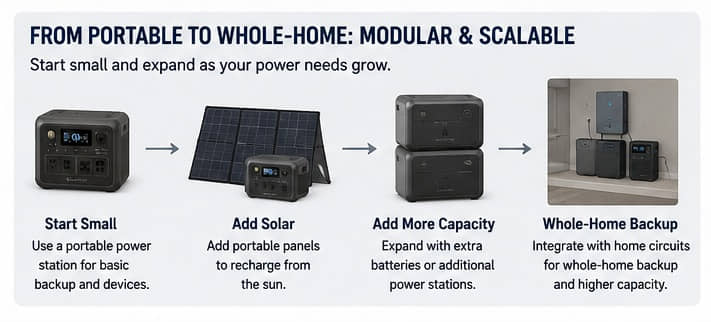
Portable systems are often the most practical first step into solar ownership.
➡️ Explore portable power stations : See Real-world Examples, comparisons, specs and pricing
6. Off-Grid Solar Systems
Off-grid systems operate completely independently from utility companies.
They generate, store, and manage all of a property’s electricity without relying on the public grid.
Because there’s no backup utility connection, these systems require careful planning. Solar production, battery storage, seasonal weather, and household energy consumption all need to work together.
Best for
- Remote properties
- Cabins
- Homesteads
- Self-sufficient living
Advantages
- Complete energy independence
- No monthly utility bills
- Ideal for remote locations
- Full control over your power supply
Trade-offs
Off-grid systems are typically the most complex and expensive option because they must provide reliable electricity throughout the year without assistance from the grid.
What’s It Actually Like Living With Each System?
Specifications tell you what a system can do.
Daily life tells you what it’s actually like to own one.
A grid-tied homeowner usually checks their electricity bill and enjoys seeing lower monthly costs.
A homeowner with battery storage feels more confident knowing essential appliances can keep running during an outage.
Someone using a modular system appreciates being able to expand gradually without replacing everything they already own.
Portable power users enjoy taking reliable electricity wherever life takes them—whether that’s an RV trip, a weekend campsite, or simply keeping the essentials running during a storm.
Off-grid homeowners think differently altogether. Energy becomes something they actively manage rather than something they simply buy each month.
None of these experiences is inherently better than another.
They simply reflect different priorities, different lifestyles.
Curious what a modern off-grid system actually looks like?
If you are ready to get going on a prebuilt solution for you off-grid venture, and not necessarily looking to build your own system from the ground up
➡️ Browse Bluetti’s off-grid systems and real-world backup solutions.
➡️ For the more seasoned off-grid enthusiast, the next step is often exploring a modular solar marketplace.
Because off-grid systems rely entirely on the right combination of panels, batteries, inverters, charge controllers and supporting components, comparing equipment from multiple manufacturers becomes part of the planning process.
A1 Solar Store makes it easy to compare complete systems, energy storage and individual components side by side, helping you understand how different system architectures are built.
Depending on your situation, I’d recommend looking at both.
Bluetti provides an excellent introduction to complete off-grid solutions,
and while A1 Solar Store is a marketplace, it helps you explore the building blocks behind larger, more customized systems.
Ultimately, the goal isn’t choosing a brand first—it’s understanding where you are today, where you’re heading, and what you need your system to do for you.
How to Choose the Right Solar System
If you’re still unsure which direction to take, ask yourself these questions:
- Do I want to reduce my electricity bill?
- Do I need backup power during outages?
- Am I planning to stay in this home long-term?
- Would I rather expand my system gradually?
- Do I need power away from home?
- Am I trying to eliminate my dependence on the grid completely?
The clearer your answers become, the easier your decision will be.
Remember that choosing solar isn’t necessarily an all-or-nothing commitment. Many homeowners begin with one solution and expand as their budget, confidence, and energy needs grow.
Before You Buy Solar or Backup Systems, Do the Numbers
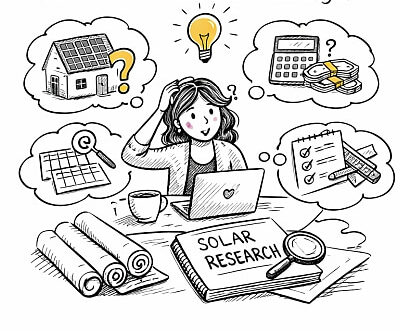
Solar is a significant investment, and the best decisions are based on real numbers rather than estimates.
Before purchasing any system, take time to calculate:
- Your current electricity usage
- Potential monthly savings
- Battery capacity requirements
- Estimated system size
- Long-term return on investment
Using solar calculators can help you compare options objectively and avoid paying for equipment that’s either too small or unnecessarily oversized.
➡️ Open your NavigatingSolar Toolkit for all the solar calculators and checklists.
It’s a Free, Independent Online Resource – for homeowners by homeowners.
Final Thoughts
There isn’t one perfect solar power system.
There is only the system that’s right for your home, your budget, and your goals.
For some homeowners, that’s a professionally installed rooftop system designed to maximize long-term savings.
For others, it’s a modular energy ecosystem that can grow over time
For outdoor enthusiasts and emergency preparedness, a portable solar power station may provide exactly the flexibility they need.
The smartest investment isn’t always the biggest one.
It’s the one that solves your energy needs today while giving you the freedom to adapt tomorrow.
🏆 Solar is a lifestyle upgrade — not just a tech upgrade. 🏆
You don’t need to down-scale of sacrifice any creature comforts, you just choose a system that works for you.
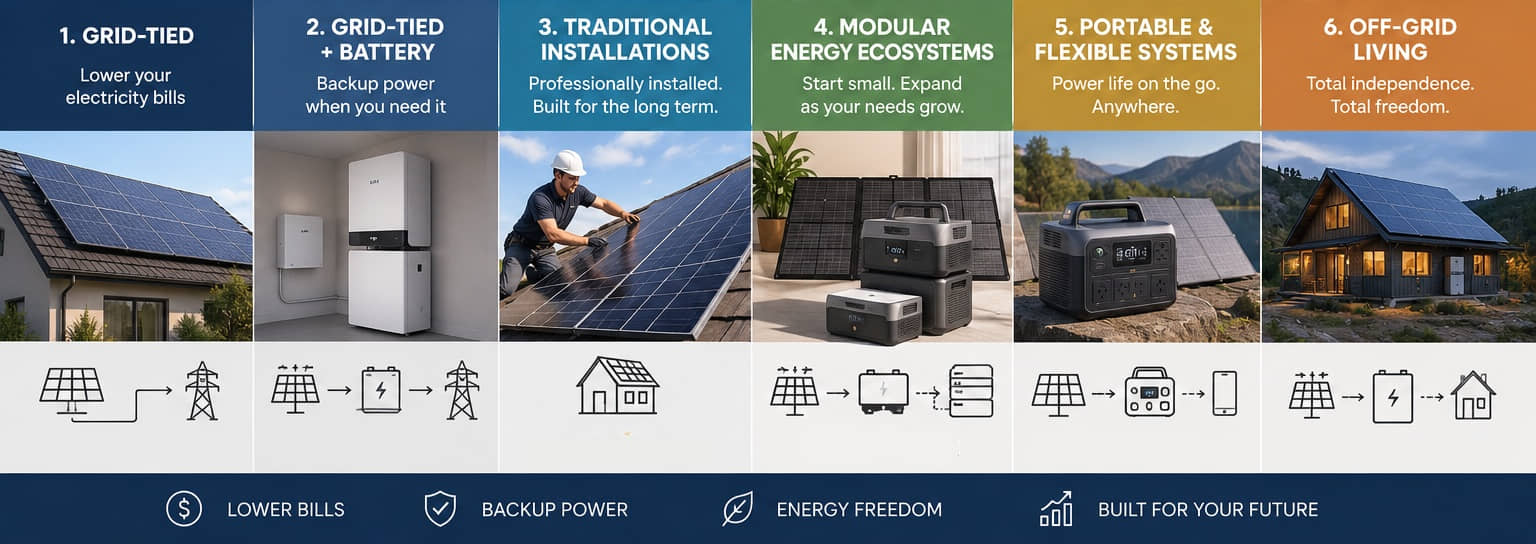
Quick Overview: Which System Fits You?
| Your Goal | Best System Type |
|---|---|
| Lower electricity bills | Grid-tied solar |
| Backup power during outages | Grid-tied + battery |
| Long-term home investment | Traditional installed systems |
| Flexible / expandable setup | Modular systems (EcoFlow) |
| Portable / travel power | Portable systems (Bluetti) |
| Full independence | Off-grid systems |
Related Articles:
Which Type of Solar Consumer Are You?
Solar Battery Storage: Value vs Expense
Inverter Settings Cheat Sheet
Exploring different inverters and their function. Understand how energy is controlled and directed through your home
References
Bluetti: Battery Backup & Portable Energy Solutions
https://www.bluettipower.com
EcoFlow: Whole-home Energy Ecosystems and Modular Power Generator Systems
https://us.ecoflow.com/