 Navigating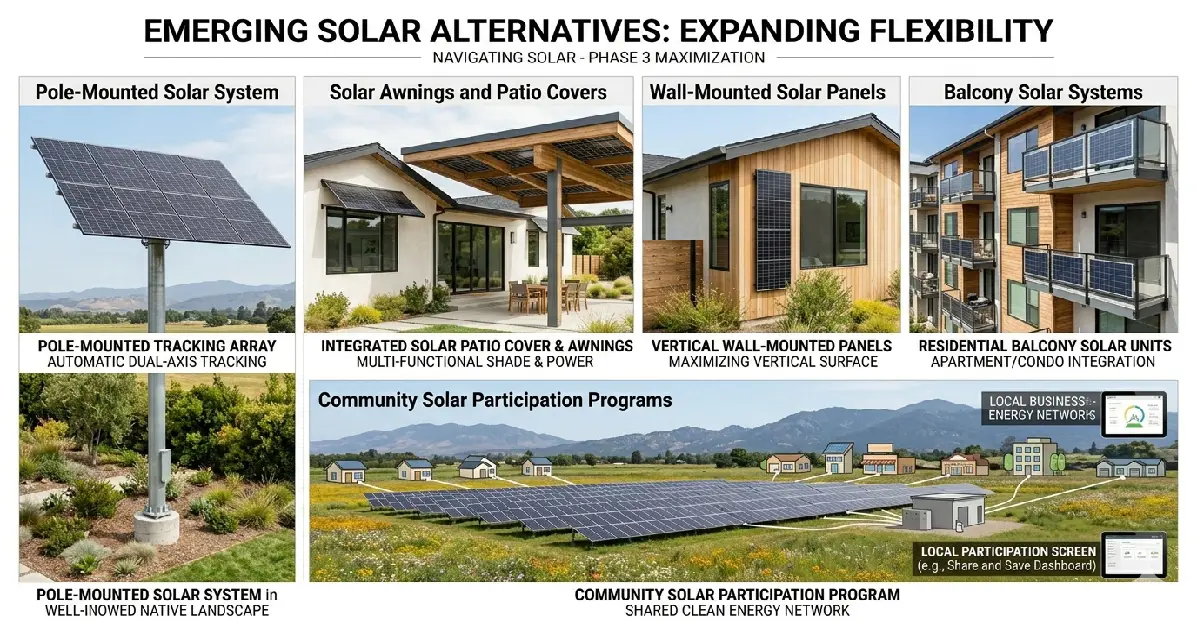
Solar does not have to look the same for everyone
Exploring Portable & Modular Solar Solutions and Alternative Solar Mounts
When most people imagine solar power, they picture panels mounted neatly across a rooftop.
But real homes — and real energy situations — are rarely identical.
Some roofs are shaded. Some properties have space constraints. Some homeowners care deeply about aesthetics, while others prioritize energy production, resilience, or future expansion.
The good news is that modern solar mounting options are far more flexible than many people realize. Today, homeowners can choose from several alternative solar solutions designed around different needs, properties, and long-term goals.
Solar is no longer a one-size-fits-all decision
If you’re facing a roofing challenge or if you simply want to maximize your energy production, this post is for you. We’re going to explore options that allow you to harness the sun’s power without ever touching your main roof structure.
Solar Panel Comparison Chart
Compare solar panel types and mounting solutions to see which works best for your needs.
Why Consider Alternative Solar Mounting Options?
While rooftop solar utilizes otherwise unused space, it comes with inherent limitations:
-
Roof Condition and Age: If your roof is nearing the end of its life, you must replace it before installing solar, adding significant upfront cost and complexity.
-
Shading Issues: Trees, chimneys, or neighboring buildings can cast shadows, dramatically reducing the efficiency of a traditional string-inverter system.
-
Orientation and Pitch: Not all roofs face due south (or north, depending on your hemisphere), and a suboptimal angle means less power generation.
-
Aesthetics: Some homeowners simply prefer a cleaner look for their roofline.
- Budget & Living Situations: Some people’s living situation calls for portability, or budgets only allow modular expansion rather than a complete traditional turnkey install.
Fortunately, these challenges have driven innovation, leading to three primary alternative solutions that offer superior performance, flexibility, and even added functionality.
Different Energy Goals Lead to Different Solar Designs
For some homeowners, the goal is maximum energy production.
For others, it may be:
- less ideal roof age or design
- avoiding roof penetrations
- adding shaded outdoor space
- preparing for future battery systems
- or simply working around physical property limitations
The “best” solar setup is not always the cheapest or most common one.
The right solution depends on how solar fits into the larger picture of your home, lifestyle, budget, and long-term energy plans.
New to solar?
Use the NavigatingSolar Solar Readiness Checklist to get started.
Comparing Alternative Solar Mounting Options for Different Needs
Modern solar systems are far more flexible than many homeowners realize.
Different properties, energy goals, budgets, and lifestyle needs often lead to very different installation approaches — and rooftop solar is only one of them.
Let’s explore some of the most popular alternative solar mounting options — and where each one tends to work best.
🟢 The Ground-Mounted System: Optimal Power, Maximum Control
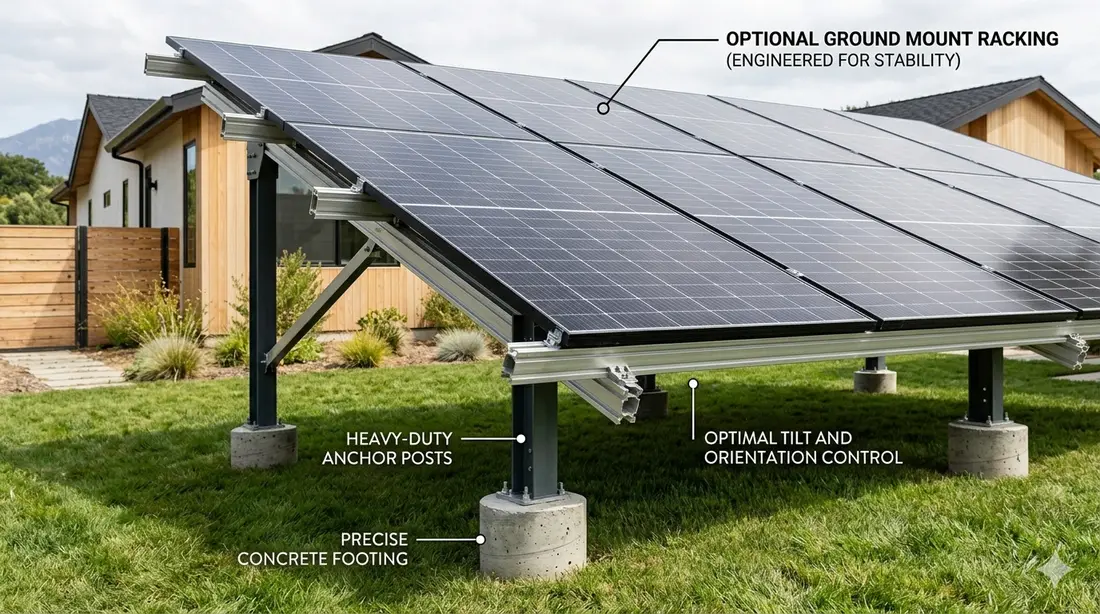
If you have available land on your property, a ground-mounted solar system is often the gold standard for performance. It’s the closest you can get to building a mini solar farm right in your backyard.
How It Works
Ground mounts involve installing a racking system on the ground, secured by concrete footings or deep-driven posts. The panels are then mounted onto this structure. Because the system is separate from your home, the DC wiring must be run underground via trenching back to your inverter and main electrical panel [1].
The Unbeatable Advantages
-
Optimal Tilt and panel direction angle (azimuth): This is the biggest performance advantage. Unlike a roof, which is fixed, a ground mount can be positioned to face the exact optimal direction (usually true south) and tilted to the perfect angle for your latitude. This maximizes annual energy production.
-
Easy Maintenance and Cleaning: No ladders required! Since the panels are easily accessible, cleaning off dust, pollen, or snow is simple, and maintenance checks are safer and faster.
-
Superior Cooling: Air circulates freely around the panels, keeping them cooler. Solar panels lose efficiency as they heat up, so this natural cooling can lead to higher energy yields, especially in hot climates.
-
No Roof Penetrations: You completely avoid drilling into your roof, eliminating any risk of leaks and preserving your roof’s warranty.
The Trade-Offs
-
Higher Upfront Cost: The cost of the racking structure, concrete work, and trenching for the wiring makes ground mounts generally 10-20% more expensive than a standard roof mount [2].
-
Land Use: They require a significant, unshaded area of your yard, which may not be feasible for smaller properties.
-
Aesthetics and Permitting: They are more visible than roof mounts, which can sometimes lead to neighborhood aesthetic concerns or more complex permitting processes.
➡️ Curious how these systems are actually put together?
Before talking to installers, spend a little time exploring what’s available on the market.
Looking at complete systems types, individual components and different brand compatibilities make it much easier to understand the recommendations you’ll receive later.Understand how each system links to your home and utility, before settling on product choice.
Explore how they work and what the modules are for each as the system size increases.For excellent diagrams, product layouts and system illustrations, making it one of the easiest places to visualize how different solar systems are assembled before making decisions.
Here’s a visual aid:
Steps: Follow the link below – Choose a system (hybrid, grid-tied or off-grid) – Choose a size (essentials:3-5kW to whole-home: 10kw+) – Hover over the product image and see how it transforms into a home energy system.
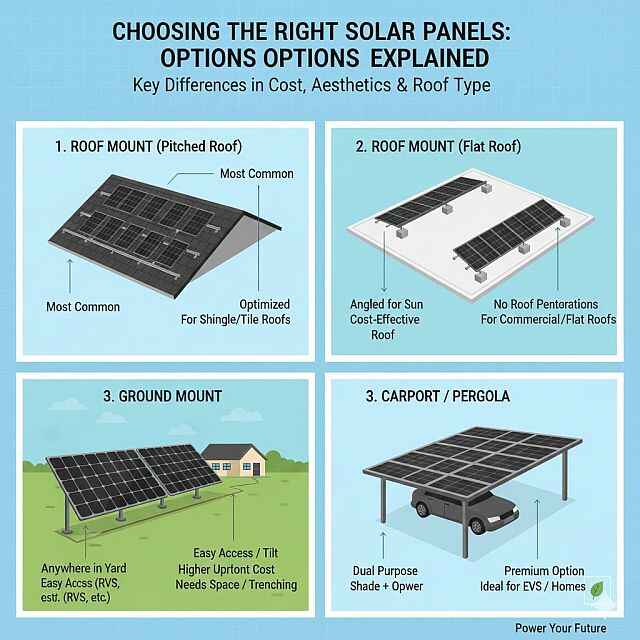
🟢 Solar Carports and Pergolas: Function Meets Generation
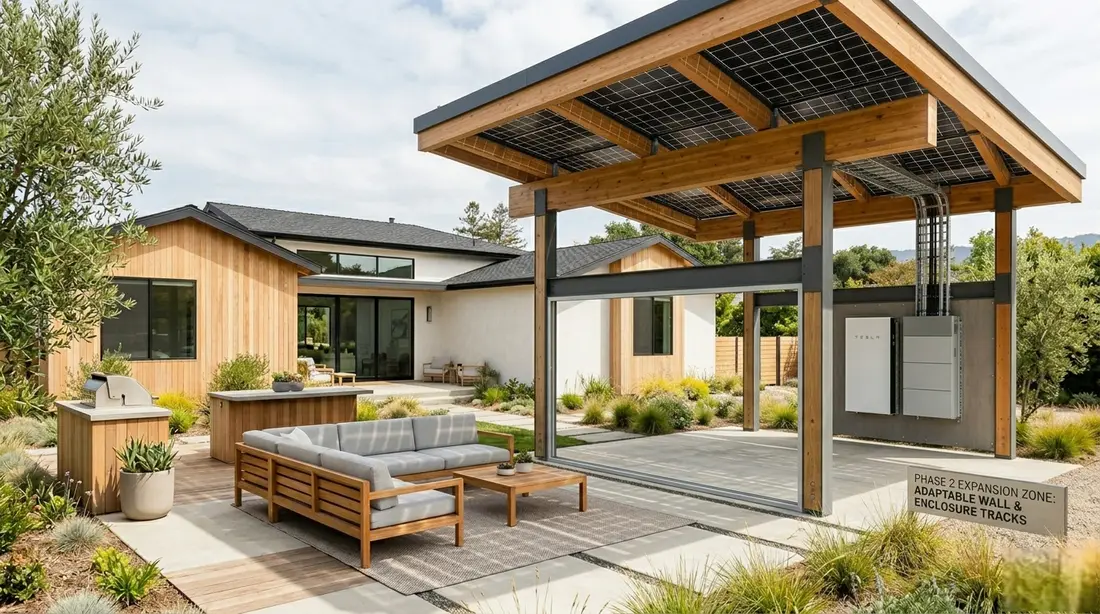
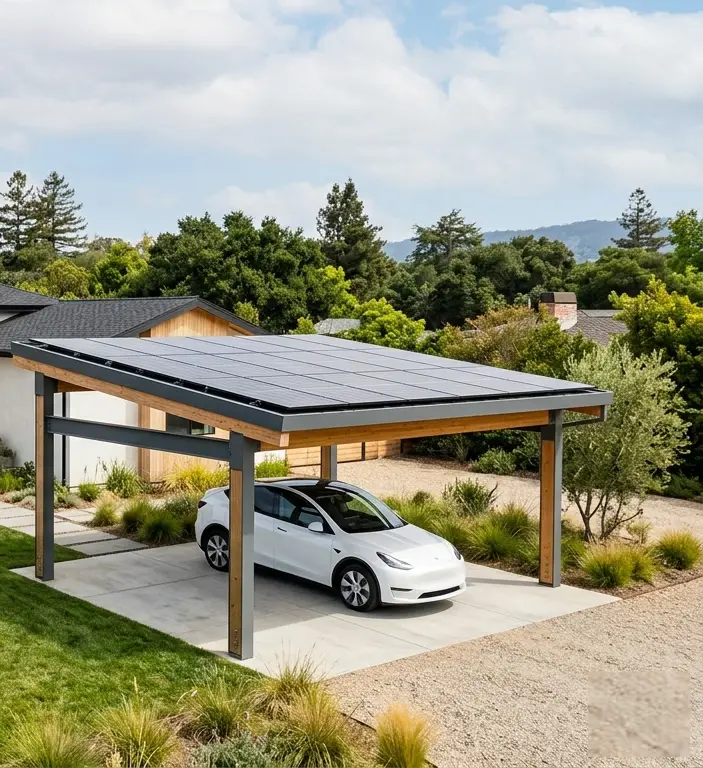
Why choose between shade and power when you can have both? Solar carports and pergolas are dual-purpose structures that generate electricity while providing shelter for your vehicles or an outdoor living space.
How It Works
These are custom-built, free-standing structures designed to support the weight of solar panels. The panels themselves form the roof of the structure, creating a seamless, functional canopy. The electricity generated is routed back to your home’s electrical system, just like a roof mount.
Solar carports and pergolas also reflect a growing shift toward multi-purpose energy design — where structures are expected to provide both functionality and energy generation at the same time.
The Value-Add Proposition
-
Dual Functionality: You get a covered parking spot that protects your car from sun, rain, and snow, and you generate clean energy. A solar pergola provides a shaded patio for outdoor entertaining while powering your home.
-
Excellent Positioning: Like ground mounts, these structures can be built to the optimal tilt and direction, maximizing energy capture.
-
Property Value: They are considered a premium home feature, adding both utility and aesthetic appeal, which can increase your property value [3].
-
Utilizing Existing Space: They turn a driveway or patio area into a productive energy asset, rather than taking up green space.
Considerations
-
Structural Cost: The cost is higher than a simple ground mount because you are essentially building a permanent, engineered structure (the carport or pergola frame) before adding the solar components.
-
Size Constraints: The amount of power you can generate is limited by the size of the structure you can reasonably build on your property.
🟢 Building-Integrated Photovoltaics (BIPV): The Invisible Solar
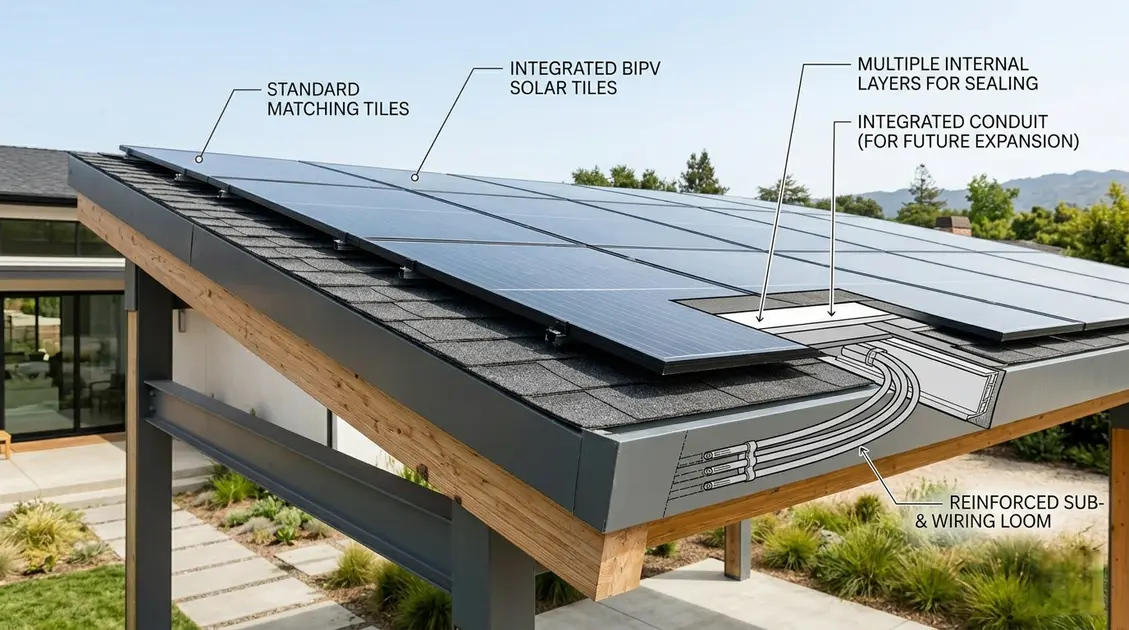
If your primary concern is aesthetics, Building-Integrated Photovoltaics (BIPV), most commonly seen as solar shingles or solar tiles, are the most elegant solution.
How It Works
Instead of mounting panels on top of your existing roof, BIPV products are the roof. They are designed to look like traditional roofing materials (asphalt shingles, slate, or terracotta tiles) but contain integrated solar cells. When installed, they blend seamlessly with the rest of the roof [4].
The Aesthetic Advantage
-
Seamless Look: From the street, they are virtually indistinguishable from high-end roofing materials, satisfying even the strictest homeowner association (HOA) requirements.
-
Roof Replacement Efficiency: If you are already planning a full roof replacement, BIPV can be a highly efficient choice, as you are paying for the roofing material and the solar generation in one product.
The Practical Realities
-
Highest Cost: BIPV systems are significantly more expensive than traditional rack-mounted panels, often costing two to three times more per watt of power [4].
-
Installation Complexity: Installation requires specialized roofing and electrical expertise, which can limit your choice of installer.
-
Lower Efficiency: Because the solar cells are tightly integrated into the roof surface, they can run hotter than rack-mounted panels (which have air circulation underneath), leading to a slight reduction in energy efficiency.
➡️ Compare Different Types of Solar Panels
Filter by wattage, cell type, price, and manufacturer, compare specs side by side, and order directly.
Look beyond the specs at full manufacturer warranty documentation, shipping costs and insurance during shipping.
Explore component compatibility between manufacturers, and see how it fits with future expansion.
🟢 Other Emerging Solar Alternatives
Whether you choose the performance powerhouse of a ground mount, the functional elegance of a solar carport, or the seamless beauty of solar shingles, there is a path to energy independence that fits your property and your vision.
As solar technology evolves, more flexible installation options continue to appear.
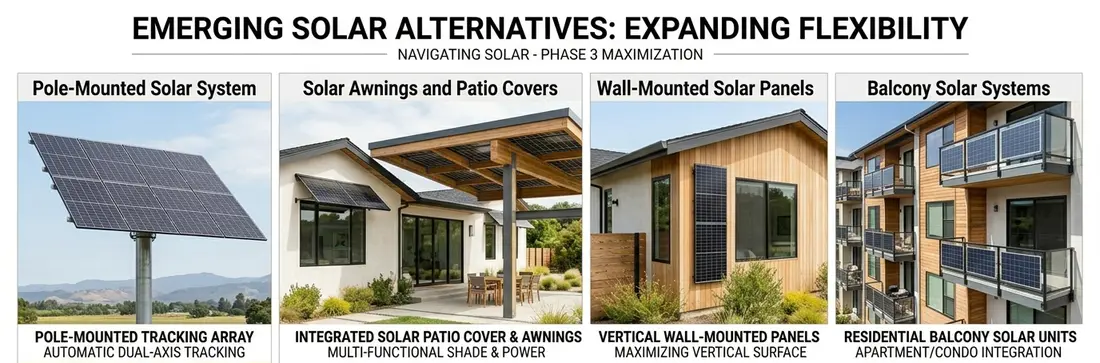
Some homeowners are also exploring:
- pole-mounted solar systems
- solar awnings and patio covers
- wall-mounted solar panels
- balcony solar systems
- and community solar participation programs
While these solutions are often more niche or location-specific, they reflect a broader trend toward flexible, adaptable solar design that can fit a wider variety of homes and energy needs.
Solar Adoption Does Not Need to Happen All at Once
One of the biggest misconceptions about solar is that homeowners must immediately commit to a large rooftop system to participate in the energy transition.
Modern solar planning is increasingly about flexibility, adaptation, and designing around real-world living conditions, not forcing every home into the same template.
In reality, many people begin with:
partial systems
alternative installations
shaded structures
backup-focused solutions
or gradual upgrades over time.
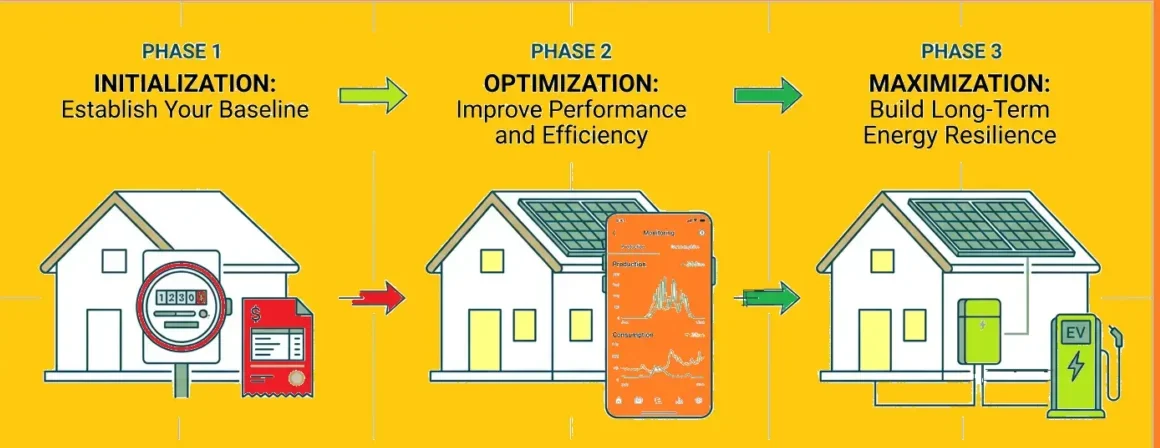
What If Solar Installation is NOT an Option For You At All?
The solar revolution is about more than just technology.
It’s about flexibility and empowerment.
If a traditional roof mount isn’t the right fit for your home, don’t be discouraged. You are not short of options in today’s thriving solar industry.
A full rooftop installation is only one path to solar energy — and in many cases, it’s not the first or most practical one.
There are several practical ways to access solar energy even when a permanent roof-mounted or alternative solutions to installation isn’t feasible.
You can now explore several other options. From portable systems as whole-home backup systems,
to modular, plug-and-play energy solutions that can scale and create a complete energy ecosystem, over time,
For many people, the challenge isn’t interest in solar — it’s whether their home, budget, or living situation allows a full installation right now.
The good news is that solar energy is no longer limited to fixed rooftop systems.
Portable Solar and Modular Energy Systems
Modular Solar Systems: The Bridge Between Roof-Mounted and Grid Independence
Not every solar journey starts with roof installations or permanent mounting systems.
In fact, for many homeowners, renters, and early-stage solar users, the most practical entry point is a portable or modular energy system — something that works immediately, without permits, structural changes, or long installation timelines.
This is where portable solar panels and integrated power stations become a crucial middle layer between traditional solar mounting solutions and full home systems.
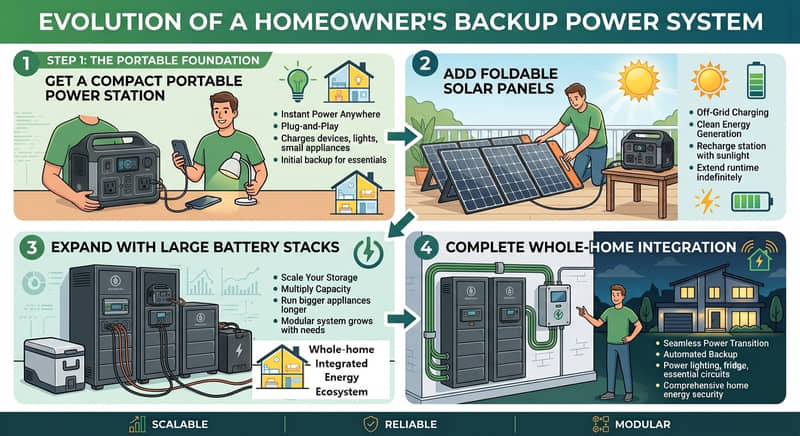
Portable Solar Panels: Flexible Energy Without Fixed Installation
Portable solar panels are typically foldable or freestanding units designed for temporary or semi-permanent use.
Unlike roof-mounted systems, they:
- Require no structural installation
- Can be repositioned for optimal sun exposure
- Work well for apartments, rentals, camping, and backup scenarios
- Can supplement an existing solar system during high-demand periods
They are often the first step for users who want solar flexibility without committing to a full installation.
Portable Power Stations: The Integrated Energy Core
Where portable panels generate power, portable power stations store and manage it.
These systems are important because they already include the key components that would normally require separate installation and compliance considerations:
- Built-in inverter (converts DC to usable AC power)
- Integrated battery management system (BMS)
- Charge controllers (often MPPT-based)
- Multiple output ports for household appliances and devices
This means users are not simply “adding batteries” — they are using a fully integrated energy system designed for safe plug-and-play operation.
In practical terms, this allows you to:
- Store solar energy from portable panels
- Run essential appliances during outages
- Create a mobile backup energy source
- Start small and scale gradually over time
Whether you need a essentials-only backup power system, a bigger portable generator or solar and battery solutions for RVs, Off-grid Living and outdoor use,
you can explore portable modular system comparisons, specs and cost estimations here:
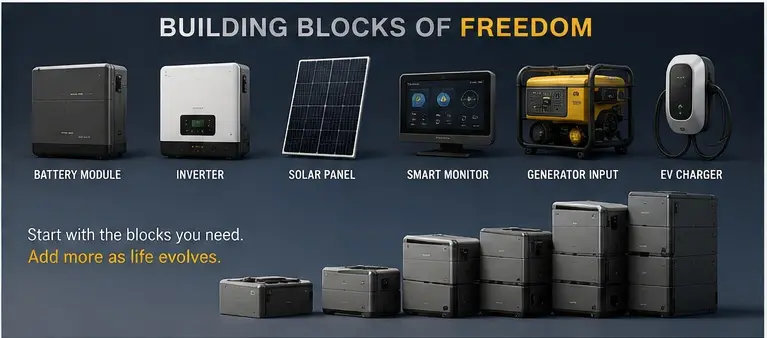
Modular Expansion: From Portable to Whole-Home to Smart Management Systems
The key advantage of modern energy systems is that they no longer need to be “all or nothing.”
Portable power stations can act as:
- Entry-level backup systems
- Supplementary storage for existing solar setups
- Step-up modules before committing to full home battery systems
Some ecosystems are designed specifically to scale from portable use into home integration, allowing users to gradually increase capacity and complexity.
For example, ecosystem-based systems allow users to move from:
Portable energy → backup power → partial home integration → whole-home energy management and automation
Explore what real ecosystem-based and scalable solutions look like:
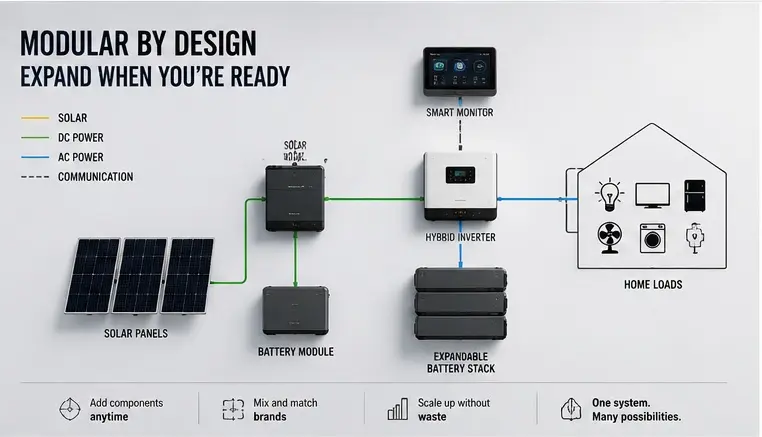
Where This Fits in the Bigger Solar Picture
Portable and modular systems sit between traditional solar mounting and future grid-interactive systems such as community solar and virtual power plants (VPPs).
They are not a replacement for fixed installations, but they serve an important role:
- immediate access to solar energy
- reduced dependency on installation timelines and regulations
- a scalable pathway into full residential solar systems
For many households, this becomes the starting layer of a longer-term energy strategy, rather than an alternative endpoint.
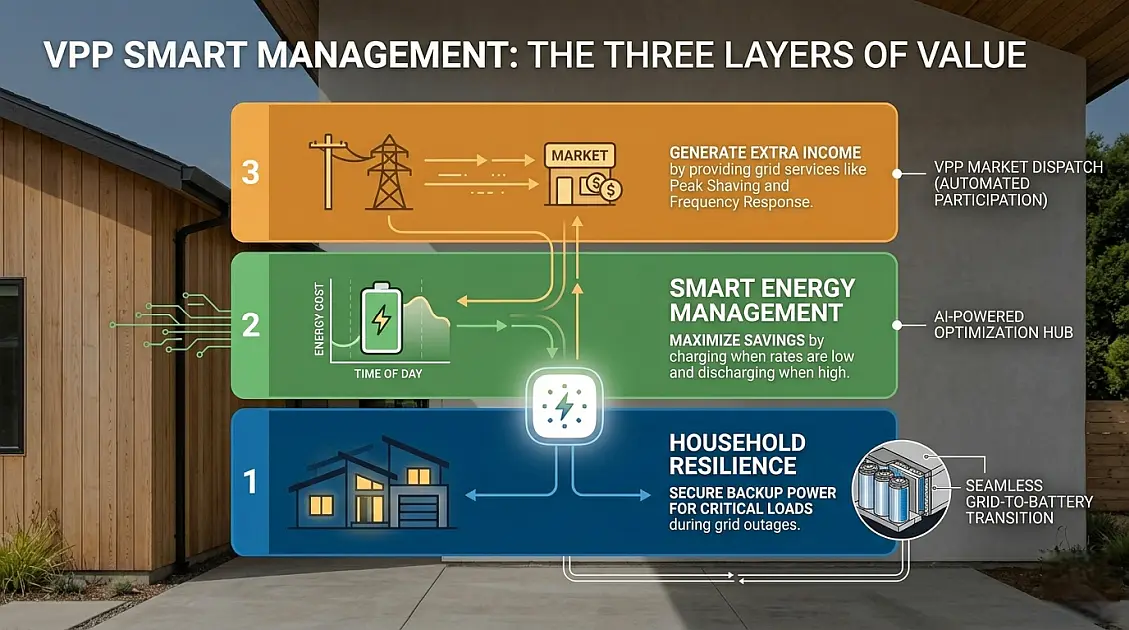
Another option is Community Solar Programs or VPPs
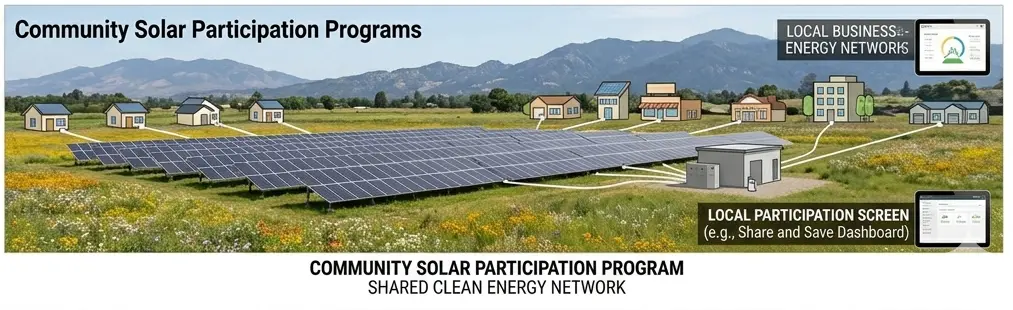
We also look into solutions like Community Solar and VPPs, for folks who really can’t install systems or who would like to do more with the power and savings they are already generating with their systems.
For a deeper looking into
Community Solar and Virtual Power Plants
visit NavigatingSolar’s webpage : Phase 3 – Maximization, to learn how shared solar works, who it works best for, and what to know before you decide to commit.
Here you will also find all the info you need on:
➖ solar battery storage,
➖ how to calculate how much battery capacity your home needs,
➖ discussions on the cost vs value of battery storage,
➖ energy independence, and
➖ energy-efficient home appliance stacks
Comparing Your Options
Choosing the right alternative depends on your priorities: performance, cost, space or aesthetics.
Here is a quick comparison:
| Solution | Primary Benefit | Cost vs. Roof Mount | Best For… |
|---|---|---|---|
| Ground Mount | Maximum Performance & Control | Higher (10-20% more) | Large, unshaded properties where maximum energy yield is the goal. |
| Solar Carport/Pergola | Dual Functionality & Shade | Significantly Higher | Homes needing covered parking or patio space, or those with limited roof space. |
| Solar Shingles (BIPV) | Superior Aesthetics | Much Higher (2-3x more) | Homeowners replacing their roof who prioritize a completely seamless look. |
| Portable Solar & Power Stations | Flexible, plug-and-play solar with backup power and no permanent installation | Lower initial cost (can scale over time) | Renters, apartments, campers, emergency backup, and anyone wanting to start small |
| Modular Home Energy Systems | Expandable energy storage and backup that grows with your household’s needs | Variable (start lower, expand as budget allows) | Homeowners wanting to build a system gradually without investing in a full installation upfront |
| Community Solar / Virtual Power Plants (VPPs) | Access renewable energy or earn value from shared energy resources without owning a complete solar system | Typically lower upfront cost (subscription or participation model) | People who can’t install solar, apartment residents, or homeowners interested in shared energy programmes |
Finding the Right Solar Fit for Your Home
The best solar solution is not always the most common one.
Some homes benefit from maximum energy production through ground-mounted systems. Others prioritize aesthetics, shaded outdoor spaces, future flexibility, or working around roof limitations.
Modern solar planning is about adapting systems to real-world living conditions, not forcing every homeowner into the same setup.
If you are still exploring what might work best for your property, the planning tools and calculators inside the Initialization Phase can help you compare options, understand trade-offs, and estimate long-term energy potential more clearly.
You can also explore trusted solar quote tools to connect with installers who can evaluate your property layout, energy goals, shading conditions, and future expansion possibilities.
Sometimes the most important part of going solar is simply understanding which path fits your situation best.
Solar Panel Comparison Chart
Compare solar panel types and mounting solutions to see which works best for your needs.
→ New to Solar? Take the Solar Smart Start Quiz
→ Explore the Solar Planning Tools
→ Connect with Local Solar Professionals Near You
Recommended Further Reading
Which Type of Solar Consumer Are You?
Types of solar-powered systems
7 Solar Installation Mistakes to Avoid (Including Hidden Costs Most People Miss)
Solar Battery Storage: Value vs Expense
Solar Incentives by State in 2026
References
NREL PVWatts Solar Calculator
This tool helps you estimate how much electricity a solar system can produce based on your location, roof direction, system size, and basic setup assumptions.
It’s not a quote tool or sales calculator — it’s a planning model used to understand potential solar output in different scenarios.
You can use it to compare system sizes, explore how orientation affects performance, and get a clearer sense of what solar might realistically produce on your property before speaking to installers.
Utility Rate Database
1. U.S. Department of Energy — Energy Saver Program
https://www.energy.gov/energysaver
This is one of the cleanest government resources explaining:
energy-efficient appliances
electrification upgrades
home efficiency improvement
how these interact with solar systems
Community solar info
Solar United Neighbors:
https://solarunitedneighbors.org/community-solar/
Clean Energy Group — Virtual Power Plant Acceleration
https://www.cleanegroup.org/initiatives/virtual-power-plant-acceleration/
——————————————————————————————————————————————-
[1] Unbound Solar. “Ground Mount vs. Roof Mount Racking: Which is Best?” Unbound Solar Blog.
[2] Paradise Solar Energy. “Ground Mount vs. Roof Mount Solar Systems: A Comparison.” Paradise Solar Energy Blog.
[3] Solar Electric Supply. “Residential Solar Carport System Discount.” Solar Electric Supply.
[4] EnergySage. “Solar Panel Alternatives: What Are Your Options?” EnergySage.
Bluetti USA : https://www.bluettipower.com
EcoFlow USA : https://us.ecoflow.com/