 Navigating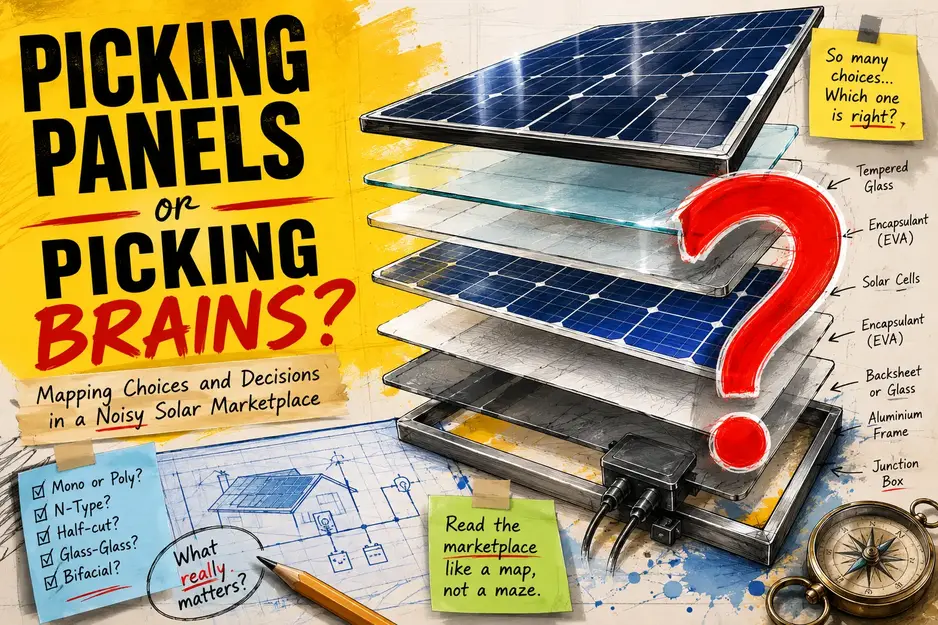
Picking the Perfect Panels Without Panic
…and Knowing Whether Your Choice Will Last Decades
If you are here, I bet you found yourself exactly where I did at one stage.
You think ” Right. Today is the day. Let’s look at solar panels and see what makes sense for my home …and budget.”
You open a website that resembles something like an Amazon gone one way…
…stock images you can’t truly tell the physical product size from,
let alone compare if the price is right for the size or is it a big brand with a small box at double the price.
..there’s 7 different manufactures…
…then they start with the Watts and whatnots,
and BOOOM!
your solar research just sucked the life out of you.
Well, today we will turn this generally overwhelming catalog crunch into a focused stroll through the market place.
So, ignore the selections and noise and vendors yelling “Discount, Discount!”
Let us have a look at what’s available, and why.
This Solar Panel Guide doesn’t just answer:
“How do I choose a panel?”
but “What exactly am I comparing when I open a marketplace with 600 different panels?”
What to Look For When Shopping For Solar Panels
Many homeowners immediately compare:
• wattage
• efficiency percentages
• manufacturer rankings
• price per panel
While those specifications matter, they rarely tell the whole story.
The real performance of a solar system depends on how the panels interact with:
✓ your roof space
✓ shading conditions
✓ inverter architecture
✓ local climate
✓ utility billing rules
✓ future energy needs
And that’s where homeowners usually do a double-take and go, “Hold on! What’s this stuff made from? Will it outlast this above mentioned list for 25 years?”
Which leads us to take a closer look at what solar panels are really made of, what different combinations of product materials mean to buyers, what dictates the lifespan of a panel, and above all, how to choose the panels most suited to your scenario.
The Anatomy of a Solar Panel
Before we talk about performance, let’s look under the hood.
A solar panel, or photovoltaic (PV) module, is a sophisticated piece of engineering designed to withstand decades of weather while quietly generating power.
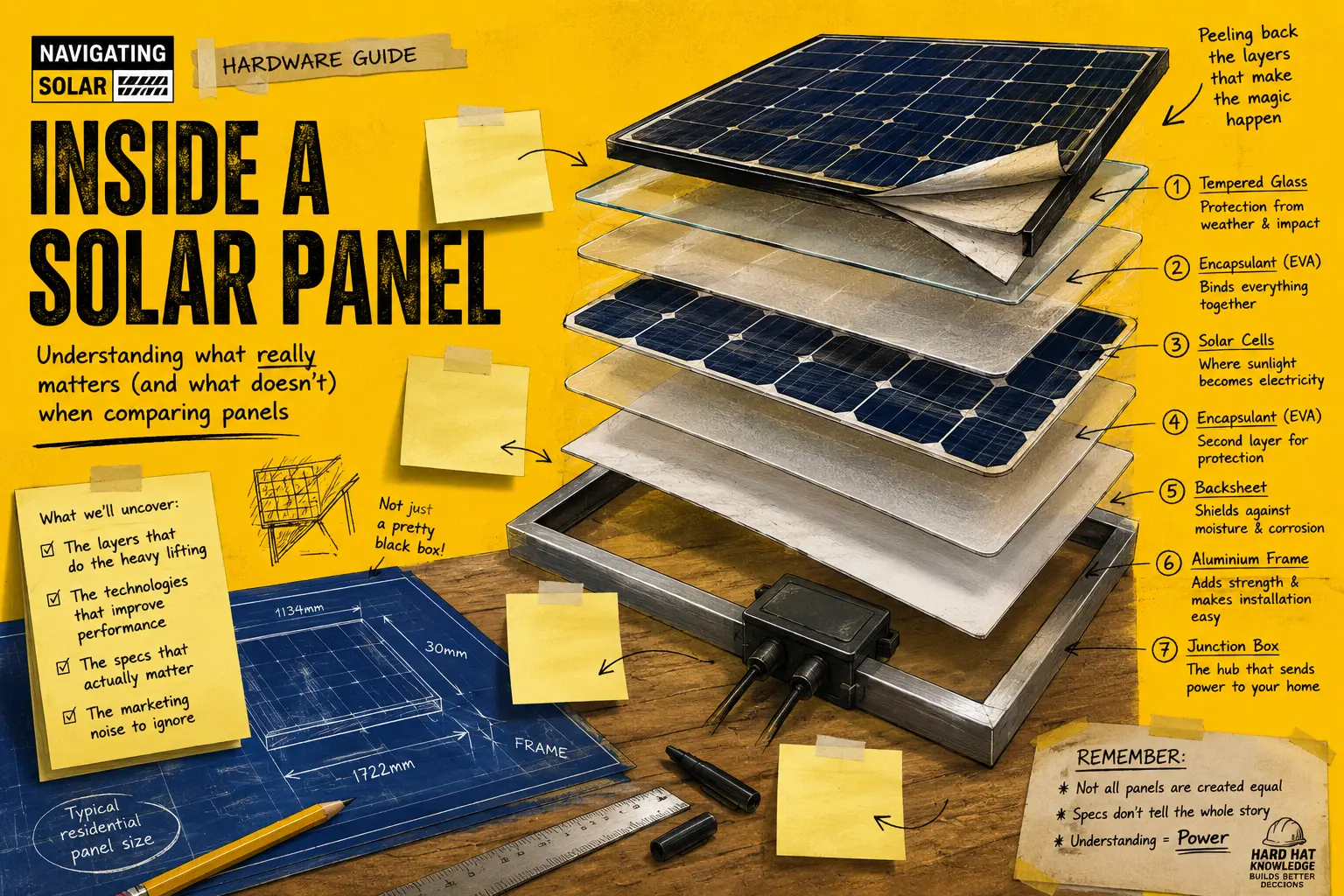
It’s more than just a collection of cells; it’s a carefully layered system [1].
| Component | Function | Consumer Significance |
|---|---|---|
| Solar Cells | The core component, typically made of silicon, that converts sunlight (photons) into direct current (DC) electricity (electrons). | Determines the panel’s efficiency and power output (wattage). |
| Tempered Glass | A highly durable, low-iron glass sheet that protects the cells from weather, hail, and debris. | Crucial for longevity and resistance to physical damage. |
| Encapsulant | A thin layer (often EVA or POE) that seals the cells between the glass and the backsheet, protecting them from moisture and vibration. | Prevents corrosion and ensures long-term performance stability. |
| Backsheet | The rear layer, usually a polymer, that provides electrical insulation and protects the internal components from moisture and UV degradation. | Its quality impacts the panel’s lifespan and fire rating. |
| Aluminum Frame | Provides structural integrity, protects the edges of the laminate, and allows for easy mounting onto your roof or ground array. | Essential for installation and wind/snow load resistance. |
| Junction Box | A small, weather-proof box on the back of the panel where the internal wiring is connected and the output cables (positive and negative) exit. | Contains bypass diodes that allow electricity to flow around shaded or damaged cells, preventing the entire panel from shutting down. |
📌The most important takeaway here is the junction box.
Those little bypass diodes are your panel’s unsung heroes.
If a single leaf shades one cell, the diode ensures that only that small section is bypassed, allowing the rest of the panel to keep producing power.
What Makes One Solar Panel Better Than Another?
At first glance, most solar panels look nearly identical.
The differences become visible when comparing the factors that influence long-term performance, like:
Efficiency
How much sunlight becomes usable electricity.
Temperature Performance
How well the panel performs during hot weather.
Durability
Resistance to hail, wind, moisture, and environmental stress.
Degradation Rate
How much output is lost over decades of operation.
Warranty Support
The manufacturer’s confidence in long-term reliability.
Understanding these factors makes comparing panels significantly easier than focusing on brand names alone.
Picking Panels Apart before Shopping for Solar
One thing that has changed dramatically over the last five years…
People don’t really buy “solar panels” anymore.
They buy technologies..
…and panels have become platforms.
Open five 450W panels from different manufacturers.
Notice that four are now TOPCon, most are Glass-Glass, and nearly all have 25-year product warranties.
That’s not a coincidence—it’s where the industry is heading.
So let’s peel back all the layers and see what these acronyms and abbreviations on a solar panel sticker means.
Layer 1 — The Base Material
This answers the first question: “What is the solar cell made from?”
Before manufacturers started adding new technologies like TOPCon or HJT, every solar panel began with a simple choice: the material used to make the solar cells.
While modern residential panelsare now overwhelmingly monocrystalline, you’ll still come across all three types when researching solar or browsing a marketplace.
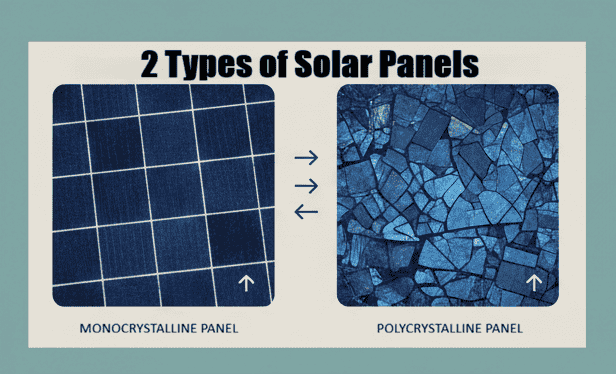
1. Monocrystalline (Mono)
This is the panel you’ll see most often on today’s residential roofs.
Monocrystalline cells are made from a single, highly pure silicon crystal.
Because electrons can move more freely through this uniform structure, these panels achieve the highest efficiencies and produce more electricity from the same roof space.
You’ll usually recognize them by their deep black appearance.
Best suited for:
- Homes with limited roof space
- Homeowners wanting maximum energy production
- Most modern residential installations
Typical efficiency: 17%–22%+
2. Polycrystalline (Poly)
Polycrystalline panels were once the affordable alternative to monocrystalline panels.
Instead of using a single crystal, they’re manufactured from multiple silicon crystals fused together.
Those crystal boundaries make it slightly harder for electricity to flow, resulting in somewhat lower efficiency.
Their blue, speckled appearance makes them easy to recognize.
Today they’re becoming far less common as monocrystalline manufacturing has become more affordable.
Best suited for:
- Larger roofs where space isn’t limited
- Budget-conscious projects
- Older residential systems
Typical efficiency: 15%–17%
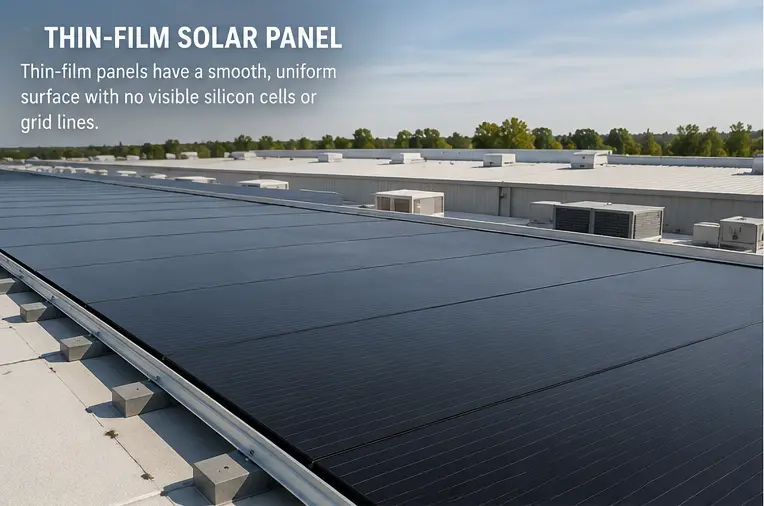 3. Thin-Film
Thin-film panels take a completely different approach.
Instead of cutting silicon wafers, manufacturers deposit an extremely thin photovoltaic layer onto a backing material such as glass, metal or flexible plastic.
They’re lightweight, can be flexible, and work well in certain commercial or specialty applications—but they generate less electricity for the same amount of space.
For that reason, they’re rarely used on residential rooftops.
Best suited for:
- Commercial buildings
- Large ground-mounted projects
- Portable or specialty applications
Typical efficiency: Lower than crystalline silicon panels
Encapsulant
😂 We actually ignored the poor bastard for 6,000 words, before adding it in on the last edit.
Because… honestly… homeowners don’t buy encapsulants, but they do like explanations.
It’s basically the clear glue of the panel. That clear glue (usually EVA or POE) does four jobs.
- Holds everything together
- Stops moisture getting in
- Cushions the cells from vibration
- Electrically insulates the cells
Without it the cells would crack, move around and slowly corrode.
That’s why you never hear people discussing it.
If the encapsulant fails… the panel has a serious manufacturing problem.
Otherwise… it quietly does its job for 30 years.
Why this matters
This is the first filter when comparing solar panels.
For most homeowners today, the choice has largely been made by the industry.
If you’re shopping for a new residential system, you’ll almost certainly be comparing monocrystalline panels.
That means once you’ve identified a panel as monocrystalline, you’re ready to move to the next layer of the puzzle.
Understand how each system links to your home and utility, before settling on product choice.
Explore what these systems look like, how they work and what the modules are for each system.
Here are the steps to a visual aid:
Follow the link below – Choose a system (hybrid, grid-tied or off-grid) – Choose a size – Hover over the product image and see how it transforms into a home energy system.
➡️ Compare Different Solar Systems
Layer 2 — The Silicon Type
Now we go one level deeper.
This one needs a proper explanation because almost every website skips the WHY.
This is one that confuses almost everyone.
Imagine silicon like a road.
Electricity wants to travel down it.
Manufacturers deliberately add tiny amounts of other materials to the silicon to get a specific effect.
The monocrystalline silicon itself can be made in different ways. Mainly:
- P-Type
- N-Type
From this point on, the interesting questions aren’t about the base material anymore.
They’re about how manufacturers continue improving that same monocrystalline silicon through newer technologies like N-Type, TOPCon, HJT, and IBC
This answers: How was the silicon engineered?
P-Type
The old recipe: They add boron.
Works brilliantly.
We’ve used it for decades.
Cheap. Reliable.
The older generation, but still everywhere. Usually paired with PERC.
Nothing wrong with it. Just gradually being replaced.
N-Type
Instead of boron… they add phosphorus.
That tiny change creates different electrical behavior.
Why bother?
Because boron has one annoying problem.
Over many years… sunlight slowly causes tiny defects.
The panel gradually loses a little more performance.
This is called:
Light Induced Degradation (LID).
N-Type silicon is naturally resistant to that.
Which means:
Less degradation.
Better performance.
Longer life.
That’s why everyone is moving toward N-Type.
Not because P-Type is bad… because N-Type ages more gracefully.
That’s a much nicer homeowner explanation than talking about semiconductor physics, isn’t it?
Benefits:
• less degradation
• better heat tolerance
• better lifetime production
• fewer impurities
Most premium residential panels today use N-Type.
You’ll increasingly see “N-Type TOPCon” instead of simply “TOPCon.”
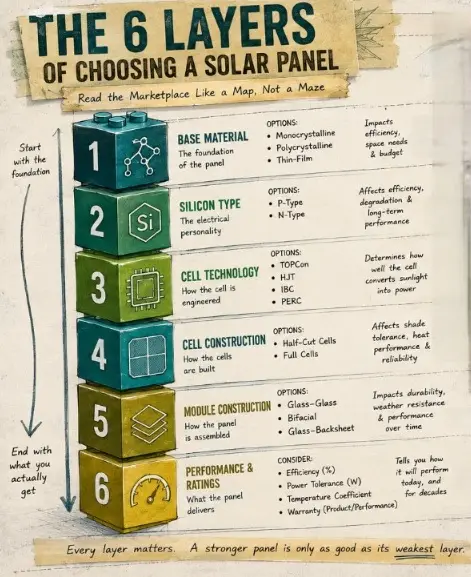
Layer 3 — Cell Technology Beyond the Basics: Modern Panel Innovations
The solar industry doesn’t stand still.
Over the last few years, several key innovations have become standard, dramatically improving panel performance and reliability.
Now engineers ask “How do we get the electricity out of that silicon more efficiently?”
That’s where we get
- TOPCon
- HJT
- IBC
- PERC
These are not replacing N-Type.
They’re built on top of it.
So you can legitimately have Monocrystalline ➜ N-Type ➜ TOPCon
All describing the same panel.
(…and suddenly everything clicks.)
TOPCon (Tunnel Oxide Passivated Contact)
Currently the industry’s favorite child.
If someone is buying a quality residential panel today… there’s a very good chance it’s TOPCon.
TOPCon is not the silicon. it’s what engineers build on top of the silicon.
Imagine building a house.
The concrete foundation… that’s N-Type.
The insulation… that’s TOPCon.
TOPCon is an incredibly thin layer that sits where electricity leaves the solar cell.
Its job is basically : Stop electrons escaping the wrong way, so less energy gets wasted.
Result:
Higher efficiency.
Better heat performance.
Excellent low-light performance.
It’s relatively inexpensive to manufacture More efficient than PERC Works beautifully with N-Type silicon Has lower degradation
It’s basically become today’s mainstream premium technology.
IBC (Interdigitated Back Contact)
IBC is completely different. This is clever engineering.
Instead of putting all the electrical contacts on the front… they’re hidden behind the cell. Now the front becomes almost entirely active solar surface.
Advantages:
No shading from front wiring.
More active surface.
More sunlight.
Higher efficiency.
Beautiful appearance.
Premium product. More expensive.
i-TOPCon
Basically, it’s TOPCon cross IBC ideas.
Still fairly new, but worth mentioning because folks will start seeing the term popping up more often.
Heterojunction (HJT): Premium Performance for Demanding Installations
Heterojunction (HJT) panels combine traditional crystalline silicon with ultra-thin semiconductor layers that help electricity flow more efficiently.
This design improves performance in high temperatures, reduces long-term degradation, and delivers excellent efficiency.
HJT panels are available for residential homes, but they’re generally positioned as a premium option and often cost more than standard panels.
For most homeowners, modern N-Type TOPCon panels offer an excellent balance of performance and value.
HJT is worth considering when roof space is limited, maximum efficiency is a priority, or you’re investing in a premium long-term system.
Advantages:
• extremely efficient
• incredible temperature performance
• excellent bifacial output
• very low degradation
Disadvantages:
expensive, mostly premium panels.
📌 Homeowner takeaway: Don’t worry if your installer doesn’t recommend HJT. It’s one of several high-performance technologies available today—not the only good choice.
Think of them like this:
N-Type : The better silicon.
TOPCon : A smarter exit door for electricity.
IBC : A completely different wiring layout.
HJT : A different way of building the whole cell using several layers.
They’re solving different engineering problems.
That’s why you’ll sometimes see combinations like N-Type TOPCon.
One describes the silicon, the other describes the cell architecture.
They’re not competing labels—they’re stacked together.
PERC Technology (Passivated Emitter and Rear Cell)
This is a game-changer, but I think this is where the industry itself muddies the waters.
PERC is actually a transition technology.
It doesn’t fit as neatly as TOPCon or HJT because it was developed for P-Type silicon.
That’s why it feels like it’s sitting between layers.
Let’s look at the hierarchy. Old generation panels: Monocrystalline → P-Type → Standard Cell
Then engineers thought, “Can we squeeze a bit more performance out of P-Type?”
Answer: PERC.
It was a clever upgrade to the old generation.
Then they hit a ceiling.
So the industry changed the silicon itself.
Once manufacturers had chosen the silicon itself, they asked a new question: “How can we get more electricity out of every cell?”
The answer came in the form of different cell architectures.
Some, like PERC, improved the older P-Type generation.
Others, including TOPCon, HJT, and many modern IBC designs, represent the next generation built around N-Type silicon
Traditional cells have a metal layer on the back that absorbs some light and heat.
PERC cells add a thin, reflective layer (a passivation layer) to the back of the cell.
The Benefit: This layer reflects unabsorbed sunlight back into the silicon, giving the cell a second chance to capture the energy.
It also reduces heat absorption.
The result is a significant boost in efficiency, especially in low-light conditions and high temperatures.
Today, most high-quality monocrystalline panels are PERC.
Do homeowners actually need to know all this?
Not in detail, but they do need enough understanding that when they browse a marketplace
Our job isn’t to turn you all into solar engineers. It’s to remove that feeling of intimidation.
If a homeowner finishes the article thinking, “Oh… TOPCon isn’t another mysterious product. It’s just a newer cell design. N-Type is the silicon it’s built on.”
…then we’ve accomplished what we set out to do: get clarity before investing real money.
Not in detail, but they do need enough understanding that when they browse a marketplace
Our job isn’t to turn you all into solar engineers. It’s to remove that feeling of intimidation. If a homeowner finishes the article thinking, “Oh… TOPCon isn’t another mysterious product. It’s just a newer cell design. N-Type is the silicon it’s built on.”
…then we’ve accomplished what we set out to do: get clarity before investing real money.
Layer 4 — The Actual Solar Cell Construction
Now we ask “How should we build the cell?”
Examples
- Half-cut
- Full-cell
Different construction. Same technology.
Half-Cut Cells and Cell Counts
This is one of the most important innovations for homeowners dealing with partial shading.
Instead of using 60 or 72 full-sized cells, the manufacturer cuts each cell in half using a laser, doubling the number of cells (to 120 or 144).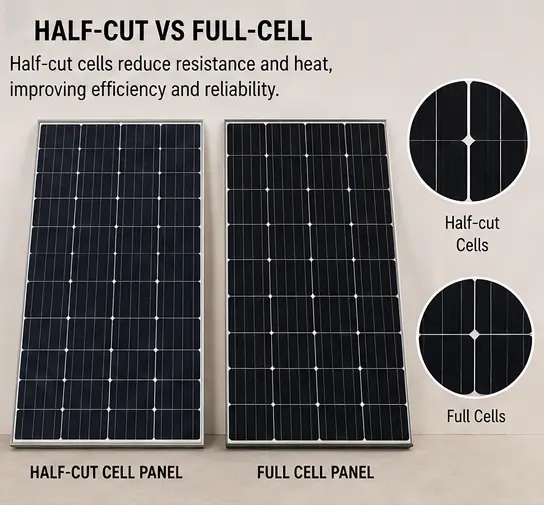
This is another place marketing gets sneaky.
Consumers naturally think: “More cells must be better.”
Not necessarily.
Many manufacturers are simply counting the half-cells, and rearranging the layouts.
Usually because manufacturers changed the wafer size too, the panel is almost exactly the same size.
They simply packed the smaller pieces differently. Instead of
□ □ □ □ □you now get something like
▭ ▭ ▭ ▭ ▭
▭ ▭ ▭ ▭ ▭
More pieces, but the same amount of silicon. Just divided differently.
Like slicing one loaf into thinner slices.
You don’t have more bread. Just more slices.
So why less resistance?
This is where electricity gets weird.
Current flowing against resistance becomes heat. Heat wastes power.
When you split the cell and rewire the panel into two parallel halves the current traveling through each little piece becomes smaller.
Less current = less electrical resistance.
Less resistance = less wasted energy as heat = More electricity reaches the inverter.
More importantly, it splits the panel into two independent halves.
If the bottom half is shaded (say, by a chimney or vent), the top half can continue to produce power at full capacity, significantly mitigating the impact of partial shading.
That’s why half-cut cells improve efficiency.
The silicon itself didn’t become better.
The electrical traffic is channeled differently, leading to a small boost in overall efficiency.
Then what am I comparing?
THIS is the important bit. You actually don’t care whether it’s 108, 120, 132, or 144 cells.
Those numbers mostly describe how the manufacturer assembled the panel.
Instead compare
- panel power (Watts)
- efficiency
- degradation
- temperature coefficient
- warranty
- technology (TOPCon, HJT etc.)
Those affect your ownership experience.
Layer 5 — Module Construction
This is simply about how manufacturers package and protect that technology for the next 30 or 40 years.
This isn’t about the cells anymore.
It’s about the finished product that gets bolted to your roof.
Now we ask “How should we build the panel?”
So, let’s look at some of the different finished product. The biggest things homeowners will encounter are:
- Glass-Backsheet
- Glass-Glass
- Bifacial
- Frameless (rare in residential)
But there are a few more worth mentioning.
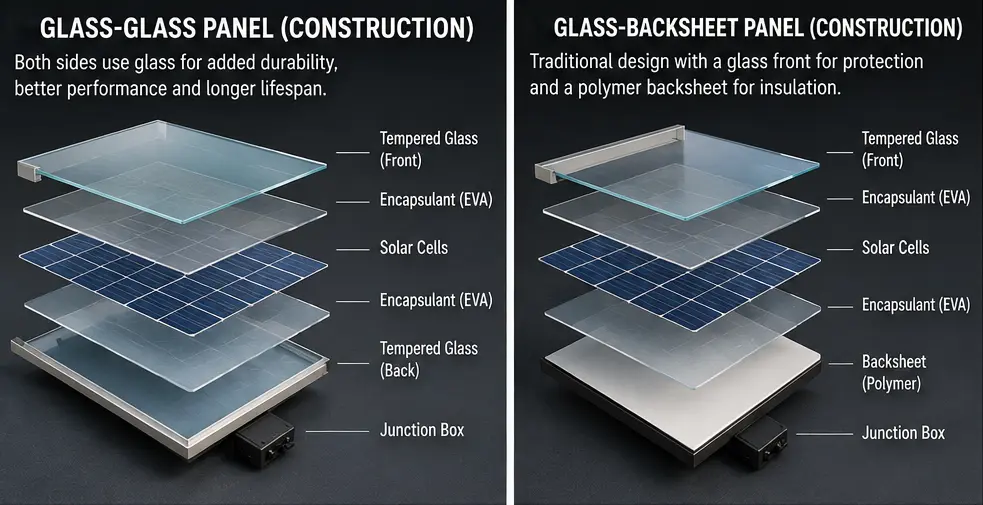
Glass-Backsheet
It’s the standard.
Glass → Cells → Polymer backsheet
This is still the most common residential construction.
Advantages:
lighter
cheaper
proven technology
 easier to handle
Disadvantages:
plastic slowly ages
slightly more moisture ingress
generally a little shorter lifespan than Glass-Glass
Glass-Glass
Instead of Glass ➜ Cells ➜ Plastic backsheet
you get Glass ➜ Cells ➜ Glass
Advantages:
Better moisture protection.
Longer lifespan.
Often lower degradation.
Excellent for harsh climates.
Disadvantages:
Heavier.
Slightly more expensive.
This is becoming increasingly common.
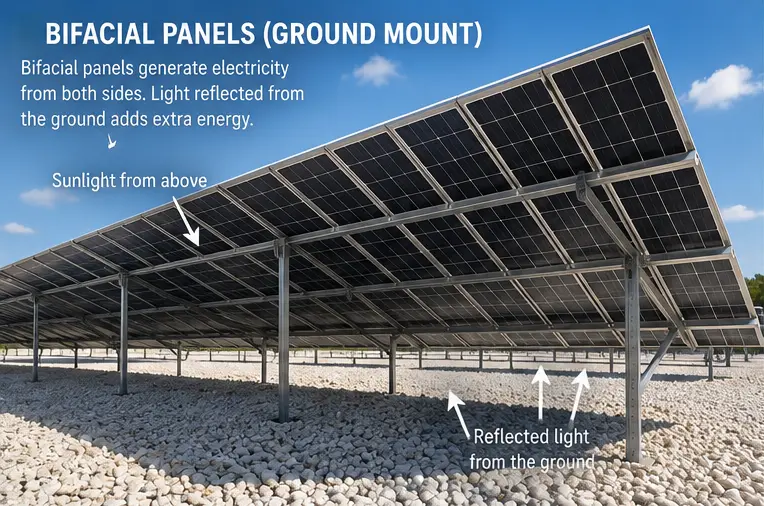 Bifacial Panels
These panels are exactly what they sound like: they capture light from both sides.
They replace the opaque back-sheet with a second sheet of glass, allowing light to pass through.
The Benefit: While they won’t capture light from your roof directly, they capture albedo—the light reflected off the surface below (like a white roof, gravel, or the ground).
For a standard residential rooftop, the benefit is minimal, but it’s a technology to watch for future applications.
Campers, TinyHomes and RV enthusiasts, report the benefits from the portable bi-facial solar panels.
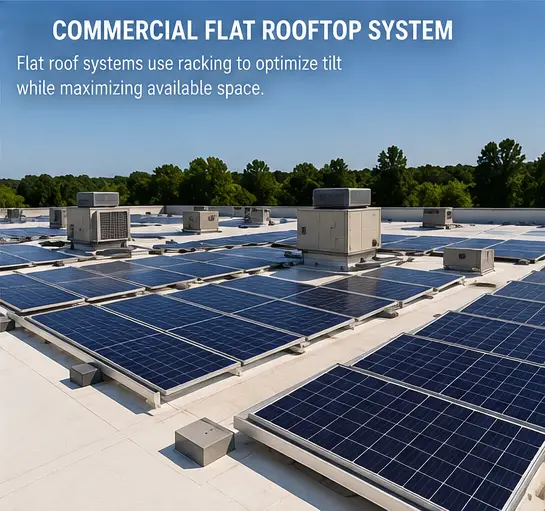
On a ground-mounted system or a flat commercial roof, this can add an extra 5% to 30% to the panel’s output.
Bi-facial panels at this scaleusually pairs with the Glass-Glass tech.
Frameless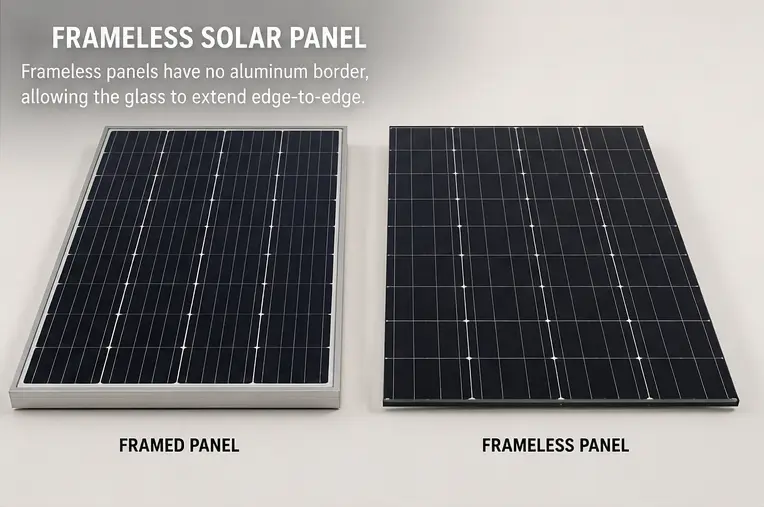
Used mostly in commercial systems.
No aluminium frame.
Advantages:
less dirt build-up
good for large commercial arrays
works well with bifacial systems
Disadvantages:
special mounting
uncommon for residential roofs
Homeowner takeaway: You’ll probably never buy one.
Building-Integrated Photovoltaics (BIPV)
Most of the panels we’ve discussed so far are **mounted onto** a roof.
BIPV takes a different approach.
Instead of installing solar panels *on top* of the building, the solar product becomes part of the building itself.
Examples include:
* solar roof tiles
* solar shingles
* solar façades
* solar glass
* canopy structures
In other words, the solar module replaces conventional building materials while generating electricity at the same time.
Advantages:
* cleaner appearance
* integrated architectural design
* dual-purpose building materials
Disadvantages:
* higher cost
* more specialised installation
* fewer product choices
* repairs can be more complex
📌 **Homeowner takeaway**
Most residential systems still use conventional roof-mounted panels because they offer the best balance of performance, flexibility and cost.
BIPV is growing, particularly in premium homes and new construction, but for most homeowners it’s still considered a specialist option rather than the mainstream choice.
If you’re retrofitting an existing home, you’ll almost certainly be comparing conventional solar panels. BIPV products are most commonly considered during new builds, major roof renovations, or architectural projects where appearance is just as important as energy production.
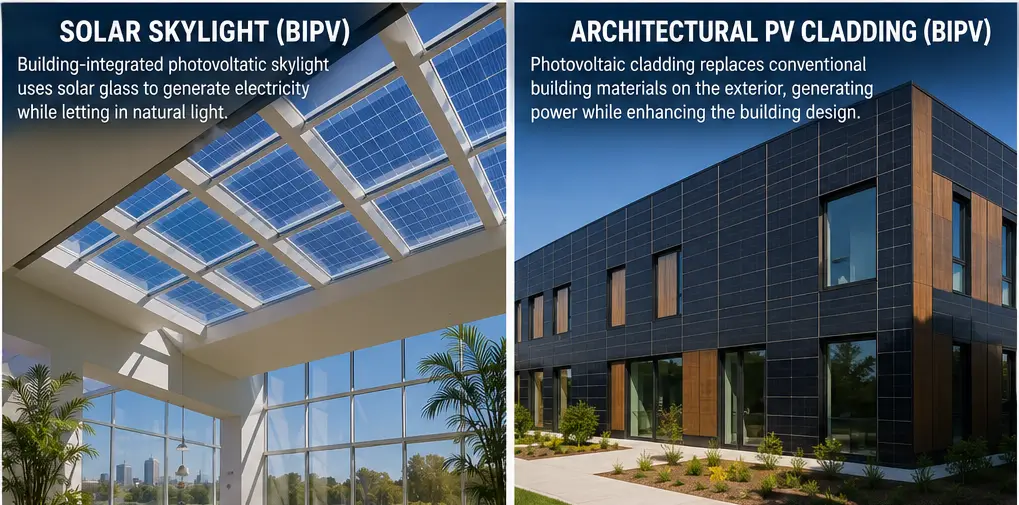
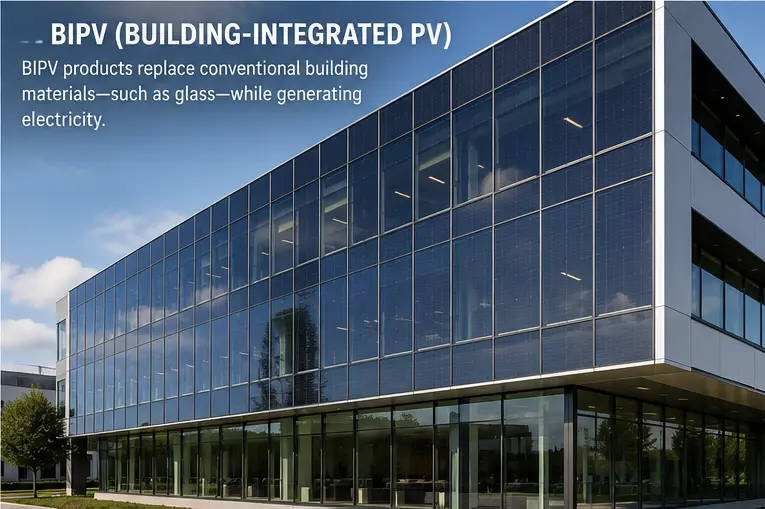
By the time you reach this layer, you’re no longer comparing the solar cell itself—you’re comparing how manufacturers package that technology into products designed for different homes, buildings and applications.
Shingles?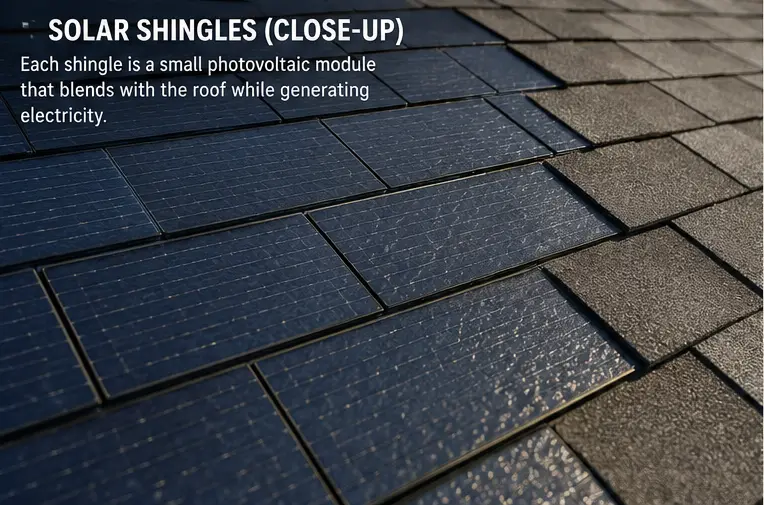
Solar shingles have their own ecosystem.
They’re not really “module construction.”
They’re roof replacements.
Different buying decision.
Different customer.
Different installer.
Different article.
 Flexible panels?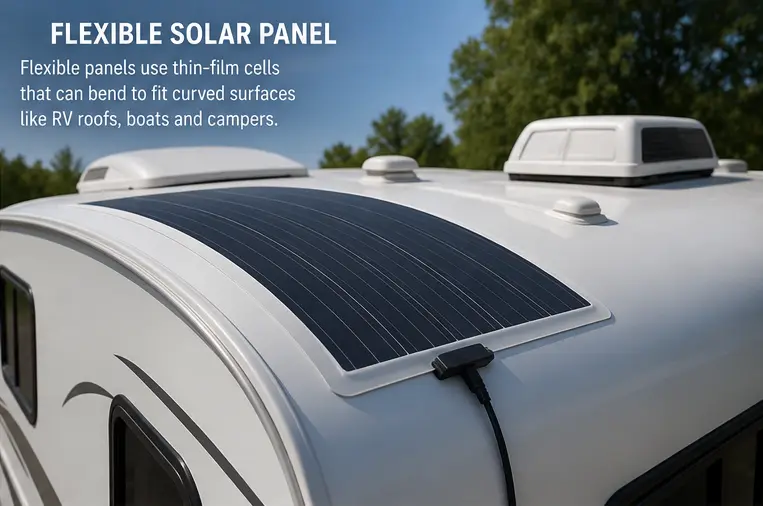
Same story.
Not for residential rooftops.
Think:
Apartment Dwellers
RV Living and camping
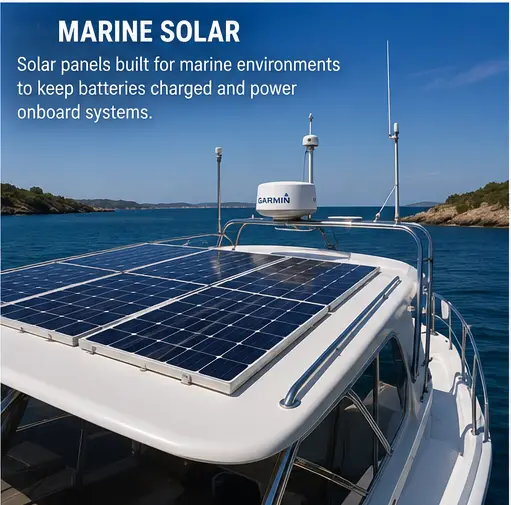
Marine.
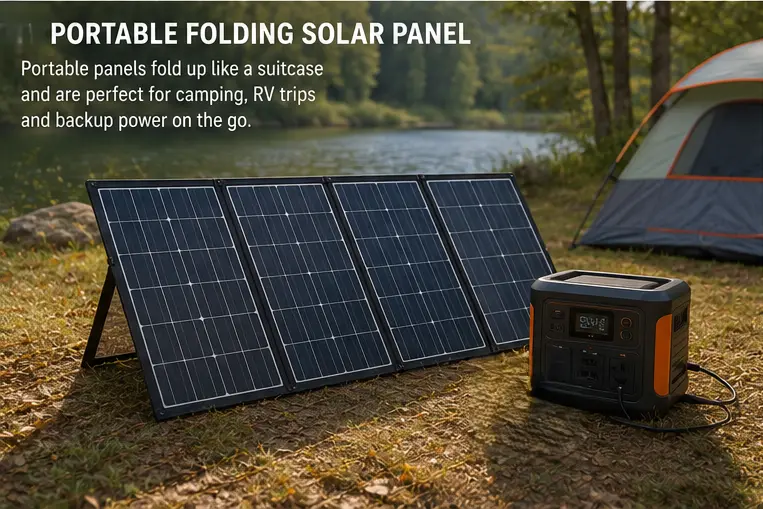
And foldable panels for larger portable setups for mobile power stations.
Think battery storage first…
The Really Interesting Bit
Market trends. When you start shopping for solar you will notice these.
Browse panels?
You’ll notice…
Five years ago, almost everything was “PERC”.
Today you see TOPCon and N-Type everywhere, Glass-Glass increasing, Higher wattages. Longer warranties.
Marketplace browsing becomes industry education once you know which noises to block out, and what you are actually looking at.
If I were ranking technologies by importance for a homeowner shopping today, I’d say:
- ⭐⭐⭐⭐⭐ TOPCon – definitely understand this.
- ⭐⭐⭐⭐⭐ N-Type – you’ll see it everywhere.
- ⭐⭐⭐⭐☆ Glass-Glass – increasingly common.
- ⭐⭐⭐⭐☆ Half-Cut Cells – almost standard now.
- ⭐⭐⭐☆☆ Bifacial – useful in specific situations.
- ⭐⭐☆☆☆ HJT – recognize the name, know it’s premium.
- ⭐⭐☆☆☆ IBC – recognize the name, know it’s premium.
Take-away: 80% of what you’re comparing today is actually built on a very similar recipe.
The marketplace looks overwhelming until you realize most manufacturers are converging on the same handful of technologies.
Layer 6 — Performance
Panel-Perfect Partners for Production
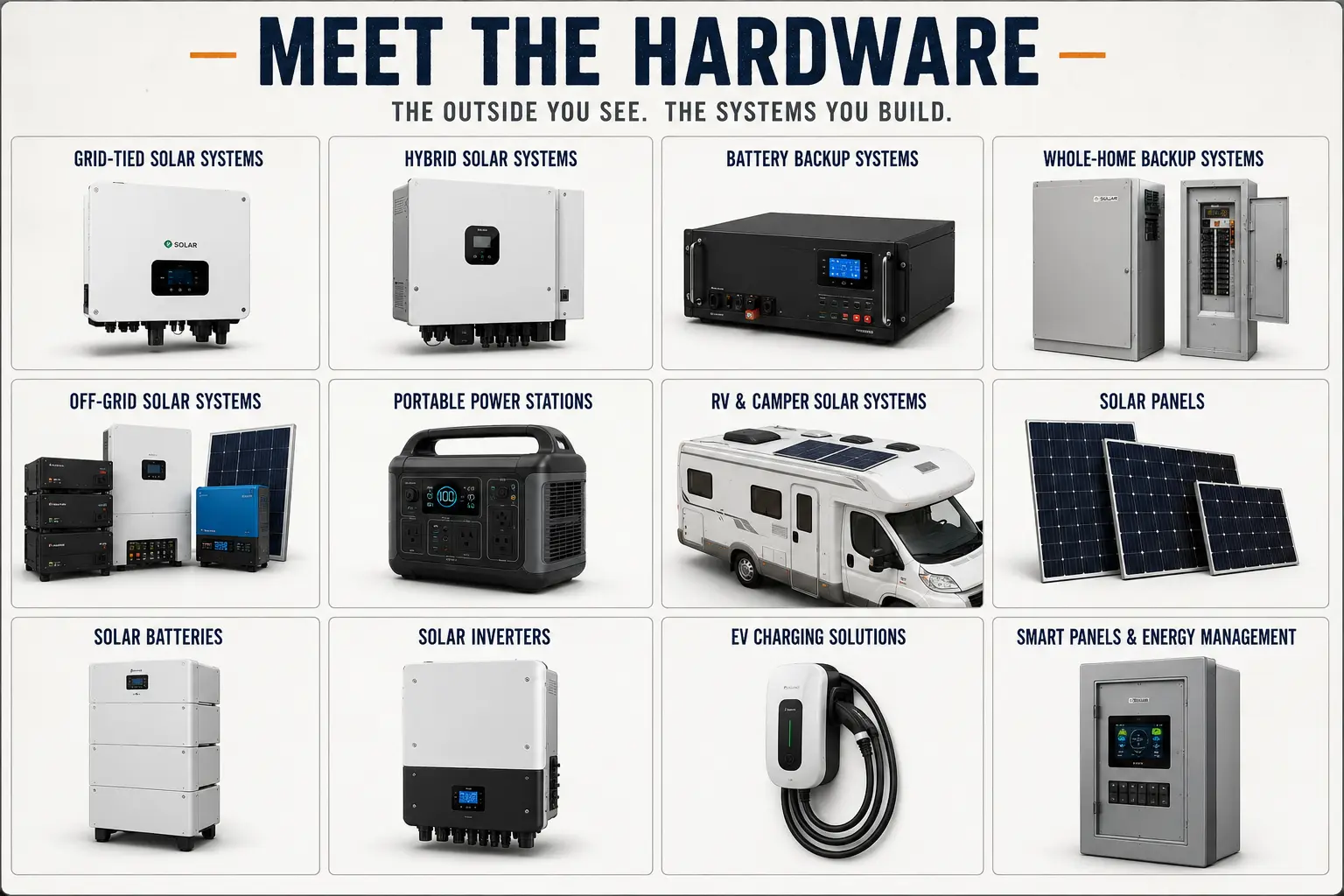
Now let’s look at the Supporting Hardware for Solar Panels.
Some homeowners will need them. Others won’t.
A solar panel doesn’t work on its own.
The electricity it produces still has to be managed, protected and, in some systems, stored.
That’s where a handful of supporting components come in.
Charge Controllers
Job: Protect batteries from being overcharged.
A solar panel produces electricity whenever the sun shines.
Left unchecked, that electricity would continue flowing into a battery long after it was full, eventually damaging it.
A charge controller sits between the solar panels and the battery, regulating the charging process.
Think of it as an automatic tap that slows the flow as the battery fills up.
You’ll usually find charge controllers in:
Off-grid homes
Cabins
RVs
Boats
Portable solar systems
Most grid-tied residential systems don’t have a separate charge controller because that function is already built into the hybrid inverter or battery system.
Two types you’ll see:
PWM (Pulse Width Modulation) The older, simpler technology. Reliable and inexpensive, but less efficient.
MPPT (Maximum Power Point Tracking) The modern choice.
An MPPT controller constantly adjusts itself so the panels operate at their most efficient voltage, often producing 10–30% more energy than a comparable PWM controller under real-world conditions.
If you’re buying a new battery-based system today, MPPT is almost always the better option.
Power Optimizers
Power optimizers are often confused with charge controllers because they’re both small boxes connected to the panels.
In reality, they do completely different jobs.
A power optimizer sits underneath each individual panel. Instead of managing batteries, it manages the electricity coming from that one panel.
Why?
Solar panels connected in a string naturally behave like Christmas lights.
If one panel performs poorly because of shade, dirt, leaves or a chimney, the entire string can lose performance.
An optimizer allows each panel to operate much more independently.
That means: Less energy lost from partial shading
Better monitoring of individual panels
Easier fault finding if one panel develops a problem
Not every installation needs optimizers.
They’re most valuable on roofs with:
Multiple roof faces
Trees
Chimneys
Vents
Regular partial shading
On a simple roof with full sun all day, the additional cost may not provide enough extra benefit.
So… do I need either of them?
That depends entirely on your system.
| System | Charge Controller | Optimizers |
| Grid-tied solar | Usually No | Sometimes |
| Hybrid solar with batteries | Usually built into the inverter | Sometimes |
| Off-grid solar | Yes | Sometimes |
| RV or portable solar | Yes | Rarely |
The important lesson is this:
Charge controllers protect batteries.
Optimizers protect panel performance.
They may both look like small black boxes, but they solve completely different problems.

Module Efficiency vs Cell Efficiency
Manufacturers improved cell efficiency ➜ cell layout ➜ larger wafers ➜ better packaging ➜ lower losses
So more wattage doesn’t necessarily mean “better.”
Ask yourself why two 450W panels are different sizes.
The answer is often panel efficiency, also sometimes referred to as Module efficiency.
Manufacturers love quoting cell efficiency.
But homeowners buy modules, not cells…
The panel’s efficiency tells you how much electricity the entire panel will produce from the available roof space.
That’s the only number affecting your roof.
If two panels both produce 450W, but one has a higher module efficiency, it usually means it generates the same power from a slightly smaller surface area.
That’s particularly valuable when roof space is limited.
Power Tolerance
This one is criminally under-explained online.
Imagine buying a 1 lb bag of coffee. You expect there to be at least one pound inside—not 15.8 ounces because the factory was having a bad day.
Solar panels work the same way.
A manufacturer might advertise 450 Watts. But manufacturing is incredibly precise—not perfect.
Every panel ends up a tiny bit different. Maybe 449.8W or 451W or 452W or even 447W
They’re all almost identical. The question is…
Which ones are the manufacturer willing to sell as a 450W panel?
That’s where power tolerance comes in.
Years ago you often saw something like 450W ±5W
That means the manufacturer could legally ship you a panel producing anywhere between 445W and 455W. So your “450W” panel might actually produce only 445W.
Still within specification.
Today many premium manufacturers advertise 0 to +5W or even 0 to +10W.
That means something completely different. The manufacturer promises: “You’ll never receive less than 450W.”
Your panel could be 450W or 452W or 454W or 455W But never 447W.
For homeowners, this isn’t usually a deal-breaker.
For a single panel, the difference between 445W and 450W is tiny and won’t noticeably affect your electricity bill.
The bigger takeaway is what the specification says about the manufacturer’s confidence in its production process – it’s a good indicator of manufacturing precision and quality control.
A 0 to +5W rating tells you the company is confident enough to guarantee that every panel leaving the factory will meet—or exceed—the advertised output.
Reading a Specification Sheet
Not exciting, but reassuring stuff to know when you paying an arm and a leg for equipment.
Fire Safety Certifications
Modern panels carry certifications. It’s especially important for roof installations.
Solar panels spend decades exposed to intense sunlight, high temperatures, storms and electrical currents, so safety testing is every bit as important as performance testing.
Quality panels are independently certified to meet strict fire safety standards before they can be installed on residential roofs.
These certifications help verify that the panel:
- resists the spread of flames
- can withstand years of outdoor exposure
- meets electrical safety requirements
- complies with building and insurance standards
For most homeowners, this isn’t a feature to compare between brands—it’s a requirement you should expect every reputable panel to meet.
If you’re comparing products in a marketplace you’ll often find these certifications listed in the product specifications or downloadable datasheet.
Their presence is one more indication that you’re looking at equipment designed for long-term residential use.
What is a fire rating?
People often think the panel is being tested to see if it catches fire.
Not really. It’s more about: “If a fire starts, how does this panel behave?” or “Does this panel make the fire worse?”
Remember, you’re mounting electrical equipment on top of your roof.
Insurance companies, building codes and fire departments all care about that.
What do they test?
Things like:
- Will flames spread across the panel?
- Does the panel resist ignition?
- Can burning pieces fall off?
- Will the panel continue producing dangerous voltages during a fire?
- Can firefighters safely work around it?
It’s much more than “does it burn.”
So why mention it?
Because readers WILL see certification logos on datasheets. Things like
- UL
- IEC
- ETL
- Class A
They wonder, “What’s all that?”
Now they know – and we wiped out some more confusion.
Reading the Datasheet
Mechanical Load Ratings
Commercial solar buyers often look here first.
Especially hurricane states.
And it’s actually a great homeowner topic because, unlike fire ratings, mechanical load ratings can affect what you buy depending on where you live.
A solar panel is surprisingly strong. It’s expected to survive 25 to 40 years of whatever nature throws at it.
The question is how strong? That’s what the mechanical load rating tells you.
Because roofs experience different forces, manufacturers therefore test both directions separately.
Manufacturers test how much pressure a panel can withstand before it bends, cracks or suffers permanent damage.
When browsing a marketplace, you’ll often find specifications similar to these:
| Specification | What it tells you |
|---|---|
| Front Load: 5400 Pa | How much downward pressure the panel can safely withstand from snow, ice or weight during installation. |
| Rear Load: 2400 Pa | How much upward force the panel can resist from strong winds and storm uplift. |
Don’t worry about memorizing or converting it. The important part is understanding what those two numbers represent.
Instead ask: “What kind of weather is your roof going to experience over the next 30 years?”
For most homeowners… if both panels are from reputable manufacturers the ratings will already exceed normal residential requirements.
Think of it as another confidence check rather than the deciding factor.
Should I compare load ratings?
Only if you’recomparing two similar panels.
Most homeowners won’t need to compare load ratings closely—but if your local climate is extreme, this specification suddenly becomes one of the most important numbers on the datasheet.
That surprises a lot of people.
How Solar Connects to Your Space and Choices
Roof Space Often Determines Panel Choice
For many homeowners, available roof space is the deciding factor.
A larger roof may comfortably accommodate lower-efficiency panels while still producing enough electricity.
Smaller roofs require every square foot to work harder.
In these situations, higher-efficiency panels often become more valuable because they generate more electricity from the same available area.
This is why two homeowners with identical energy usage may end up choosing completely different panel models.
The decision is often about space optimization rather than panel quality.
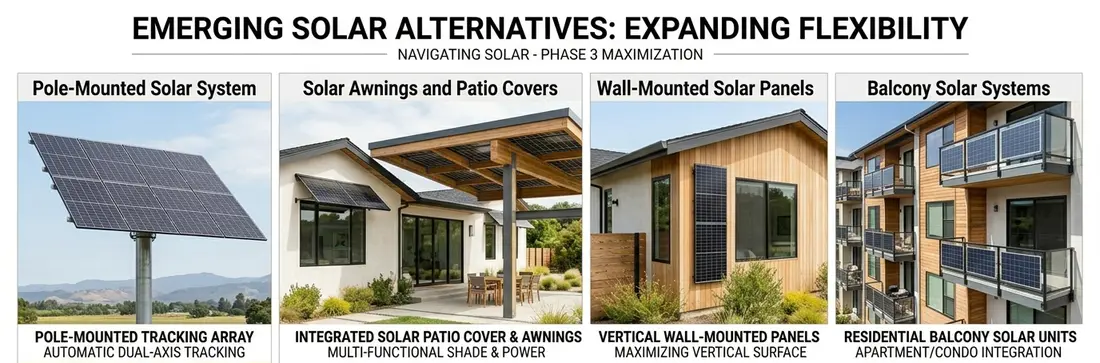
Read more about Alternative Solar Mounting Solutions – Click the image
Solar Panels Behave Differently in Different Climates
Many people assume solar panels perform best in extreme heat.
The opposite is often true. Solar panels, like many other pieces of tech(computers, batteries, fridges) perform better under cool conditions.
While panels need the light in sunlight to generate electricity, excessive heat can reduce performance.
This is where temperature coefficients become important.
Panels with stronger temperature performance maintain a higher percentage of their rated output during hot summer conditions.
Homeowners in warmer climates should pay particular attention to temperature specifications rather than focusing solely on efficiency ratings.
Solar Panels Are Only One Piece of the System
Even the highest-rated panel cannot overcome poor system design.
Solar performance is influenced by:
• inverter selection
• mounting orientation
• shading
• monitoring capabilities
• battery integration
• energy usage patterns
This is why experienced installers evaluate the entire energy system rather than selecting panels in isolation.
The Quality Question: Understanding Tier 1 Solar Panels
When you’re making a 25-year investment, you need confidence that the company making your panels will be around to honor their warranty.
This is where the term “Tier 1” comes in.
Tier 1 is NOT a measure of technical quality or efficiency. It is a classification created by Bloomberg New Energy Finance (BNEF) to rank solar panel manufacturers based on their bankability [4].
A Tier 1 manufacturer meets strict criteria, including:
Vertical Integration: They control the entire manufacturing process, from the raw silicon to the final module assembly.
Investment in R&D: They continuously invest in research and development to drive innovation (like the PERC and Half-Cut technologies we discussed).
Automated Manufacturing: They use highly automated, state-of-the-art manufacturing processes, which reduces human error and ensures consistent quality.
Financial Stability: They have been in the business for at least five years and have provided their own-brand, self-manufactured products to six different projects that were financed by six different non-development banks [4].
📌 The Consumer Takeaway:
Choosing a Tier 1 manufacturer is a way of ensuring that the company has the financial stability and proven track record to be around for the entire 25-year life of your panel’s warranty. I
t’s a measure of risk, not a measure of performance.

When Are Premium Solar Panels Worth the Cost?
Higher-efficiency panels are not always the right answer.
Premium panels often make the most sense when:
• roof space is limited
• maximum production is a priority
• future electrification is planned
• aesthetics are important
For homes with abundant roof space, a larger system using more affordable panels can often achieve similar production at a lower overall cost.
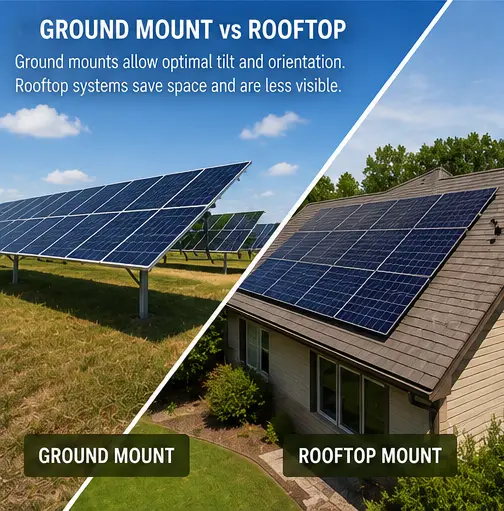
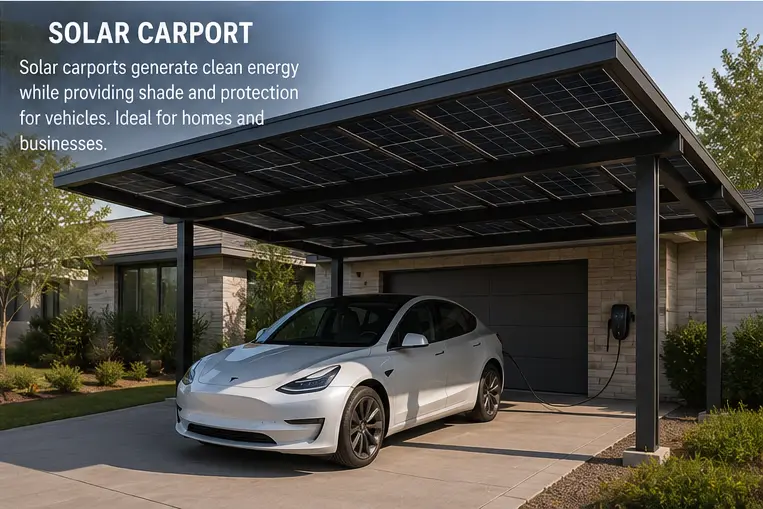
For other homesportable or modular solar systemsare a better choice.
The goal is buying the panel that creates the best long-term value.
What Happens When Solar Panels Reach 25 Years?
Many homeowners assume a solar panel stops working once the warranty expires.
In reality, warranties define guaranteed performance, not end-of-life.
A panel guaranteed to operate at 85% output after 25 years will usually continue producing electricity beyond that point.
Many systems remain operational for 30 years or more with gradually declining production.
The question is not whether the panel will still work.
The question is how much electricity it will continue to generate.
This long operating life is one of the reasons solar remains such a compelling long-term investment.
The Long Haul: Solar Panel Warranties and Degradation
Your solar panels are built to last. When you purchase a quality system, you receive two main warranties:
- Product Warranty (or Materials Warranty)
What it covers: Defects in manufacturing, materials, and workmanship.
Typical Term: 10 to 12 years, though some premium manufacturers now offer 25 years. - Performance Warranty (or Power Output Warranty)
What it covers: A guarantee that the panel will produce a certain percentage of its original rated power over time.
Typical Term: 25 years.
Understanding Degradation
All solar panels naturally degrade over time—it’s an unavoidable part of physics.
The performance warranty addresses this by guaranteeing a maximum rate of degradation.
Year 1: Most manufacturers guarantee a maximum drop of 2% to 3% in the first year.
Years 2-25: The annual degradation rate is typically guaranteed to be no more than 0.5% to 0.7% [5].
What does this mean in real terms?
A high-quality panel with a guaranteed annual degradation of 0.5% will still be operating at 88.7% of its original efficiency after 25 years [5].
Even a panel with a slightly higher 0.7% annual degradation will still be producing around 83.6% of its original power after a quarter-century.
This is the incredible promise of solar: a system that continues to deliver reliable, powerful energy for decades.
More Useful Tools for You
NavigatingSolar Warranties and Permits Vault Tool
See which permits and warranties you need, and track timelines of guarantees, all in one place.
Think ahead, because compatibility matters.
Solar installations typically remain in service for 25 years or longer.
During that time, household energy needs often change.
Families grow, new appliances are added, and many homeowners gradually expand their energy systems rather than replacing everything at once.
When choosing solar panels today, it’s worth thinking beyond your current electricity usage and considering future plans such as:
✓ Electric vehicles
✓ Battery storage
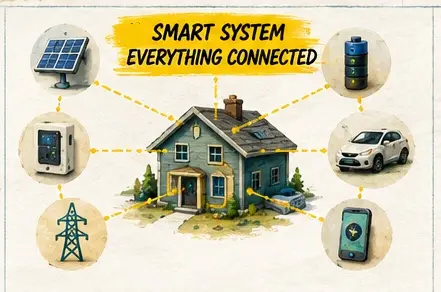 ✓ Inverter
✓ Heat pumps
✓ Electric water heating
✓ Home electrification upgrades
Planning for future expansion now can help avoid costly upgrades later. It also raises another important question:
Will future equipment still work with the solar panels I’m buying today?
The good news is that expanding a solar system is often possible—but it isn’t always as simple as mixing and matching different panels, batteries or inverters.
Compatibility depends on factors such as electrical specifications, inverter design, battery communication protocols and how the original system was configured.
That’s why it’s worth thinking about your long-term energy roadmap before choosing today’s equipment.
Because you’re not buying a panel—you’re starting an energy system
… And The Panel Adjourns
Well that’s it folks!
If anything, after reading this, I hope the next time you set finger in the digital solar marketplaces, you will find it a bit easier.
Once you know how to recognize the building blocks the endless catalogue starts shrinking into a handful of meaningful choices.
…and remember: The best panel is not necessarily the newest or most expensive.
It is the panel that – when combined with the right inverter, storage solution, and optimization approach – fits your roof, your budget, and your energy strategy.
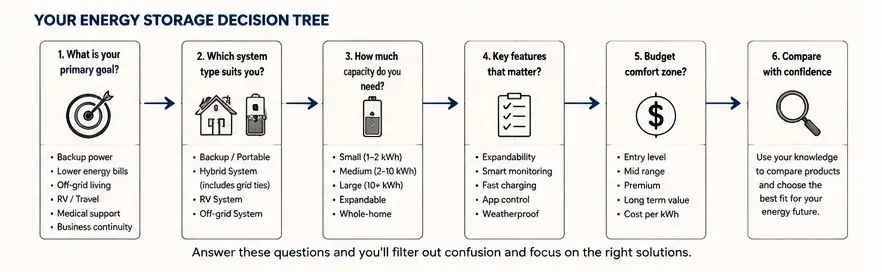
⚡ Ready to Compare Solar Panel Options?
Forget comparing hundreds of panels. Compare technologies first.
Try this yourself:
Open a solar panel marketplace and pick any three panels with similar wattage. Ignore the brand names for a moment.
Instead, compare:
✓ Silicon type (P-Type or N-Type)
✓ Cell technology (TOPCon, HJT, IBC or PERC)
✓ Module construction (Glass-Glass or Glass-Backsheet)
✓ Module efficiency
✓ Temperature coefficient
✓ Product warranty
✓ Performance warranty
➡️ Click Here to Visit the Marketplace
You’ll quickly notice that once you stop comparing logos and start comparing technologies, even a catalogue with hundreds of panels becomes much easier to understand.
Also Try These
Use our planning tools, solar calculators, checklists and other guides
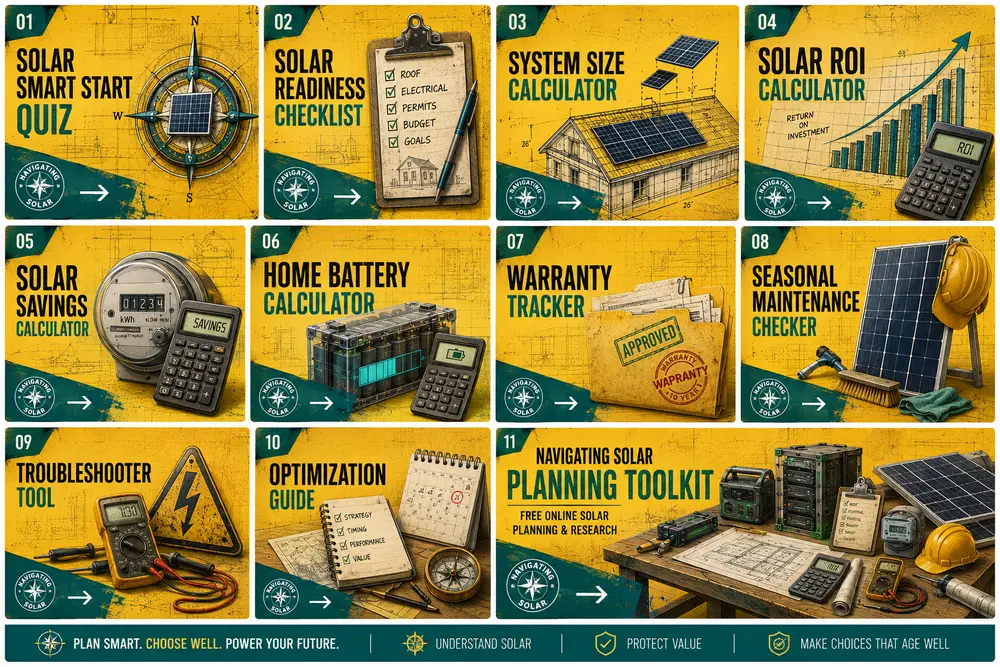
then speak with trusted installers to evaluate solutions
that fit your roof, budget, and long-term energy goals.
Quote Request Tool
Connect with Local US Installers trusted by homeowners nationwide — step-by-step, practical, and pressure-free.
Affiliate Disclaimer:
This link may connect you with solar providers through our partner network.
We may earn a commission if you choose to engage — at no extra cost to you.
Read more:
Which Type of Solar Consumer Are You?
Inverters : The Brain of Your System
Solar Battery Storage: Value vs Expense
Running Security Systems on Solar Power
Electric Vehicles and EV Chargers
Solar Upgrades That Give The Biggest ROI
How to Monitor Solar Production: 3 Best Ways
Educational transparency.
NavigatingSolar is an Independent Educational Resource. We are not solar manufacturers or installers – we research them.
Why these suggestions?
Navigating Solar doesn’t recommend companies simply because they offer affiliate programs. We believe readers should always understand why something is being recommended. We begin with the homeowner’s decision—not the product. We identify where people struggle to make informed choices, then evaluate products, services and partners that genuinely solve those problems.
Not every recommendation earns us a commission. Partnerships are selected to fit the educational framework—not forcing the educational framework to fit whatever affiliate programs happened to exist. If a company doesn’t fit the decision framework and ethos, we don’t include it—whether it has an affiliate program or not. If we believe a better solution exists, we’ll recommend it regardless of whether it generates a commission.
➡️ Our goal is to help you make the right decision—not the fastest purchase.
References
[1] Aurora Solar. “Solar panel components: A complete guide to every part.” Aurora Solar Blog.
[2] SolarReviews. “Types Of Solar Panels: Monocrystalline, Polycrystalline, Thin-Film.” SolarReviews Blog.
[3] SolarReviews. “What Is Half-Cut Solar Cell Technology?” SolarReviews Blog.
[4] Solar Choice. “What is a “Tier 1” solar panel? Tier 2 or 3?” Solar Choice Blog.
[5] Dominion Energy. “How Long Will My Solar Panels Last?” Dominion Energy Blog.
Whole home modular generators: Components & Pricing – EcoFlow
Choosing your portable power station – Bluetti
A1 SolarStore – Solar and Energy Storage Marketplace