 Navigating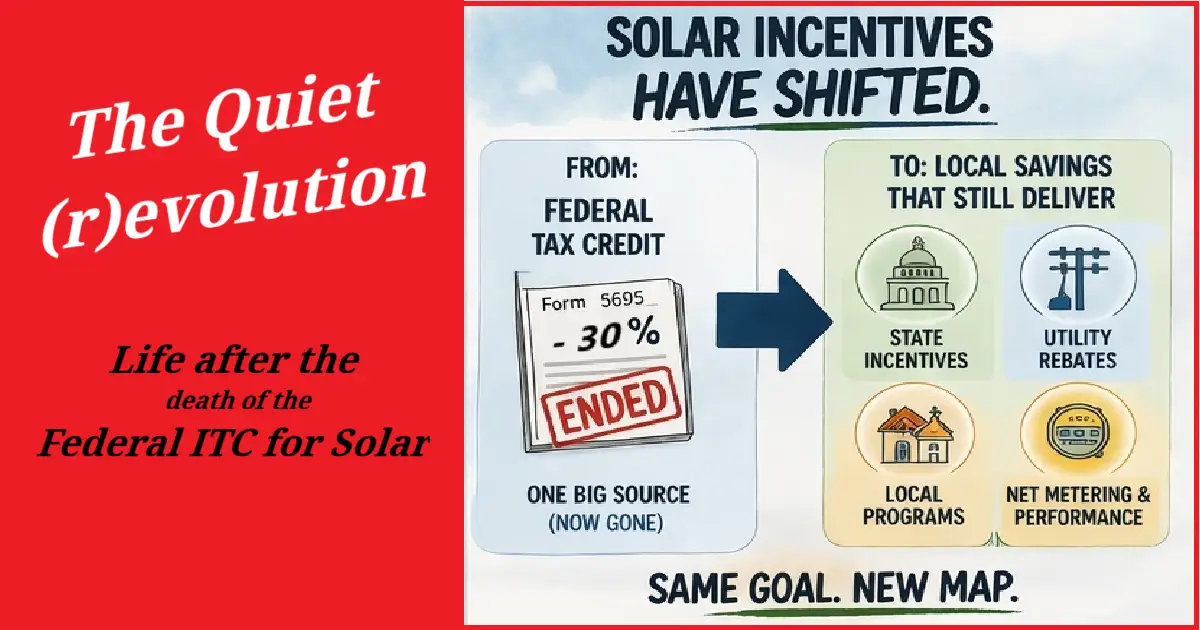
How State Incentives Replace the Lost Federal Incentives
Solar savings aren’t lost – the place they come from is just different
This article dives into the reasons Why Some States’ Solar Incentives Pay More and we looked at 5 top states for solar incentives beacuse:
The federal solar story has changed.
With the accelerated phase-out of key incentives under the One Big Beautiful Bill Act, many homeowners are asking the same question:
📌 If the 30% tax credit is gone for new installs… is solar still worth it in 2026?
The short answer?
📌 Yes — but not for the reasons most people think.
Because the real opportunity has quietly shifted — to local economics.
Here’s what most people don’t realize:
Incentive value alone doesn’t determine solar ROI — utility pricing, net metering structures, electricity inflation, and self-consumption patterns matter too.
📌 Some states already offer equal — or even better — long-term value than the federal credit ever did.
And it’s not random — there’s a pattern…
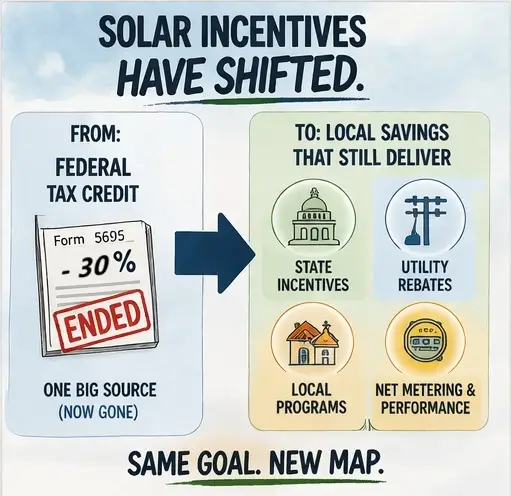
The Big Shift: Federal Incentives → Local Economics
For years, the solar conversation was simple:
Install solar. Get 30% back. Reduce your electricity bill.
That model is fading.
Now, the real driver of value is:
📌 Where you live — and how your local energy system works
Enter Local Installers…
But how do you know who to trust? In this case, the more you know, the better off you will be.
Learn more here, on
Why Some States Pay More (And Others Don’t)
The states offering the strongest solar value are not random.
The “best solar states” are NOT just the sunniest ones, and they’re NOT just the wealthiest either.
After digging into incentive programs across multiple states, a clear pattern emerges.
And the question changes:
Why are certain states forced to incentivize solar harder than others?
This is Why Some States’ Solar Incentives Pay More:
The strongest incentives show up where three pressure points collide:
1. High Electricity Prices Force Alternatives
States like California, New York, and Massachusetts consistently rank among the most expensive for electricity.
📌 That creates pressure.
When grid electricity becomes too expensive:
- Homeowners look for alternatives
- Governments are pushed to support them
💡 Solar becomes less of a “green choice” and more of a financial necessity
2. Grid Infrastructure Is Under Pressure
Here’s something most people never consider:
📌 In many states, the electrical grid is aging, overloaded, or expensive to upgrade.
Upgrading infrastructure costs billions.
So instead, states take a different approach:
📌 They incentivize homeowners to generate their own power
This reduces:
- Peak demand
- Grid strain
- Infrastructure costs
💥 In other words:
Paying for solar installs through these incentives are sometimes cheaper than fixing the grid.
3. Policy Isn’t Just Environmental — It’s Strategic
Yes, clean energy goals matter.
But there’s a deeper layer: Incentives are tools to shift energy responsibility away from utilities and toward consumers.
States with aggressive renewable targets use:
- Tax credits
- Rebates
- Performance payments
…to accelerate adoption. Not just for climate — but for system stability and long-term energy cost control
When you combine all three:
- High energy costs
- Grid pressure
- Policy enforcement
📌 You get states that “overpay (strategically)” for solar adoption
The Hidden Truth: Incentives Were Never the Real Win
This is where most people get it wrong.
They think:
📌 “No tax credit = no value”
But in reality:
📌 Incentives were just a boost — not the foundation
What Actually Determines Solar ROI
Strong incentives can reduce upfront costs significantly, but the long-term financial outcome still depends on:
- Electricity cost in your area
- System size vs usage
- Utility buyback rules
- TOU Structures
- Financing terms
- Installation quality
- Battery Integration
📌 Get these right, and solar can work without incentives
📌 Get them wrong, and even a 30% credit won’t save you
Utility Bill Still High After Solar Install?
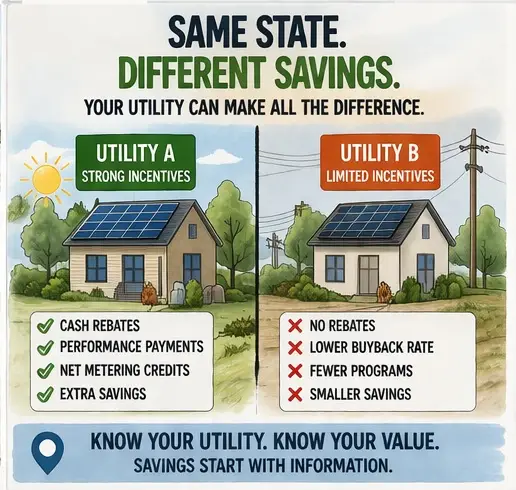
Why Two Identical Systems Perform Completely Differently
This is one of the biggest “aha” moments for homeowners:
Imagine this: Two houses. Same system size and brand. Same monthly usage.
- One saves thousands
- One barely breaks even
📌 The difference?
- Location
- Utility structure
- Incentive stacking…and if Optimization Strategies are applied or not.
What Smart Homeowners Are Doing Now
There’s a clear shift happening.
📌 Instead of chasing incentives, they’re asking:
“What does solar actually earn me here?”
📌 They’re focusing on:
- Real ROI
- Payback period
- Long-term savings
- Energy independence
Inside you will find:
🟡 Step-byStep guides,
🟡 Free-to-use Independent Calculators
🟡 and a Library of Trusted Resources
🟡 You also have access to a Solar Installation & Battery Quote Request Tool that connects you to a Network of Verified US Solar Installers
Step 1
Open My Toolkit
Step 2
Quote Requesting Tool
Connect with Local US Installers trusted by homeowners nationwide — step-by-step, practical, and pressure-free.
Affiliate Disclaimer:
This link may connect you with solar providers through our partner network.
We may earn a commission if you choose to engage — at no extra cost to you.

So… Is Home Solar Still Worth It in 2026 in the US?
The honest answer:
📌 It depends — but not on federal incentives anymore
It depends on:
- Your state
- Your utility
- Your system design and how you manage it
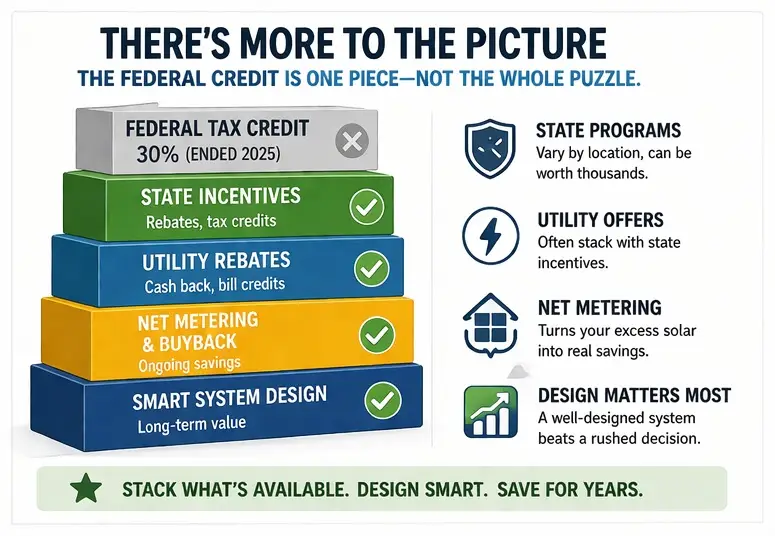
🏆 So Which States Actually Deliver the Most Value?
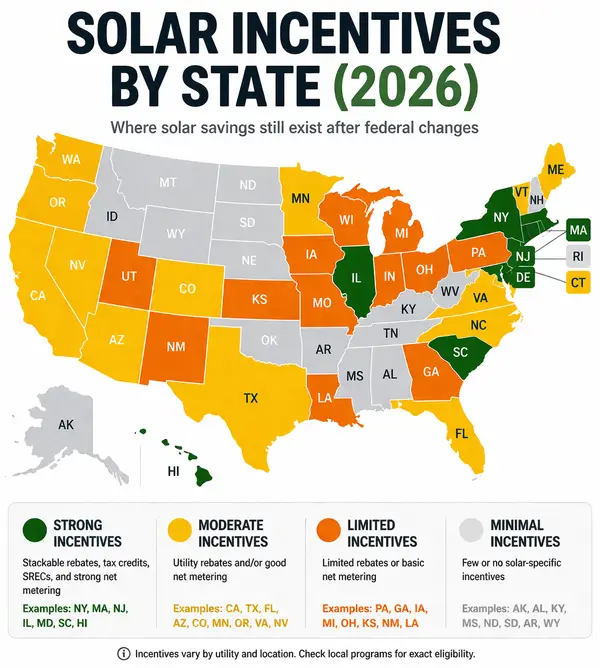
I wrote an article with the full breakdown of the types of solar incentives still available in each state.
➡️ Read it here: Solar Incentives by State (2026)
These states stand out:
🔹 Solar in California
- High electricity prices
- Strong (but evolving) net metering
- Massive grid pressure
📌 Value comes from bill savings + energy arbitrage, not just incentives
🔹Solar in New York
- State tax credits
- Strong local incentives
- Aggressive clean energy targets
📌 One of the few places where stacking incentives still creates serious upside
🔹Solar in Massachusetts
- SMART program (performance-based payments)
- High electricity costs
📌 Pays you over time — not just upfront
🔹Solar in New Jersey
- Solar Renewable Energy Certificates (SRECs)
- Strong market-driven payouts
📌 You can literally earn from your system
🔹Solar in Texas
- No state tax credit
- BUT strong utility buyback programs
📌 Value depends heavily on provider — huge variance (opportunity if optimized)
🔹Solar in Florida
- Property tax exemption
- Sales tax exemption
- Good sun exposure
📌 Quietly strong — not flashy, but very efficient ROI
The Bottom Line
⚠️ The Big Shift Happening Right Now
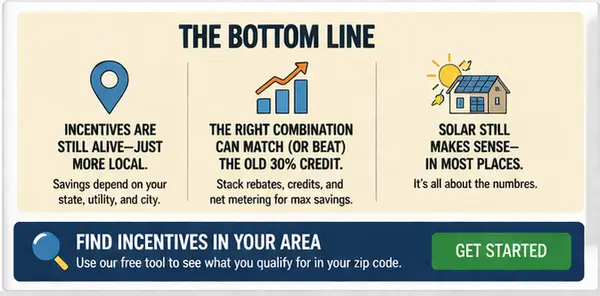
Yes — the federal incentives are being reduced sooner than expected, but that doesn’t mean the opportunity disappears.
It shifts.
From National programs to Local economics and smart system design
Before: 📌 Federal incentives drove solar decisions
Now: 📌 State + utility economics decide everything
What Comes Next
In the next article, we’ll break this down even further:
📌 How to calculate your actual solar value based on your state
📌 How to spot high-value vs low-value setups
📌 And how to avoid the most common (and expensive) mistakes
➡️ Read “A Step-by-Step Checklist to Map Solar Value”
Because the truth is:
Solar isn’t “good” or “bad” anymore — It’s strategic
And the difference between a bad decision and a great one…
Comes down to understanding how your system really works
How to go about this:
- Research incentives in your area
- Work out your estimates in system size, cost and savings.
- Calculated possible ROI and long-term value of having solar
- Then make sure you speak to Verified, Trusted Local Installers. They know and understand the incentives and will give best advice on system designs for where you live.
For independent calculators and a verified quote request tool, go to
Further Recommended Reading
Solar Incentives by State in 2026
US Solar Tax Credits : 2026 Updated Facts
Quote Requesting Tool
Connect with Local US Installers trusted by homeowners nationwide — step-by-step, practical, and pressure-free.
Affiliate Disclaimer:
This link may connect you with solar providers through our partner network.
We may earn a commission if you choose to engage — at no extra cost to you.
Further Reference Material
Energy Information Administration (EIA) – Electricity Data
https://www.eia.gov/
Rebates: https://www.energy.gov/save
Utility Rate Database
https://openei.org/wiki/Utility_Rate_Database