 Navigating
 Phase 3: Maximization
Solar Battery Storage, Energy Independence & Long-Term Value
From Prosumer to Power Player
Optimization protects value. Maximization grows it.
Your system. Your schedule. Your power.
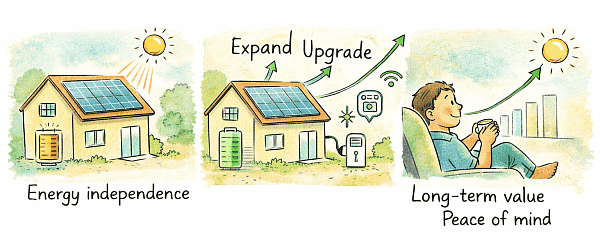
This phase is where stewardship scales returns.
With the right system design, storage, and control layers, solar moves beyond cost reduction and becomes a managed energy asset — one that prioritizes predictability, resilience, and can create additional financial or operational benefits.
This phase is optional — but powerful.
Here, solar becomes:
➡️ Storage
➡️ Automation
➡️ Grid participation
➡️ Timing arbitrage
The aim?
Predictability. Production. Profitability.
Solar doesn’t have to stop at your roof. With the right setup, it can generate extra value too.
At this stage, load-shifting and self-consumption are habit, and your system becomes smarter and more automated.
You can feed power back into the grid — take advantage of crediting systems and buy-back programs — while helping your community.
Not all homeowners want grid interaction. Some prioritize independence. Others want participation incentives. Both models have advantages.
It’s wise to plan and prepare for this phase from early on, as it affects both your system design and future financial projections.
📌 On this page
🟢 Path A:
Energy Independence & Storage
vs
🔵 Path B:
Grid Participation, VPPs, Community Solar
Jump to section:
- Battery Storage: Your Financial Strategist
- TOU Arbitrage
- Battery Capacity Calulator
- Battery Quote Tool
- Grid Participation
🟡 Related Articles
Looking for more info?
Browse these articles
Step 1
The Power of Storage
Timing energy use changes the entire equation.
This is where battery storage is the game-changer.
Batteries aren’t just for blackouts.
They are your financial strategist.
In this phase, having battery storage means you are producing enough power for your home, and have excess power to monetize.
Looking for Professional Advice
on Solar Batteries?
Use the Battery Quote Tool below to locate an Expert near you
📌 What this changes at design level
Storage capacity, inverter choice, and panel oversizing matter more in this phase.
Systems designed only to offset consumption often underperform when export, backup, or arbitrage is introduced later.
Battery storage and insurance might raise the initial costs, but it allows you to pay the system off sooner, either through
self-consumption & savings
and/or
selling power back to the grid.
Storage Isn’t Just About Going Off-Grid
Batteries do much more — they help:
🟢 protect your system
🟢 protect your ROI & Long-term value
🟢 protect your monthly savings
🟢 give you more control over usage and costs
…by helping you use your energy when it matters most
Energy storage changes behavior —how you think about energy — how you use it.
Modern battery systems can also:
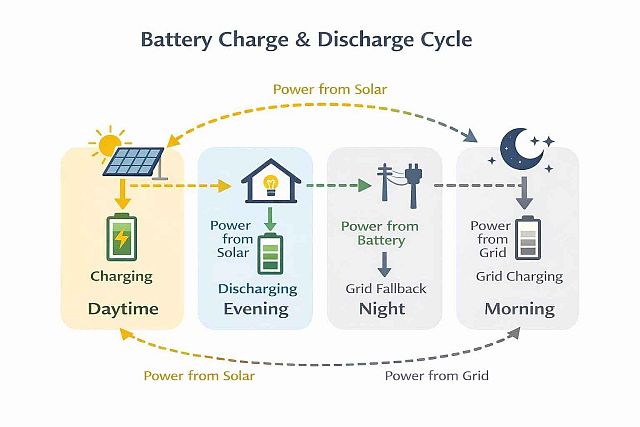
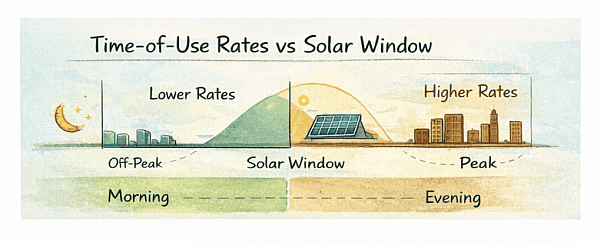
→ Store energy when rates are low
→ Sell energy back during peak pricing
→ Reduce dependence without fully disconnecting
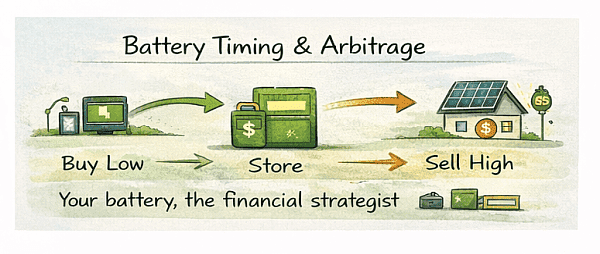
📌 Timing Arbitrage
Your battery automatically buys low and sells high.
Charge Low
Store free solar energy during
PEAK PRODUCTION times
Discharge High
Power home
during
PEAK DEMAND periods
It’s like day-trading electricity.
This is called timing arbitrage.
Battery storage allows you to practice TOU and Timing arbitrage much more effectively.
🔋 Why batteries are more important than panels:
Because panels only solve 1 problem.
🔸 Panels = solve generation problem (kW)
🔸Batteries = solve storage problem (kWh), = further solutions and options.
Storage is where user decisions actually change. Why? Options.
Storage is what drives:
resilience
independence
backup duration
grid flexibility
long-term strategy
Bonus Guide
Something helpful for both beginners and those looking to upgrade
Download the Solar Battery guide
Is Solar Battery Storage Worth It?
Solar Batteries vs Grid Dependence:
Adding battery storage to a solar system can increase energy independence, provide backup power during outages, and improve long-term energy savings.
However, the value depends on your electricity rates, local net-metering rules, and how much resilience you want from your system.
When Solar Batteries Make the Most Sense
Solar battery storage is often worth it when:
→ Your utility offers low net-metering compensation
→ Power outages are common in your area
→ You want backup power for essential appliances
→ Your goal is greater energy independence
You plan to own your home long-term
When Batteries May Not Be Necessary
Battery storage may be less valuable when:
➜ Your utility offers full retail net metering
➜ Outages are rare
➜ You are primarily focused on short-term payback
➜ Your system already exports excess energy profitably
The Long-Term Value Perspective
For many homeowners, solar batteries are less about short-term profit and more about long-term energy security. As electricity prices rise and grid reliability becomes less predictable, storage can turn a solar system into a resilient home energy asset rather than just a power generator.
How Much Energy Independence Is Actually Possible?
Off-Grid vs Grid Dependence:
Because many homeowners misunderstand this.
100% independence is rare
partial independence is common
batteries + smart usage increase independence
However, the value depends on your electricity rates, local net-metering rules, and how much resilience you want from your system.
🟡 Related Articles
Looking for more info?
The following two blog categories delve deeper into the world of Solar Batteries, Inverters and Controllers, and how these all form part of the Solar Savings Strategy when comined with Incentives.
🔋 Battery Capacity Calculator
How Much Energy Independence Do You Need?
Most homeowners install solar… but stop short of true energy independence.
Battery storage is what turns a solar system into a powerful financial asset.
But here’s the problem:
Most people either overspend on too much storage
or
undersize and run out of power when it matters most
This calculator helps you find your balance.
📌 Not Everyone Needs Maximum Storage
You might only need:
→ Evening coverage (4–6 hours)
→ Overnight backup (8–12 hours)
→ Full multi-day resilience (24+ hours)
The right choice depends on:
→ Your budget
→ Your risk tolerance
→ Your long-term energy goals
Want to Know If Your Solar System Can Support This?
Battery storage only works if your solar system can properly charge it.
👉 Before finalizing storage, calculate your system size, cost, and ROI.
Go to:
→ System Size & Cost Calculator
→ Solar ROI and Payback Period calculator
Interactive Tool
Your Estimated Battery Capacity
Next Steps:
Estimate how much battery capacity you need based on:
→ Your daily energy usage
→ How long you want backup power to last
→ How independent from the grid you want to be
🟢 Start with a rough estimate — you can refine it later.
For informational purposes only. Always consult a licensed professional.
📊 Output Explanation
This result gives you a practical starting point, not a final system design.
Keep in mind:
→ Actual battery size depends on system efficiency and usage patterns
→ Critical loads (fridge, lights, WiFi) vs full-home backup changes requirements significantly
→ Weather and solar production variability also play a role
Battery storage plays a major role in maximizing the value of a solar energy system.
Looking for Professional Advice
on Solar Batteries?
Use the Battery Quote Tool below to locate an Expert near you
Solar Battery Quote Tool
Get in touch with battery experts in your area for professional guidance.
See Availability →Why Use This Tool?
Options vary by location.
You can start by seeing which providers are actually available in your area.
✔️ Fast connection to multiple providers
✔️ Trusted by homeowners across the US
✔️ No obligation
✔️ Simple, guided process
✔️ Options based on your location
Affiliate disclaimer
We’re an independent resource and don’t provide solar installation, equipment or quotes directly.
Affiliate Disclaimer
Some links on this page may connect you with solar providers through our partner network, including MySunSaver.
The commission we may earn, if you choose to engage — at no extra cost to you — powers these free resources.
Affiliate relationships exist to help support the ongoing maintenance of this site and it’s free resources.
🔗 NavigatingSolar Partner Disclosure
By continuing, you agree to be contacted by a provider from our partner network, including MySunSaver.
Your information will be handled according to our Privacy Policy and the partner’s Terms of Service.
Step 2
Energy-Aware Home Systems
Automation isn’t about convenience — it’s about consistency.
Smart systems remove human error from energy decisions, ensuring your system behaves optimally
even when you’re not thinking about it.
Discussing Future Expansion matters early.
➡️ See what else to ask your installer
Who should plan for EV early?
You should mention EV plans to your installer early if:
→ You’re designing a system now
→ You want future-proofing baked in
→ You want to avoid panel upgrades later
Good installers design with headroom if you say:
“EV in 1–3 years”
Bad ones don’t ask.
The big myth to bust:
❌ “I need a totally different solar setup for EVs”
❌ “EV charging is some special tech thing”
✅ It’s just electrical load + planning
✅ Same installer ecosystem
✅ Same solar system
One practical pro tip (worth gold)
If you haven’t installed solar yet:
Ask for conduit and panel space reserved for EV
Even if you don’t install the charger now
It’s cheap insurance.
READ MORE about EV charging and and how it connects to a whole-home energy ecosystem
The Tech Stack
for Energy Efficient Homes
Smart Managers
Software and controllers that prioritize where energy flows — home loads, batteries, EVs, or export — based on cost, availability, and rules.
Solar Roof Tiles
Seamless integration that replaces traditional shingles.
EV Charger Integration
EV charging becomes a controllable load, not a wildcard. When aligned with solar production and tariffs, transportation becomes part of your energy strategy.
Integrated Hardware Choices
Certain hardware ecosystems work better together. Planning compatibility early avoids expensive retrofits later.
Step 3
Maximization and the Grid
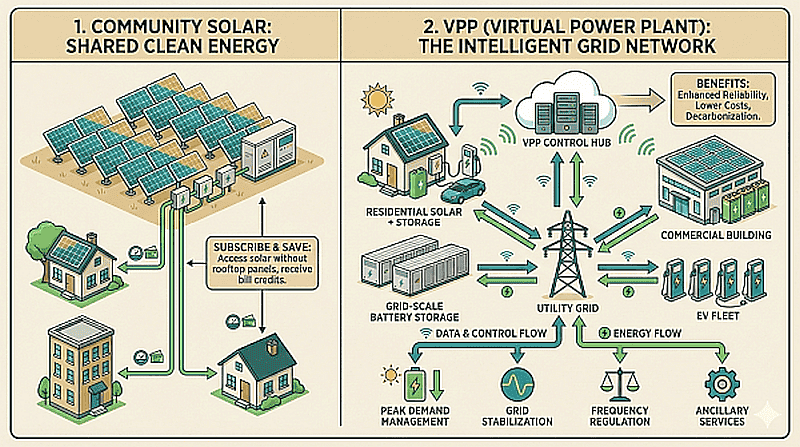
Virtual Power Plants (VPP)
A Virtual Power Plant (VPP) is a utility or third-party program that coordinates many distributed energy systems — like home batteries — to support grid stability during peak demand events.
What it means in real life:
➜ Your battery may discharge during specific grid events
➜ You may receive bill credits, cash payments, or incentives
➜ Participation rules, compensation, and control vary widely
Financially smart participation depends on three factors:
✅ Program transparency — clear dispatch rules and compensation
✅ Battery warranty alignment — ensuring participation doesn’t accelerate degradation
✅ Insurance and resilience benefits — some programs reduce outage risk or offer premium incentives
Community Solar
🆚
VPPs:
What’s the difference?
➜ Community solar allows participation without owning hardware.
➜ VPPs leverage systems you already own to provide grid services.
One is access-focused; the other is performance-focused.
Why is community solar important?
It’s kick-starting the movement to renewable energy adoption, supporting modern grid infrastructure development, and offers the current grid relief from the rising pressure it faces.
With demand comes accessibility –
and today, product & service development is improving faster than ever
🟡 Trusted Links
For more perspective on this subject, follow this useful link for Community solar info
Interactive Comparison Tool
➡️ Community Solar
What it is:
➜ You get credits on your electricity bill based on how much energy your share produces.
How it works:
➜ The utility applies a credit or net metering equivalent to your electricity bill.
➜ Usually long-term subscription or ownership agreement.
Pros:
➜ Can participate if you’re a renter or have shading issues.
What to be aware of:
➜ Limited control over maintenance or upgrades.
➡️Virtual Power Plant
What it is:
➜ Your system is aggregated with other local systems to help utilities manage the grid.
How it works:
➜ You usually receive financial incentives or payments for contributing energy.
➜ Often includes automation or software control to optimize timing (buy low, sell high).
Pros:
➜ Potential additional revenue streams beyond savings.
➜ Improves grid stability.
What to be aware of:
➜ May slightly limit when you can use your stored energy if the VPP dispatches it elsewhere.
➜ Need to track agreements for resale and insurance purposes.
🔹 Key Differences at a Glance
Key Differences : |
||
|---|---|---|
Feature |
Community Solar |
Virtual Power Plant (VPP) |
Location |
Off-site | On-site (your home) |
Ownership |
Subscription / partial ownership | You own system \& battery |
Control |
Limited | Full control, with some automated dispatch |
Financial |
Bill credits | Payments + optimized self-consumption |
Resale Considerations |
Contract may transfer | Ownership \& incentives may transfer; must check warranty \& agreements |
Community Solar
🆚
VPPs:
Home Resale Considerations
Yes — there’s a key difference, and it’s subtle but important,
especially for homeowners thinking about system design, participation, or resale.
Let’s break it down clearly:
Interactive Tool
Key Points to Consider
when selling a home that is connected to either of these systems.
Ownership & Contracts:
➜ If you sell your house, the contract may transfer to the buyer, or you may have to buy out your share.
➜ Buyers might be wary if a legal obligation is attached to the home.
Metering / Grid Interconnection:
➜ Buyers unfamiliar with solar billing or TOU rates may get confused — disclosure is essential.
Battery & System Ownership:
➜ Make sure warranties and insurance are transferable.
➜ Some warranties are tied to the original owner, not the home.
Home Appraisal / Valuation:
➜ Some appraisers might not fully credit revenue from grid participation or VPP incentives, affecting perceived home value.
HOA / Local Regulations:
➜ You need to disclose any restrictions or ongoing agreements.
That’s where these Tools come in handy again:
Find them in your Navigatingsolar Toolkit, together with the checklists. Keep track, easily.
NavigatingSolar.com
Solar Information Station
Solar Knowledge Hub
Research ➜ Plan ➜ Prepare ➜ Install
Solar Finance & Incentives
Learn about Solar ROI & Savings leverage mechanisms. Topics include:
- Solar Financing Options
- Solar Incentives & Rebates
- Solar Tax Credits
- Community Solar & VPPs
➡️
Solar Equipment & Tech
Guides on solar system components, design, installation
- Solar Panels
- Solar Inverters & Controllers
- Solar Battery Storage
- System Types
- Installation best practices
➡️
Solar Strategy & Insights
Step-by-step guides and tools to maximize system performance & solar savings
- Solar Savings Strategies
- Long-term Energy Planning
- Maintenance Checklists
- Performance Optimization Strategy
➡️
Solar News & Innovation
Stay informed and up-to-date on everything solar
- Solar Market updates & policy changes
- Emerging Solar Technologies
- Latest Industry Developments
➡️
Mission Aligned.
Next step:
How to choose solar service and product providers you can trust.