 Navigating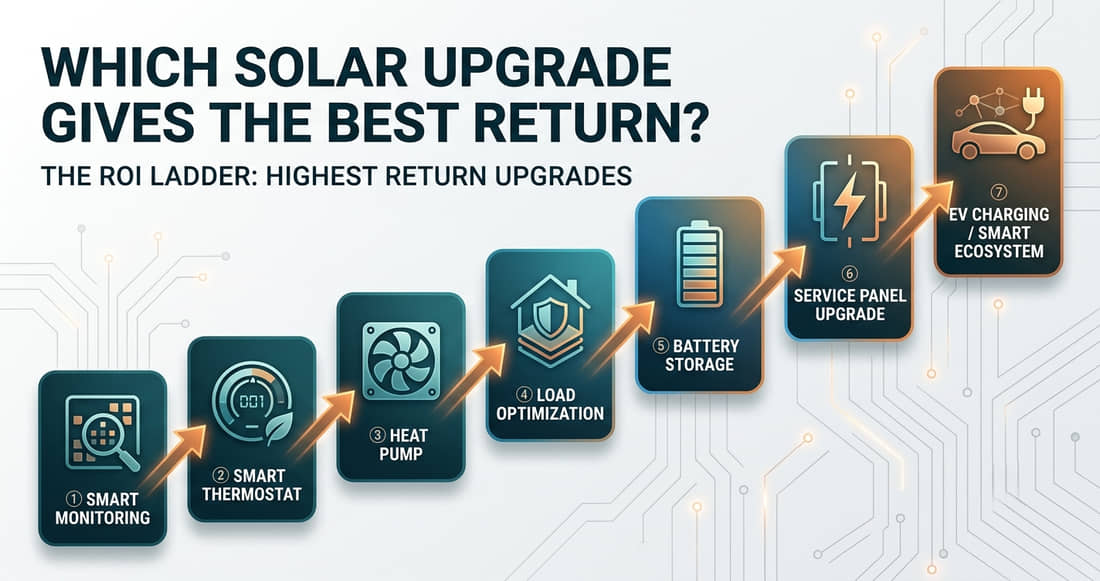
She Says She Is INVESTING, Not Spending!
How Solar Planning turns Hardware into an Asset
In our last chat, we firmly established that going solar is not a cost; it’s a high-yield, low-risk investment.
But the journey to energy independence doesn’t stop when the panels are bolted down.
In fact, that’s just the beginning of a powerful financial strategy.
Modern solar ROI is no longer just about panels alone.
Today’s highest-performing solar homes combine
energy-efficient home upgrades,
smart energy management and home electrification,
battery storage,
and strategic load shifting
to maximize long-term savings and reduce dependence on utility companies.
The next step is to ensure that every kilowatt-hour (kWh) your system produces is used as efficiently as possible.
This means looking at your home not just as a place to live, but as an integrated energy system.
With solar, every upgrade works best when the entire home is planned as one connected energy system.
The highest solar ROI comes from designing your home around energy efficiency and future energy needs, not just today’s electricity usage.
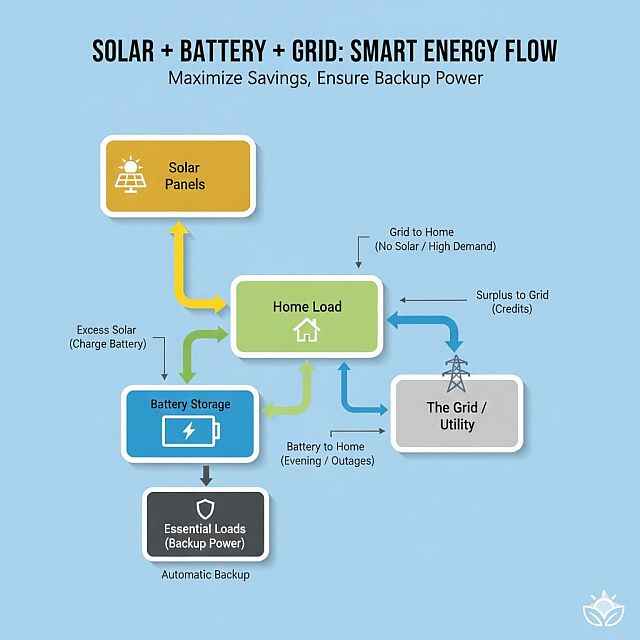
Fully Integrated Home Solar System
This post is your guide to the next level of investment: the energy-efficient home upgrades that dramatically increase your solar system’s Return on Investment (ROI).
These are the moves that turn your home into a fortress of efficiency, ensuring you get the absolute maximum value from the free sunshine you’re collecting.
The Solar Savings Encyclopedia
How to:
Initialize ➔ Optimize ➔ Maximize
Your Solar Energy & Savings
- What to Know Before you Buy
- How to Integrate after Installation
- How to Optimize Savings
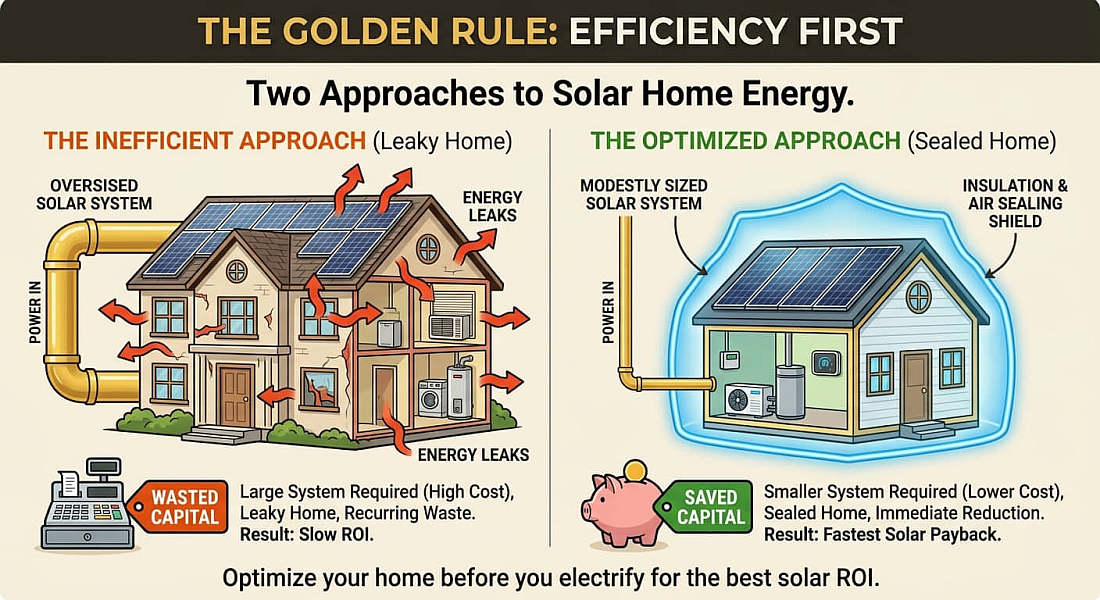
The Golden Rule: Efficiency First
Before you electrify, you must optimize.
The single biggest mistake a solar homeowner can make is installing a large system to power a leaky, inefficient home. It’s like pouring water into a bucket with holes.
The upgrades that offer the most immediate and foundational ROI are those that reduce your energy demand in the first place.
1. Insulation and Air Sealing your Home Before Solar Installation
-
The Investment: Upgrading attic insulation (to R-38 or higher) and sealing air leaks around windows, doors, and utility penetrations.
-
The ROI: This is often the highest ROI upgrade you can make, sometimes reducing heating and cooling costs by 10% to 20% [1]. By reducing your energy needs, you can install a smaller, less expensive solar system to achieve the same goal of a zero electric bill.
-
The Solar Link: A smaller solar system means a lower upfront cost, which directly shortens your solar payback period.
2. Optimize Solar Energy Consumption with Smart Thermostats
-
The Investment: Installing a smart, programmable thermostat .
-
The ROI: These devices learn your habits and automatically adjust temperatures, saving energy when you’re away or asleep.
They can save you up to 10% on heating and cooling costs [2]. -
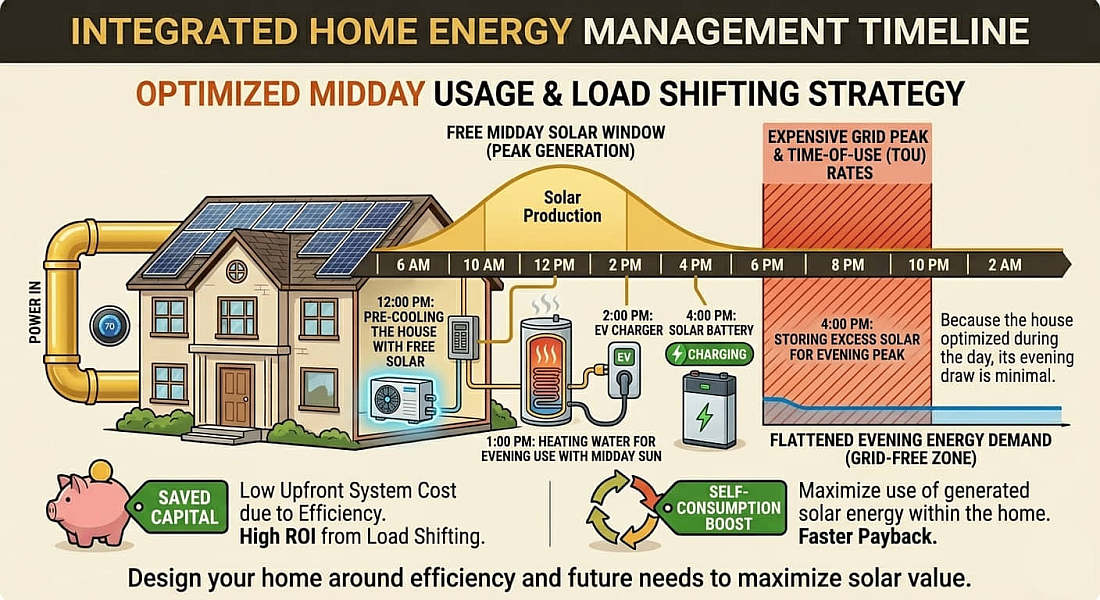
The Solar Link: They are essential for load shifting — a key strategy for solar homeowners. They can be programmed to pre-cool your home during the midday solar window (when your power is free) so your AC runs less during the expensive evening peak hours.
→ 🔧 Find the biggest performance leaks in your system.
📋 Run the Optimization Checklists
The Electrification Revolution: Making Your Solar Power Work Harder
Once your home is a tight, efficient shell, the next step is to replace fossil fuel appliances with high-efficiency electric alternatives.
This is where your solar panels truly shine, as they provide the free fuel for these new, efficient machines.
3. The Heat Pump: Heating and Cooling for Pennies
In many regions, heat pumps are becoming one of the most important upgrades in modern energy-efficient homes because they dramatically reduce energy waste compared to older HVAC systems.
For solar homeowners, that efficiency compounds over time by lowering the amount of electricity required to maintain comfortable indoor temperatures year-round.
-
The Investment: Replacing your old furnace and air conditioner with a modern Air Source Heat Pump (ASHP).
-
The ROI: Heat pumps don’t generate heat; they move it. They are typically 2 to 3 times more efficient than traditional furnaces and air conditioners [3]. They provide both heating and cooling, eliminating the need for two separate systems.
-
The Solar Link: By switching from natural gas or propane to an electric heat pump, you are replacing a recurring fuel cost with free solar electricity. This massive increase in electric load is now powered by your solar system, drastically increasing the financial value of every solar panel you own.
The Coolest Savings and Hottest Upgrades
➡️ Considering a permanent HVAC upgrade?
Compare whole-home HVAC systems, mini-splits, equipment specifications and energy-efficient solutions from multiple manufacturers to see which approach best suits your home and budget.
Smart Management & Climate control
Interested in how heating and cooling become part of a smart energy ecosystem?
Modern energy ecosystems don’t simply power appliances—they coordinate them.
Modern smart energy ecosystems can coordinate solar production, battery storage, EV charging and major household loads like HVAC from a single management platform. Seeing one in action makes the concept much easier to understand.
If you’re curious how intelligent energy management works in practice, it’s an excellent place to explore.
→ EcoFlow Home Energy Ecosystem
Take your HVAC anywhere:
Not every home needs a permanently installed solution. Sometimes the problem isn’t cooling the whole house—it’s cooling one space, wherever you happen to be.
Instead of running a central HVAC system to condition an entire home, it’s worth considering targeted climate control solutions for specific rooms, workspaces, cabins, RVs, workshops, or backup living areas.
Newer portable energy systems combine battery storage, inverter technology, multiple charging methods and portable heating or cooling into a single self-contained unit. These systems are particularly useful during power outages, off-grid living, remote workspaces, camping, van life, and emergency preparedness scenarios. With up to 8hrs run-time, several ways to recharge, and complete portability, these alternatives offer a very effective low-cost way to heat and cool living spaces.
This approach can reduce overall energy demand while improving comfort where it matters most.\ Rather than focusing on powering an entire property, they focus on solving a specific problem: keeping people comfortable when traditional climate control isn’t practical, available, or energy-efficient.
➡️ Explore Portable Climate Control & Energy Solutions
4. Heat Pump Water Heaters (HPWH)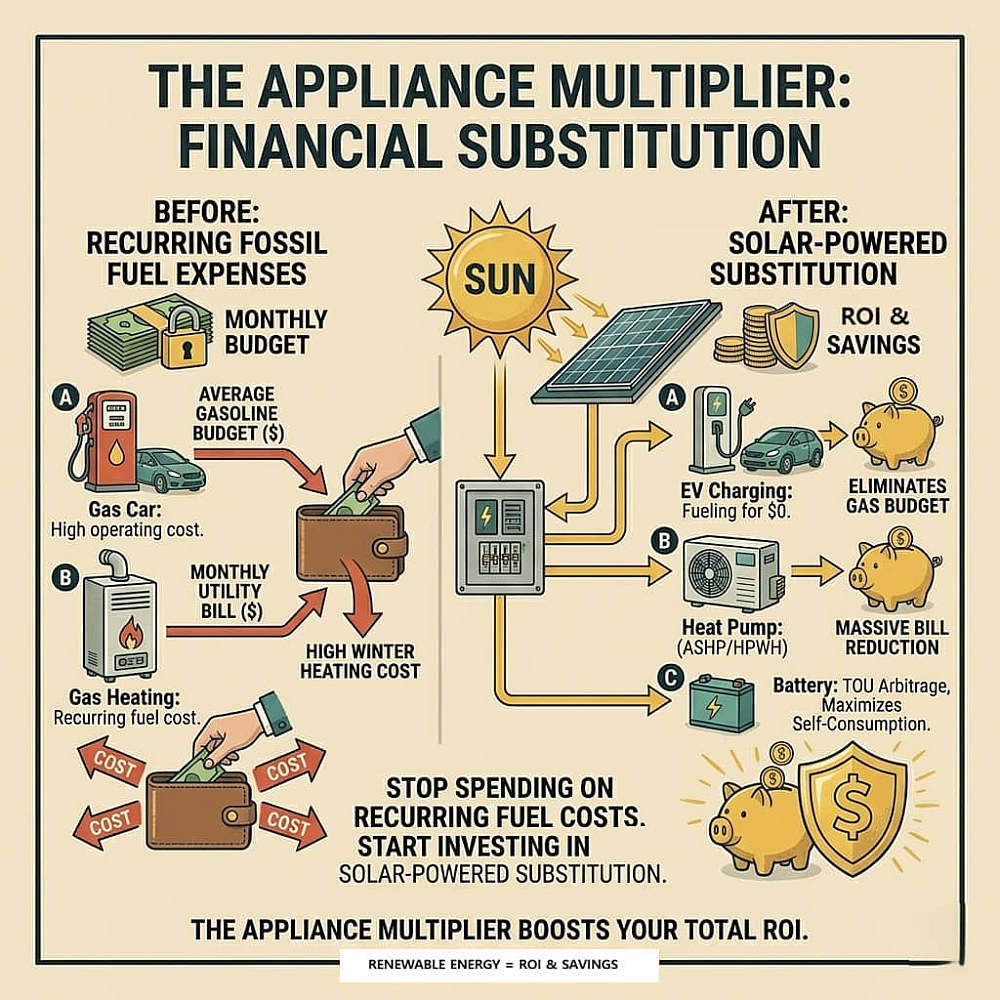
-
The Investment: Replacing your traditional gas or electric resistance water heater with a Heat Pump Water Heater.
-
The ROI: HPWHs are incredibly efficient, using up to 60% less energy than standard electric water heaters [3].
-
The Solar Link: Water heating is one of the largest energy draws in a home.
By using a HPWH, you can strategically heat your water during the midday solar peak, effectively storing your free solar energy as hot water for use in the evening.
5. EV Charging: Fueling Your Car for Free
-
The Investment: Installing a Level 2 Electric Vehicle (EV) charger in your garage.
-
The ROI: If you own an EV, your solar system can eliminate your gasoline budget entirely. The average American drives about 13,500 miles per year, which translates to a significant annual fuel cost that is now replaced by free solar power.
EV charging also helps increase solar self-consumption by using more of your solar production directly inside the home ecosystem rather than exporting excess electricity back to the grid at lower utility buyback rates.
In areas with weak net metering policies, this can significantly improve the financial performance of a solar system over time. -
The Solar Link: This is the ultimate example of maximizing solar ROI. You are using your solar investment to power your home and your transportation, turning two major household expenses into one zero-cost energy source.
Looking Beyond the Core Solar Components
Once your solar panels, inverter, and battery storage are in place, some of the highest-value upgrades come from improving how you use, store, and manage energy in everyday life.
For EV owners, smart charging systems can help maximize solar self-consumption, reduce grid reliance, and better integrate vehicle charging into a broader home energy strategy.
Rather than simply charging whenever the vehicle is plugged in, these systems can coordinate charging around solar production, battery storage, and household energy demand.
For RV owners, van life enthusiasts, campers, and mobile power users, vehicle charging upgrades can deliver surprising value by turning everyday driving into a charging opportunity.
Modern alternator charging systems allow portable power stations to recharge while travelling, reducing generator use and extending off-grid capability.
Neither of these upgrades is essential for every solar owner.
However, for the right household or lifestyle, they can deliver meaningful convenience, energy flexibility, and long-term value beyond the traditional solar system itself.
➡️ Explore EcoFlow Smart Energy & EV Charging Solutions
➡️ Explore Bluetti Mobile Energy & Vehicle Charging Solutions
The Infrastructure Investment: Future-Proofing Your Panel
These are the essential infrastructure upgrades that ensure your home can handle the power of solar and the future of electrification.
6. Main Service Panel Upgrade (MSP)
As homes become increasingly electrified, older electrical panels can quickly become a bottleneck.
Upgrading your service panel not only supports solar expansion today, but also prepares the home for future additions like battery systems, EV chargers, smart appliances, and backup power integration.
-
The Investment: Upgrading your home’s electrical panel (e.g., from 100-amp to 200-amp service).
-
The ROI: While not directly an energy saver, an MSP upgrade is often necessary to safely accommodate the new solar inverter, a battery, and high-draw appliances like heat pumps and EV chargers [4]. It’s the foundational investment that makes all the other high-ROI upgrades possible.
➡️ Planning those future upgrades?
A service panel upgrade isn’t just about adding more breakers—it’s about creating room for the energy systems you may want to add over the next 10 to 20 years.
Whether you’re considering solar panels, hybrid inverters, battery storage, EV charging, standby generators or other electrical upgrades, it helps to understand how these components fit together before discussing options with an installer.
A multi-brand solar marketplace is a useful place to compare complete systems, inverters, batteries and other components before discussing options with an installer.
→ Browse solar components and complete systems
7. Solar Battery Storage
-
The Investment: Adding a solar battery (like the LFP chemistry we discussed previously).
-
The ROI: In areas with Time-of-Use (TOU) rates or low Buyback programs, the battery is the single most effective way to maximize your solar ROI.
It allows you to store your free midday power and use it to offset the most expensive evening peak power, effectively turning a low-value export into a high-value self-consumption [5].
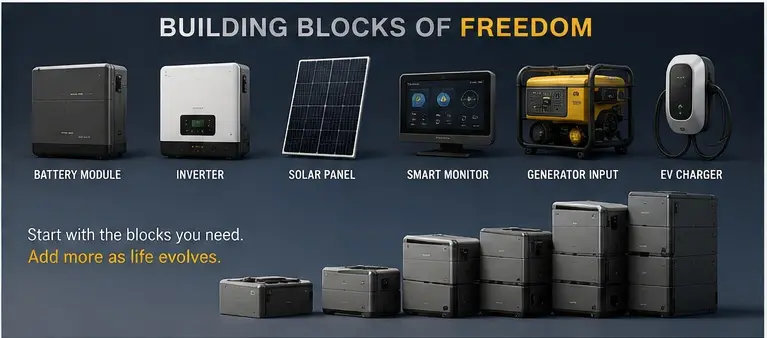
Battery storage is no longer limited to traditional solar installations.
Homeowners can now choose between:
– integrated solar batteries installed with a complete system
– modular battery ecosystems that can grow over time
– portable backup systems for resilience and emergency power
➡️ Learn more about Battery Backup: comparisons and specs vs needs & usage
Before investing in battery storage, ensure your home’s electrical infrastructure can support future additions such as batteries, EV chargers, smart energy management systems, and backup power solutions.
💰 The Investment Mindset 💰
When you look at your home through the lens of a smart investor,
you realize that every dollar spent on efficiency and electrification is a dollar that multiplies the value of your solar system.
The homes generating the highest long-term ROI from solar are rarely the ones with the biggest panel systems alone.
They are the homes where efficiency, electrification, storage, and intelligent energy management work together as one integrated system.
Your solar panels are the engine. These upgrades?
Are the high-performance transmission and tires, that ensure every ounce of power is used to its maximum financial potential.
Stop thinking about spending money on a new water heater or AC unit.
Start thinking about investing in a system that eliminates your utility bill, fuels your car, and increases your home’s value.
That is the true power of the solar investment mindset.
💰 When upgrades make sense

The Solar Buyer’s Survival Guide
Homeowner to homeowner insights on how to optimize and maximize your solar investment.
Related Articles
Which Type of Solar Consumer Are You?
Inverters : The Brain of Your System
Solar ROI, IRR & Payback Explained
7 Solar Installation Mistakes to Avoid (Including Hidden Costs Most People Miss)
References
[1] Texas Real Estate Source. Texas Real Estate Source Blog.
[2] KCSolar. “5 Home Upgrades That Pay for Themselves Over Time.” KCSolar Blog.
[3] Enact Solar. “Top Solar & Electrification Rebates and Incentives in 2025.” Enact Solar Blog.
[4] Residential Solar Panels. “Why Your Home Needs a Main Panel Upgrade Before Going Solar.” Residential Solar Panels Blog.
[5] Sunlux. “T.O.U. Rates and Battery Optimization: How to Maximize Your Solar Savings.” Sunlux Blog. –>