 Navigating
 RESOURCES
The Solar Resource Hub
Choosing Solar Installers, Insurance & System Protection
Curated tools, trusted providers, and clear next steps for your solar journey.
What the next sections cover:
Common Questions 🔸 Understanding the Process 🔸 What to Expect
What to know before Requesting a Solar quote
📌 Process explanations :
- What to know and expect when requesting a quote.
- What happens after submitting a quote
- What a quote includes
- Why get multiple quotes
📌 Checklist: Questions to ask your Installer
📌 Solar Installation Quote FAQ
How to use This
Quote Requesting Tool
Connect with Local US Installers trusted by homeowners nationwide — step-by-step, practical, and pressure-free.
Solar Insurance: an Overview
📌 Solar Insurance meaning
- Why it matters
- Who it applies to
📌 Insurance form tiers
📌 Insurance checklist
📌 Insurance FAQ
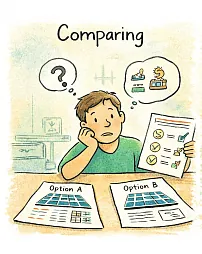
Tools, Services & Next Steps
Once you understand how solar quotes work, requesting an estimate becomes much easier.
This page walks you though
what to expect when requesting quotes from installers and insurers.
It brings together tools, services, and providers we regularly reference throughout the site.
Some are useful early in the decision process. Others become relevant later.
You don’t need everything at once — this hub exists so you can return when the timing is right.
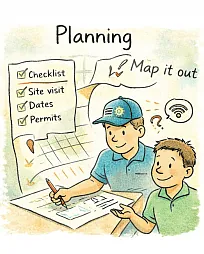
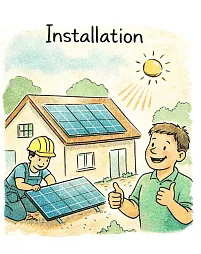
This is not a catalogue. It’s a guided map.
NavigatingSolar is an independent resource and don’t provide solar installation or quotes directly.
Affiliate Disclaimer
NavigatingSolar is an independent resource and don’t provide solar installation or quotes directly.
We don’t sell solar equipment.
We don’t install systems.
We don’t represent a single brand or installer.
Learn more
About NavigatingSolar, our mission and policy
🔗 Partner Disclosure
Some links on this page may connect you with solar providers through our partner network.
We may earn a commission if you choose to engage — at no extra cost to you.
By using the Quote Requesting Tool, you agree to be contacted by a provider from our partner network, including MySunSaver.
Your information will be handled according to our Privacy Policy and the partner’s Terms of Service
Step 1
Get a Solar Quote
Getting a solar quote is usually the first real step people take — and also where most confusion begins.
📌
A “free solar quote” is not just a price.
It’s an initial assessment of whether solar could work for your home, your usage, and your location.
❓Why We Start With Quotes
(Not Hardware)
Panels, inverters, and batteries matter — but they come after alignment.
Until you know:
• whether your home qualifies
• what size system makes sense
• what the real costs look like
…hardware discussions are mostly noise.
That’s why this resource hub starts here.
📌 This section walks you through:
• What “free solar quotes” actually involve
• What happens after you submit your details
• How site assessments typically work
• How to evaluate quotes without pressure
Learn what to expect — so you can calmly decide on your own terms.

What to Expect when I request a Quote
Interactive Tools
Step 1 : User fills out a form
➜ Home type (own / rent)
➜ Monthly electric bill (range)
➜ Contact details (email + phone)
Step 2 : User gets contacted : Data is validated
➜ Confirm address
➜ Confirm ownership
➜ Rough system size
➜ Explain process.
Step 3 : Remote estimate
➜ Utility rate modeling
➜ Incentives calculation
Step 4 : Site assessment (only if serious)
➜ Roof inspection
➜ Electrical panel check
➜ Shade analysis
This only happens after mutual interest.
This service works best for
homeowners who are looking to explore solar options for their property.
✔️ You own your home
✔️ Your average electricity bill is around $100/month or more
✔️ You’re 18 or older
✔️ You’re open to reviewing solar options if it makes sense
Some providers may consider credit as part of their evaluation, but options can vary.
❓ Why Installers Ask for So Much Information
Installers need details to avoid under- or over-sizing a system — which creates problems later.
That said, not all data requests are equal.
A good provider explains why they need information and what will happen next.
If the process feels rushed, vague, or overly aggressive, that’s a signal — not a requirement.
❓ What a Quote Actually Includes
➜ A review of your roof size, orientation, and shading
➜ An estimate based on your electricity usage
➜ A proposed system size and projected savings
➜ Financing or payment options (sometimes optional, sometimes not)
Early quotes are usually estimates, not final numbers. Final pricing often changes after a site visit or engineering review.
❓Why get multiple quotes?
➜ Roof complexity
➜ Local incentives
➜ Utility rates
➜ Installer margins
➜ Financing terms
✅ You’re allowed to:
➜ Take time before deciding
➜ Compare multiple quotes
➜ Say no : Pressure at this stage is rarely a good sign. Polite refusal costs nothing.
Solar is a long-term investment and lifestyle choice.
Not an appliance, and not a “phase”.
The right installer will help you see that, not hide behind branding, deals and rushed quotes.
Ready to Get a Quote?
Getting accurate solar information can be confusing.
Prices, system sizes, and savings vary depending on your home, location, and energy usage.
Instead of guessing, the easiest way to start is by connecting with a local provider who can walk you through your options.
🔗 NavigatingSolar Affiliate Partner Disclosure
By requesting a quote, you agree to be contacted by a provider from our partner network.
The commission we may earn, if you choose to engage — at no extra cost to you — powers these free resources
Why Use This Tool?
You can start by seeing which providers are actually available in your area.
✔️ Fast connection to available solar providers
✔️ No obligation to move forward
✔️ Simple, guided process
✔️ Options based on your location
✔️ Explore your options at your own pace
Grab your phone and last utility bill,
and let’s go!
Next 3 Steps
1. Click the button to open the Tool
2. Using your utility bill, submit your details. Your request is securely shared with a solar provider from our partner network who can assist you based on your location and energy needs.
3. They may contact you to discuss system options, pricing, and next steps — so you can decide what works best for you.
⚠️ You may be contacted fairly quickly after submitting, so it helps to keep your phone nearby.
This service works best for
US homeowners
✔️ Do you own your home in the USA?
✔️ Do you live in the house you are looking to get a quote for?
✔️ Is your average electricity bill is around $100/month or more?
✔️ You must be 18 years or older to submit your details
⚠️ NOTE :
Some providers may consider credit as part of their evaluation, but options can vary.
🔗 NavigatingSolar Partner Disclosure
We’re an independent resource and don’t provide solar installation or quotes directly.
Affiliate Disclaimer
Some links on this page may connect you with solar providers through our partner network, including MySunSaver.
We may earn a commission if you choose to engage — at no extra cost to you.
It allows us to keep resources like this website free and accessible.
🔗 NavigatingSolar Partner Disclosure
By continuing, you agree to be contacted by a provider from our partner network, including MySunSaver.
Your information will be handled according to our Privacy Policy and the partner’s Terms of Service.
Solar Quote FAQ
Interactive Tool
Q: How long does it usually take to get a quote?
Q: Am I obligated to buy after requesting a quote?
Q: Can I compare multiple quotes safely?
Q: What happens if my home isn’t suitable for solar?
Q: How accurate are initial estimates?
Q: Can I request a virtual quote instead of a site visit?
🟡 Related Articles
Looking for more info?
Browse these articles for info relating to Solar Installation and Credit systems. It’s something that should be considered before speaking to installers.
Knowledge on this, is where long-term solar savings starts.
➜ UNDERSTANDING INCENTIVES (Bonus Cheat Sheet)
➜ TOU: EXPLAINED IN 60 SECONDS

Solar Quote FAQ
Interactive Tool
Q: How long does it usually take to get a quote?
Q: Am I obligated to buy after requesting a quote?
Q: Can I compare multiple quotes safely?
Q: What happens if my home isn’t suitable for solar?
Q: How accurate are initial estimates?
Q: Can I request a virtual quote instead of a site visit?
🟡 Related Articles
Looking for more info?
Browse these articles for info relating to Solar Installation and Credit systems. It’s something that should be considered before speaking to installers.
Knowledge on this, is where long-term solar savings starts.
➜ UNDERSTANDING INCENTIVES (Bonus Cheat Sheet)
➜ TOU: EXPLAINED IN 60 SECONDS
Step 2
Solar Insurance & Protection
🛡️ The Long-term Asset Risk Reduction mechanism
Protecting your solar investment and long-term savings.
Insurance is one of the least discussed — and most misunderstood — parts of going solar.
Some homeowners assume solar is automatically covered in existing plans.
Others don’t think about insurance at all until something goes wrong.
Neither approach is ideal.
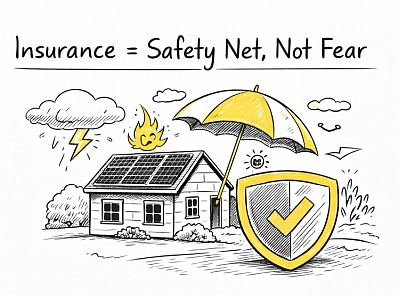
Insurance isn’t about fear of something going wrong, or spending more money on what-ifs.
It’s about understanding risk before you commit.
Solar, in comparison, may be a low-risk investment but insurance is still advised to protect the value your system creates.
🛡️ Be prepared before you need it.
Interactive Tool
📌 What to Expect
What happens when you explore solar insurance options?
The over-view:
➜ You submit a request form
➜ You’ll answer a few basic questions about your home and system
➜ A specialist reviews whether additional coverage is needed
➜ You’ll be contacted to explain options — not pushed to buy
➜ No obligation to proceed
What happens AFTER someone submits interest?
Acknowledgment: “Thanks — a specialist will review your details.”
Follow-up (24–72 hours)
Email or phone
Clarifies missing info
Explains coverage options
Explanation before pricing
A good provider will explain :
✅ What gaps exist (battery, export, liability)
✅ Whether extra coverage is even necessary
✅ Optional quote or recommendation
✅ Sometimes the answer is: “You’re already covered.”
✅ Sometimes it’s: “Add a rider.”
✅ Sometimes it’s a separate policy.
💡 Solar Rewards Preparedness
Planning for these early helps you model real costs more accurately — and understand their impact on long-term ROI.
If you’re still in early research, this step simply helps you understand what protection looks like — now or later.
Interactive Tool
❓ What “Solar Insurance” Usually Means
Coverage may fall under:
➜ Your existing homeowner’s insurance
➜ A rider or endorsement added to your policy
➜ A dedicated solar protection product
What’s covered depends on the provider, the system type, and how it’s installed.
Common considerations include:
➜ Damage from weather (hail, wind, storms)
➜ Fire or electrical issues
➜ Theft or vandalism
➜ Liability and workmanship gaps
❓ Why This Matters Early — Even If You’re Not Buying Yet
➜ Ask better questions during quotes
➜ Compare installers more clearly
➜ Avoid surprises after installation
It also reveals how experienced a provider really is.
❓ Who This Is Most Relevant For
➜ Plan to own your system long-term
➜ Live in extreme weather regions
➜ Are financing or leasing equipment
➜ Want clarity on post-installation responsibility
For DIY-leaning or early-research users, this section may simply plant a flag for later — and that’s okay.
❓ Why Insurance Is Listed Early (But Not Pushed)
➜ Signals seriousness and transparency
➜ Protects against worst-case scenarios
➜ Encourages informed decision-making
➜ Some financing/lease agreements require solar insurance coverage.
➜ Planning & preparedness beat surprises & regrets
🔍 Tip:
Even if you’re just exploring, this process helps you understand what’s needed and how much protection costs — no obligation to buy.
What does a typical solar insurance submission form ask?
Whether it’s a broker, insurer, or specialist partner, most forms fall into three tiers:
🟢 Tier 1:
Basic screening
(safe, low friction)
This is what you should expect FIRST.
Common fields:
🔸ZIP / State
🔸Home type (single-family / condo / other)
🔸Do you already have solar installed? (Yes / No)
System type:
🔸Panels only
🔸Panels + battery
🔸Estimated system size (optional)
🔸Year installed (if applicable)
👉 Purpose: Are you even insurable, and under which category?
🟡 Tier 2:
Context & risk
(after initial interest)
Usually handled by a human, not the form.
They may ask:
🔸Is the system owned, financed, or leased?
🔸Installer name (if known)
🔸Roof-mounted or ground-mounted?
🔸Battery brand/type (if applicable)
🔸Existing homeowner’s insurance provider
🔸Any prior claims related to the system?
👉 Purpose: Determine whether this is a rider, endorsement, or separate policy.
🔴Tier 3:
Documentation
(only if proceeding)
This does not happen immediately.
They may request:
🔸Installation contract
🔸Equipment list (panels, inverter, battery)
🔸Proof of commissioning / PTO
🔸Photos or inspection reports
🔸Utility interconnection approval
👉 Purpose: Finalize coverage terms — not a first-click experience.
Interactive Tools
Quick Comparison : Quotes vs Insurance |
||
|---|---|---|
Aspect |
Solar Quotes |
Solar Insurance |
Primary Purpose |
Determine feasibility, cost, and system size | Protect the value of the installed system |
When It Matters Most |
Early — before committing to solar | Early awareness, critical after installation |
What It Answers |
Is solar viable for my home? | What happens if something goes wrong? |
Typical Trigger |
Curiosity, rising bills, incentives | Ownership, financing, long-term planning |
Who You Interact With |
Installers / quote providers | Insurers / installer guidance |
Level of Commitment |
None — informational only | Planning-level first, coverage later |
Common Misconception |
“A quote is just a price” | “Insurance is automatic” |
Risk If Ignored |
Overpaying or mis-sizing a system | Unprotected asset or surprise exclusions |
Best Outcome |
Clear expectations and comparisons | Long-term security and peace of mind |
QUESTIONS TO ASK ABOUT INSURANCE :
1️⃣ Your Installer
➜ Is workmanship insurance included, and for how long?
➜ Does the installer carry active liability insurance I can verify?
➜ What parts of the system are covered by installation vs manufacturer warranties?
➜ What happens to coverage if the installer goes out of business?
➜ Are roof penetrations and water ingress explicitly covered?
➜ Does system modification (battery later, inverter swap) affect coverage?
2️⃣ Your Insurer
➜ Does my current home insurance cover a solar PV system?
➜ Is the system insured at replacement value or depreciated value?
➜ Are batteries and inverters covered separately?
➜ Does coverage include damage from weather, fire, or theft?
➜ Is lost production or downtime covered?
➜ Do I need to notify you after upgrades or capacity changes?
➜ Optional micro-note (small text under checklist)
➜ Insurance terms vary by provider and region. Review coverage annually and after system changes.
Solar Insurance FAQ
Q: Do I need separate insurance for my solar system?
Q: What does solar insurance typically cover?
Q: Does homeowner’s insurance already protect my system?
Q: Who should consider solar insurance immediately?
Q: Can I wait until after installation to get coverage?
Q: Does insurance differ for financed vs. owned systems?
Q: How do I know if my installer supports insurance?
🟡 Trusted Links
Looking for more info?
For Insurance & Financial Considerations:
National Association of Insurance Commissioners (NAIC)
Information about insurance considerations for residential solar systems.
Full System Protection
You are building an Asset with Solar.
Quotes help you understand what’s possible.
Insurance helps you understand what’s protected.
Together, they form the foundation for everything that comes next — without locking you into a purchase or a provider.
🧭 Decision stages (simplified)
1. Is solar even viable for me? → Quotes
2. If I do this, how do I protect it? → Insurance
3. Which hardware is best?
→ For Now and Later, for expansion or upgrades
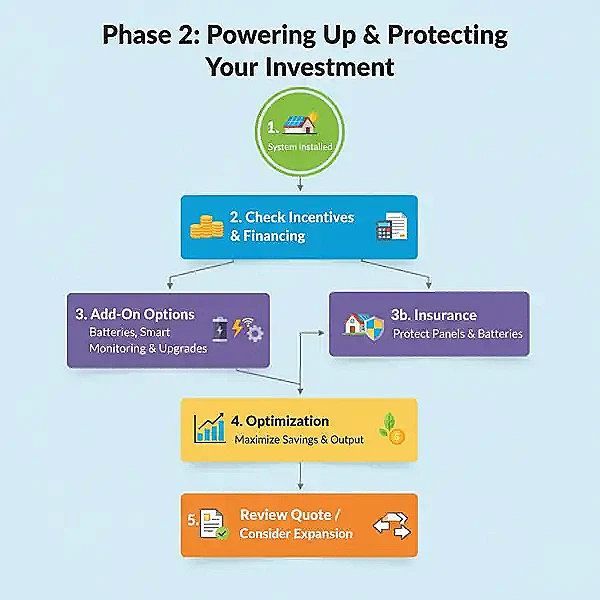
Solar system protection isn’t just one thing
— it’s a mix of:
- The right system size with components like inverters and controllers
- Smart Battery Management
- Staying on top of basic maintenance and performance — the 3M Strategy
- Covering your system with the right insurance
Once that’s in place, your system can perform for years to come.
Future expansion grows with your needs and plans
— and that’s the beauty of solar.
That’s when you explore:
➡️ Battery storage
➡️ Automation
➡️ Future-proofing & expansion
➡️ Smart home appliances
➡️ VPP/grid participation.
That’s when you return to these tools
the Battery Capacity Calculator
and this one:
Check Local Solar Battery Availability
Discover Home Energy Ecosystems and Battery Backup Solutions
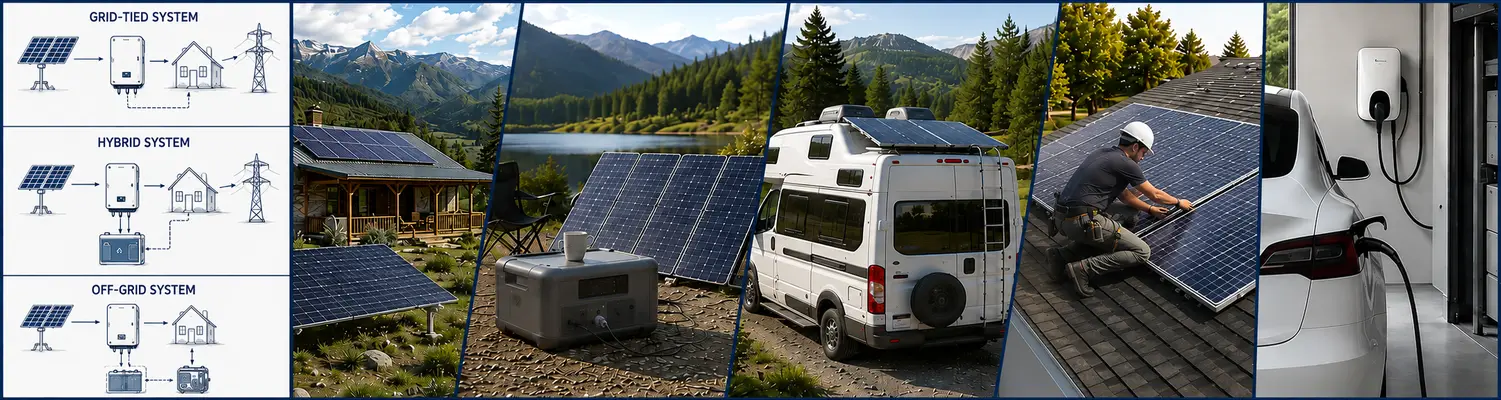
What would you like to explore next?
Quote Requesting Tool
Connect with Local US Installers trusted by homeowners nationwide — step-by-step, practical, and pressure-free.
Explore Options for My Home